Trump Administration Weighs Major Military Campaign Against Iran
The Trump administration is actively considering a weeks-long military campaign targeting Iran, a move that insiders describe as resembling full-fledged war and potentially proving existential for the regime in Tehran. This aggressive strategy could have a dramatic influence on the entire region, reshaping the balance of power across the Middle East and defining the remaining years of Donald Trump's presidency.
Escalating Tensions and Broader Scope
Fears are mounting that the United States could be on the brink of a major military confrontation with Iran, with sources warning that any operation would be much larger in scale than recent interventions and might begin sooner than many anticipate. Unlike limited or targeted missions, this potential US strike would unfold as a sustained, weeks-long campaign, expected to be coordinated with Israel and broader in scope than last year's 12-day conflict. That earlier escalation occurred when the US joined Israeli efforts to destroy Iran's underground nuclear facilities.
Diplomatic Efforts and Military Buildup
Despite the high stakes, there has been little public debate in Washington, with congressional attention and public focus directed elsewhere. Tensions have been building for weeks, initially flaring in early January when Trump considered military action following the killing of thousands of protesters by the Iranian regime. When that opportunity passed, the administration shifted strategy, combining renewed nuclear negotiations with a strong military build-up in the region.

Talks held in Geneva this week between Trump advisers Jared Kushner and Steve Witkoff and Iran's Foreign Minister Abbas Araghchi lasted three hours, with both sides claiming they made progress. However, US officials acknowledge that major gaps remain. Speaking to Fox News, US Vice President JD Vance said discussions went well in some respects but admitted that in other ways, it was very clear that the president has set some red lines that the Iranians are not yet willing to actually acknowledge and work through. He added that while Trump still wants an agreement, he could soon conclude that diplomacy has reached its natural end.
Massive Military Deployment
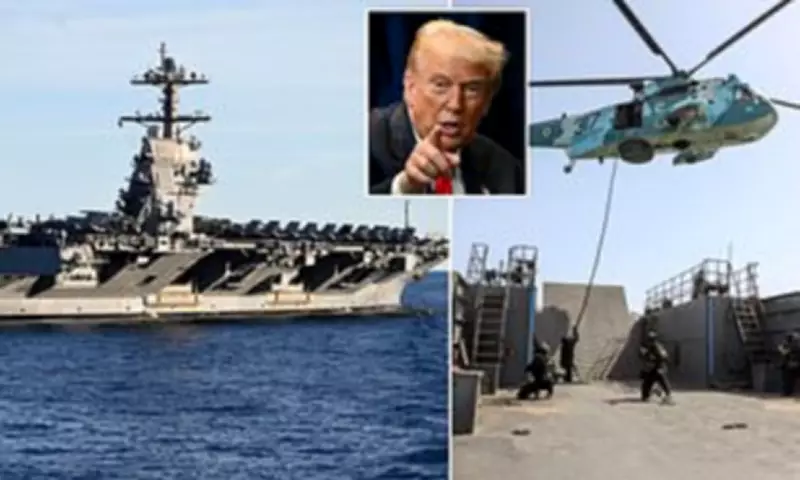
Meanwhile, the US military presence in the region has expanded significantly. Two aircraft carriers are now deployed alongside a dozen warships, supported by hundreds of fighter jets and advanced air defense systems, with more reinforcements on their way. Over 150 US cargo flights have already transported weapons and ammunition into the Middle East. In just the past 24 hours, an additional 50 fighter jets, including F-35s, F-22s, and F-16s, have been sent to the region.
Trump's military deployments and increasingly forceful rhetoric have also made backing down without significant concessions from Iran politically difficult. Israel, which has pushed for a more aggressive approach targeting not only Iran's nuclear and missile programmes but also regime change, is already preparing for the possibility of war within days, according to Israeli officials.
Uncertain Timelines and High Probability of Action
Timelines remain uncertain, with some US sources like Senator Lindsey Graham telling Axios that strikes could still be weeks away. Others believe the window could be much shorter. One Trump adviser stated: The boss is getting fed up. Some people around him warn him against going to war with Iran, but I think there is a 90% chance we see kinetic action in the next few weeks. The US has given Iran a two-week deadline following the latest round of talks to present a detailed proposal.
This pattern mirrors past actions; last June, Trump also set a two-week window to decide between continued diplomacy or military action, before launching Operation Midnight Hammer just three days later. As the world's largest aircraft carrier, USS Gerald R Ford, moves into the Middle East alongside other military assets, the potential for a weeks-long war campaign looms large, threatening to destabilize the region and challenge Iran's regime in an unprecedented manner.