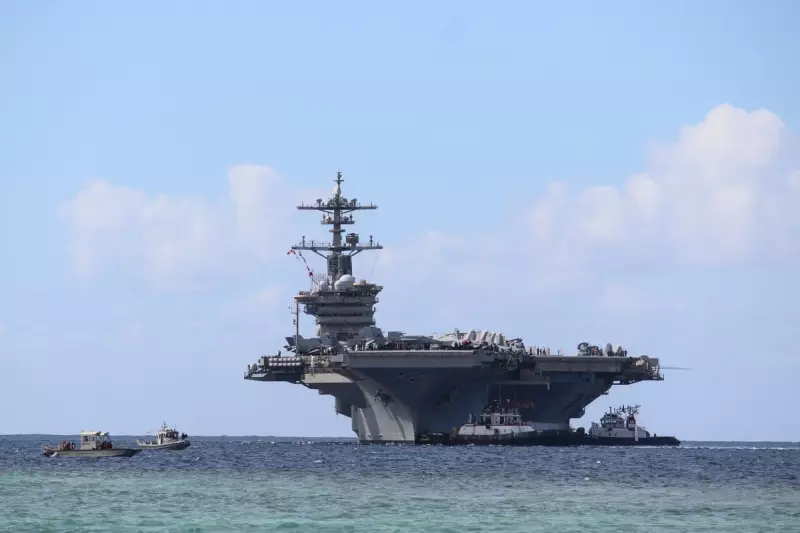
The United States has issued a stark warning to Iran, stating that "all options are on the table" to halt the violent suppression of economic protesters, as a US aircraft carrier steams towards the Middle East. The warning was delivered during an emergency session of the UN Security Council convened at Washington's request.
US Envoy Delivers Stark Ultimatum at UN
Speaking at the emergency meeting on Friday 16 January 2026, US envoy Mike Waltz, representing the Trump administration, delivered a forceful message to Tehran. He stated that any further killings of protesters would result in "grave consequences" for the Iranian regime. The meeting was called specifically to address what the US describes as Iran's brutal crackdown on its own citizens.
Ambassador Waltz emphasised that the international community could not stand by, framing the US position as one prepared to take decisive action. "All options are on the table to stop the slaughter in Iran," he told the council, underscoring the seriousness of Washington's intent.

Military Moves and Contradictory Claims
The diplomatic warning was accompanied by a significant military deployment. The US Navy has directed an aircraft carrier strike group to move closer to the Middle East, a visible signal of force intended to back the diplomatic rhetoric.
In a contradictory twist, the US administration also claimed that former President Trump had received assurances directly from Iranian authorities. According to these claims, Iranian officials promised to stop killing protesters and would not carry out executions of those already arrested. However, these assurances have not been independently verified and stand in sharp contrast to the public threats and military posturing.
Iran Accuses US of 'Lying' and Fomenting Unrest
The Iranian response was swift and dismissive. Tehran's deputy ambassador to the United Nations accused the United States of lying and of direct involvement in stirring up the unrest within Iran. The Iranian representative alleged that Washington's actions were designed to destabilise the country from within.
The US delegation categorically rejected these allegations, dismissing them as baseless propaganda intended to deflect blame from the Iranian government's own actions against peaceful demonstrators. This exchange highlights the deep-seated mistrust and escalating war of words between the two long-standing adversaries.
The situation remains volatile, with the movement of US naval power into the region significantly raising the stakes. The international community is now watching closely to see if Iran alters its domestic conduct or if the US threats translate into concrete action.