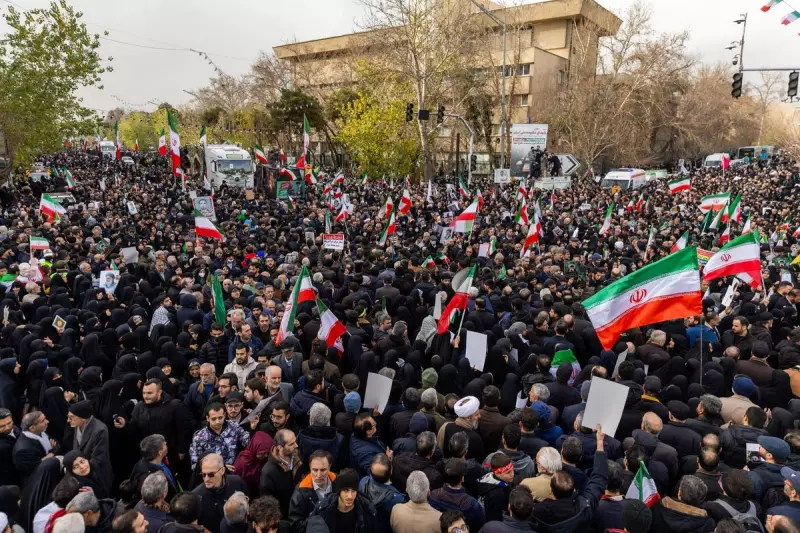
The United Nations Security Council convened an emergency session on Thursday, 15 January 2026, at the request of the United States, as tensions soared over Iran's brutal crackdown on nationwide economic protests. The meeting revealed a stark international divide, with Washington threatening military action and Tehran accusing America of orchestrating violence.
US Envoy Warns Iran of 'Grave Consequences'
The US ambassador to the UN, Mike Waltz, delivered a stark warning to Tehran's leadership, stating that President Donald Trump had made it clear "all options are on the table" to halt the violence against protesters. Waltz emphasised that any further killing would have "grave consequences." This rhetoric was underscored by the movement of a US aircraft carrier towards the Middle East, signalling a potential military dimension to the crisis.
"President Trump is a man of action, not endless talk like we see at the United Nations," Waltz told the council. He dismissed Iranian claims that the protests were a foreign plot, arguing the regime was propagating this "lie" because it was "afraid of their own people." The US envoy affirmed that America stands with the "brave people of Iran" who are demanding their freedom.

Iran and Russia Accuse US of Aggression
Iran's deputy UN ambassador, Gholamhossein Darzi, fired back with accusations of US meddling. He claimed Washington was directly involved in "steering unrest in Iran to violence" under a hollow humanitarian pretext. Darzi also pointed to the recent killing of a protester in Minnesota by a US immigration officer, criticising American human rights standards.
Russia's ambassador, Vassily Nebenzia, stood in solidarity with Iran, accusing the United States of using the UN meeting to justify "blatant aggression and interference." He warned that US actions risked plunging the region into a chaos that could spill beyond its borders. Moscow called on the UN's member states to prevent a new large-scale escalation.
European Allies Threaten Further Sanctions
European powers took a firm diplomatic stance. France's ambassador, Jérôme Bonnafont, denounced the "scale and brutality of the repression" and called for a special session of the UN Human Rights Council to investigate violations. Britain's deputy ambassador, Archibald Young, condemned Iran's actions "in the strongest possible terms" and paid tribute to the courage of Iranian women.
The UK warned that the G7 group of industrialised nations was prepared to impose additional sanctions if Iran did not urgently change course and respect the right to protest. "The world is watching," Young stated.
International Fallout and Diplomatic Moves
The crisis has triggered immediate international repercussions. New Zealand announced it had temporarily closed its embassy in Tehran and moved its diplomatic staff to Ankara, Turkey, advising all citizens to leave Iran immediately. The death toll from the crackdown, as reported by the US-based Human Rights Activists News Agency, has reached at least 2,615, marking it as the deadliest period of unrest in Iran for decades.
Meanwhile, prominent Iranian dissident Masih Alinejad, who attended the UN meeting at the US invitation, accused the Security Council of failing to respond with the urgency the situation demanded. The session concluded with no unified resolution, highlighting the deep geopolitical fissures that the Iranian crisis has exposed.