US Public Divided Over NATO Exit Following Hormuz Dispute
A new national poll reveals that American voters are sharply divided on whether the United States should withdraw from the NATO alliance after member states refused to provide military assistance to secure the Strait of Hormuz. The Daily Mail/JL Partners survey of 1,000 registered voters found an exact split, with 33 percent supporting a US exit and 33 percent opposing it.
Partisan Divide Emerges in Polling Data
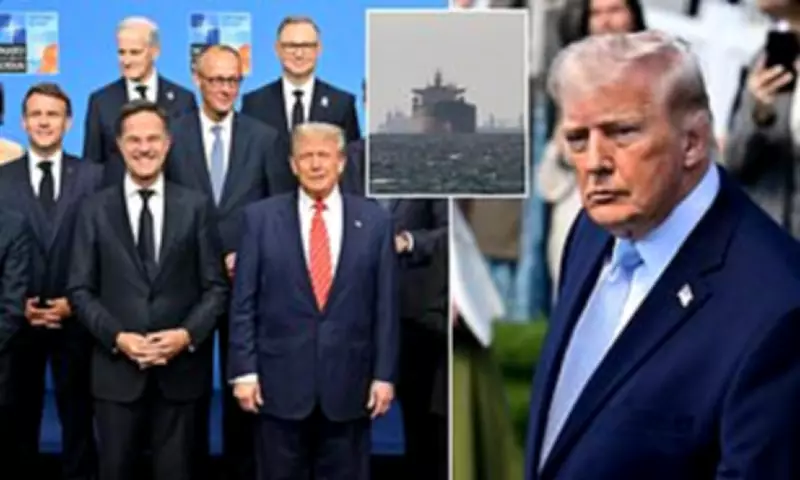
The data uncovers a significant partisan gap in attitudes toward the NATO alliance. Among Republican voters, a clear majority of 57 percent would back withdrawing from NATO if allies continue to withhold military support in the Persian Gulf region. This partisan split comes as President Trump has repeatedly criticized NATO members for doing "nothing" to help secure the vital Strait of Hormuz during his administration's conflict with Iran.
President Trump has threatened to pull the United States out of the military alliance over what he perceives as insufficient support from European partners. The "Hormuz fury" has sparked broader debates about both military cooperation and economic consequences. According to the poll, four-in-ten American voters (41 percent) view the reopening of the Strait of Hormuz with fees imposed on shipping vessels as a negative outcome overall.

Trump's Approval Rating Declines Amid Foreign Policy Concerns
The survey also indicates a decline in President Trump's approval rating, which has dropped three points to 43 percent since the previous poll in late March. Voters expressed particular concern about the administration's handling of Middle East policy, especially the ongoing conflict with Iran. The margin of error for the comprehensive poll stands at 3.1 percent.
NATO Leadership Responds to Growing Tensions
NATO Secretary General Mark Rutte addressed the escalating tensions during recent meetings at the White House. Rutte acknowledged that some alliance members were initially "a bit slow" to provide support to the United States amid the Iran conflict, attributing this delay partly to surprise at the rapidly developing situation.
During a high-stakes encounter with journalists, Rutte faced pointed questions about whether President Trump would maintain America's commitment to NATO. The Secretary General attempted to clarify previous controversial remarks, describing a "language problem" when he had referred to Trump as "Daddy" in earlier comments. "It follows me a little bit, I can assure you," Rutte explained, adding that the remark weighed on him as a non-native English speaker.
European Response and Alliance Dynamics
Rutte described what he called a "mindset shift" in Europe, evidenced by the United Kingdom leading a coalition of countries to help reopen the Strait of Hormuz. However, President Trump has made clear that words from NATO allies are no longer sufficient—he demands concrete action and increased military spending from European partners.
Writing on his Truth Social platform, Trump expressed frustration: "None of these people, including our own, very disappointing, NATO, understood anything unless they have pressure placed upon them!!!" Despite this criticism, Rutte praised Trump's "bold leadership and vision" during his remarks, while acknowledging that Europe must increase its defense spending within the alliance framework.
International Coalition Forms Amid Continuing Tensions
Several nations, including France and Spain, have agreed to participate in an international coalition to help open the Strait of Hormuz once the current conflict concludes. This development comes as Trump's frustration with NATO has intensified following additional disputes, including the deployment of troops from Germany, France, the United Kingdom, Sweden, Norway, the Netherlands and Finland to Greenland in a show of solidarity against American attempts to acquire the territory.
Rutte acknowledged that NATO is experiencing "a period of profound change" with no return to previous arrangements. He pledged that Europe would no longer be "unhealthily reliant" on the United States, while assuring that America would have allies "capable and ready, willing and able to defend" NATO's collective security interests.

The alliance now faces a critical juncture: either meet President Trump's demands for greater burden-sharing and military support, or risk losing American backing in future conflicts. The poll results suggest that American voters remain deeply divided on this fundamental question of international alliance commitment, with partisan affiliation serving as the primary predictor of attitudes toward NATO's future.