The United States has issued an urgent security advisory urging American citizens to depart Israel immediately as tensions escalate with Iran over stalled nuclear negotiations. The Department of State has authorised the departure of non-essential government workers and their families from Israel, warning that commercial flight availability may become limited.
Immediate Departure Advisory
US citizens should "consider leaving Israel while commercial flights are available," according to the State Department advisory, which also strongly advises against travel to Israel. This warning follows inconclusive talks between US and Iranian negotiators regarding Tehran's nuclear programme, with discussions scheduled to resume next week.
Diplomatic Urgency
The urgency was underscored by US Ambassador to Israel Mike Huckabee, who contacted embassy staff in an early morning email urging those wishing to leave to "do so TODAY." He warned that this move "will likely result in high demand for airline seats today," advising staff to focus first on securing any available departure from the country.

This diplomatic tension coincides with Oman's Foreign Minister Badr Albusaidi flying to Washington in what appears to be a last-ditch effort to persuade the Trump administration against military action. Albusaidi is scheduled to brief US Vice-President JD Vance, making the case that sufficient progress has been made in negotiations to warrant caution.
Military Posturing
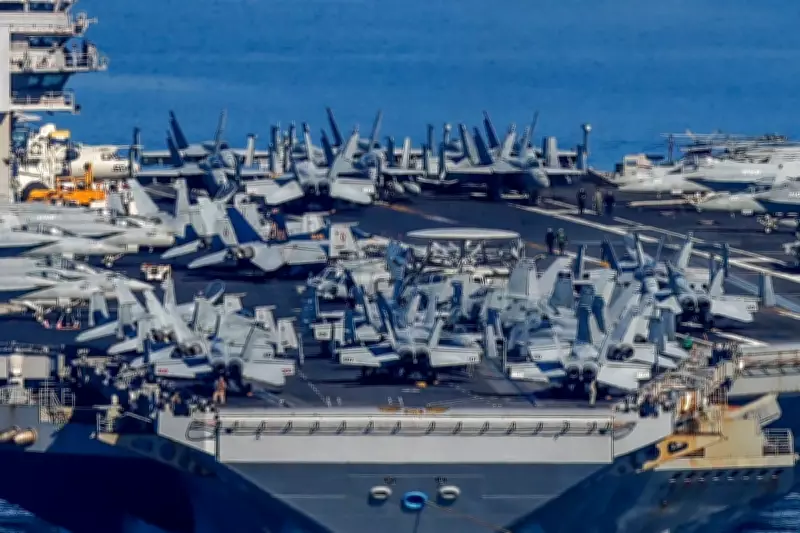
President Donald Trump has positioned two carrier strike groups within striking distance of Iran, including the USS Gerald R. Ford currently stationed off Crete. These naval assets stand ready to attack if the administration determines Tehran is not serious about ending its nuclear activities.
Negotiation Stalemate
Significant gaps remain between negotiating positions. Iranian leadership has called on the US to drop its toughest demands, while US negotiators Steve Witkoff and Jared Kushner issued no statement following the Geneva talks. Iran continues to resist Washington's demand to export its highly enriched uranium stockpile to the US and maintains its right to domestic uranium enrichment.
Iranian parliament legislation passed last July prohibits cooperation with the International Atomic Energy Agency (IAEA) without recognition of Iran's "right to enrich." However, Iran has indicated willingness to commit to needs-based enrichment at purity levels of 20% or lower for its Tehran research reactor, which produces medical isotopes for diagnosing conditions like heart disease.
Technical Discussions Ahead
The two sides are scheduled to meet next week at technical level discussions in Vienna at IAEA headquarters. The UN-affiliated agency would be responsible for verifying Iranian compliance with any nuclear agreement. IAEA Director General Rafael Grossi is expected to provide an update on access to Iran's nuclear sites during the agency's quarterly board meeting.
Grossi, who seeks to succeed António Guterres as UN Secretary General, would benefit significantly from a diplomatic resolution to the Iranian nuclear standoff. The separate issue of Iran's 400kg stockpile of 60% enriched uranium could potentially be addressed through dilution or "downblending" similar to procedures under the 2015 nuclear agreement.
Vice-President Vance, known within the administration as opposing military interventions, stated in a Washington Post interview: "The idea that we're going to be in a Middle Eastern war for years with no end in sight – there is no chance that will happen." He added uncertainty regarding whether President Trump would ultimately authorize military strikes against Iran.