Following the dramatic capture of Venezuelan leader Nicolás Maduro, US Secretary of State Marco Rubio has detailed a strategy centred on an "oil quarantine" to compel Caracas to comply with Washington's demands, explicitly ruling out an Iraq-style occupation.
The Mechanics of the Maritime Quarantine
In a series of television interviews, Rubio explained that the quarantine would be enforced by US Naval officers, supported by Coast Guard law enforcement functions. The operation aims to paralyse a key revenue stream for the former regime by refusing entry and exit to sanctioned oil tankers. "Their work is paralysing that portion of how the regime generates revenue," Rubio stated, framing it as critical leverage to hold Venezuela accountable.
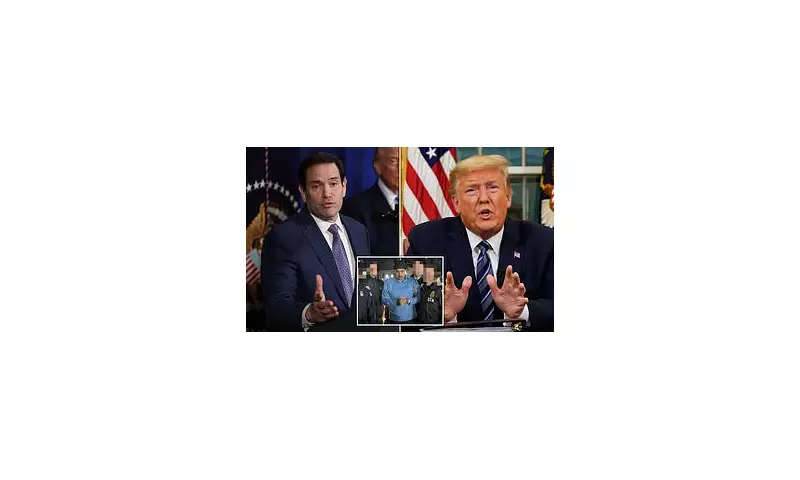
The Secretary of State made these clarifications after President Donald Trump, in a press conference at Mar-a-Lago, indicated that Rubio and Secretary of Defense Pete Hegseth would be charged with controlling the country following Maduro's apprehension and extradition to New York. This remark earned Rubio the nickname "the Viceroy of Venezuela" from the Washington Post, highlighting his expanding portfolio which already includes roles as National Security Advisor and head of the dismantled USAID.

Defining 'Control' and Addressing Legitimacy
Pressed by ABC's George Stephanopoulos on whether the US was now "running" Venezuela, Rubio carefully delineated the scope of American involvement. "What we are running is the direction that this is going to move moving forward," he asserted. He emphasised that the goal was to "set the conditions" so Venezuela would cease to be a narco-state, with its economy unable to progress until US national interests and the welfare of the Venezuelan people were met.
On the question of legal authority and leadership, Rubio dismissed the legitimacy of Maduro's regime, referencing the Biden Administration's 2024 recognition of opposition candidate Edmundo González as "president-elect." González has since fled to Spain. Following Maduro's capture, Vice President Delcy Rodríguez was sworn in. While Trump initially suggested she was cooperative, Rodríguez has publicly called Maduro the country's "only president" and condemned US actions.
Rubio downplayed her comments, stating, "We're not going to judge moving forward based simply on what's said in press conferences," and suggested that real legitimacy would only come through a transition period and free elections.
Policy, Not Occupation
Throughout his media appearances, Rubio consistently rejected the notion of a full-scale US occupation. "Their job in Venezuela is 'not running — it's running policy,'" he told NBC News, criticising the press for fixating on titles. He insisted the US strategy was about maintaining economic and diplomatic pressure through the ongoing oil quarantine to force structural changes, not direct governance.
"That leverage remains, that leverage is ongoing, and we expect that it's going to lead to results here," Rubio concluded, framing the quarantine as the principal tool to ensure compliance and ultimately transform Venezuela's political and economic landscape.