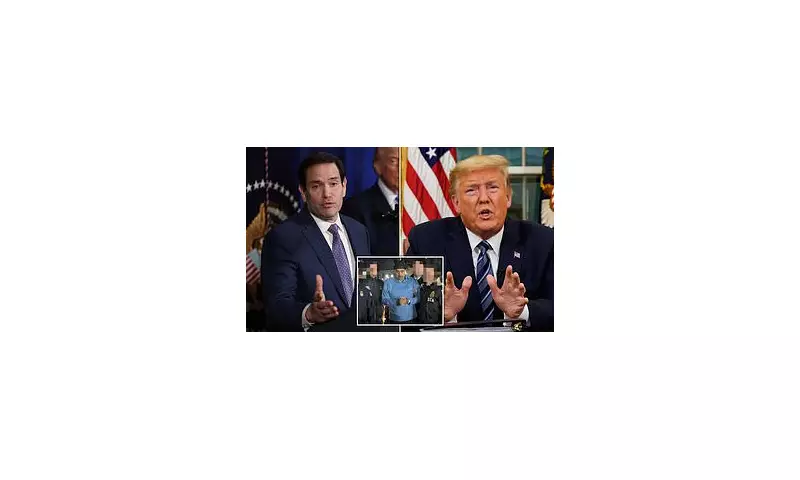
US Secretary of State Marco Rubio has detailed plans for an "oil quarantine" to compel Venezuela's compliance, following the dramatic capture and deposition of its former leader, Nicolas Maduro. Rubio insisted the United States does not intend to "run" the South American nation through a military occupation, but will use stringent economic leverage to force political change.
The Mechanics of the 'Oil Quarantine'
In a series of television interviews, Rubio explained that the quarantine strategy involves the US Navy and Coast Guard refusing entry and exit to sanctioned oil tankers. This naval enforcement aims to paralyse a key revenue stream for the former regime, holding Caracas accountable without deploying ground troops for a full-scale occupation. "That's the sort of control the president is pointing to," Rubio stated, clarifying remarks made by former President Donald Trump.
Trump, speaking at a press conference at Mar-a-Lago after Maduro's overnight apprehension on January 3rd, had said the country would be run by "the people standing right behind me," naming Rubio and Secretary of Defense Pete Hegseth. This earned Rubio the moniker "the Viceroy of Venezuela" from critics. Rubio, however, pushed back on the characterisation, telling ABC's This Week that the US role is about "running policy, not running" the country itself.

Leadership Questions and Political Leverage
The Secretary of State faced pointed questioning from host George Stephanopoulos about the legal authority for Maduro's removal and who the US now recognises as Venezuela's leader. Rubio did not explicitly name a successor but emphasised the quarantine as the primary tool of influence. He dismissed the legitimacy of the Maduro regime, referencing the July election which the Biden Administration had disputed, instead recognising opposition figure Edmundo González as president-elect in November 2024.
Following Maduro's capture, Vice President Delcy Rodríguez was sworn in. While Trump initially suggested she was cooperative, Rodríguez has publicly called Maduro the country's "only president" and condemned US actions. Rubio downplayed her statements, suggesting they were made under duress so soon after the regime's collapse. "We're not going to judge moving forward based simply on what's said in press conferences," he remarked.
Broader Aims and Future Conditions
Rubio outlined broader objectives beyond the oil industry, stating the US would "set the conditions" to end Venezuela's status as a narco-state. He promised that Venezuela's economy would not progress until conditions serving both US national interests and the Venezuelan people's welfare were met. "What we are running is the direction that this is going to move moving forward," he asserted, indicating a prolonged period of external oversight.
The Secretary of State, who also holds the roles of National Security Advisor and head of the dismantled USAID, rejected media focus on his expanded portfolio. He argued the press was "fixating" too much on titles rather than the policy, which he described as using sustained leverage to achieve democratic transition and real elections in Venezuela.