US Unveils $10 Million Bounty for Iranian Regime Leaders in Dramatic Move
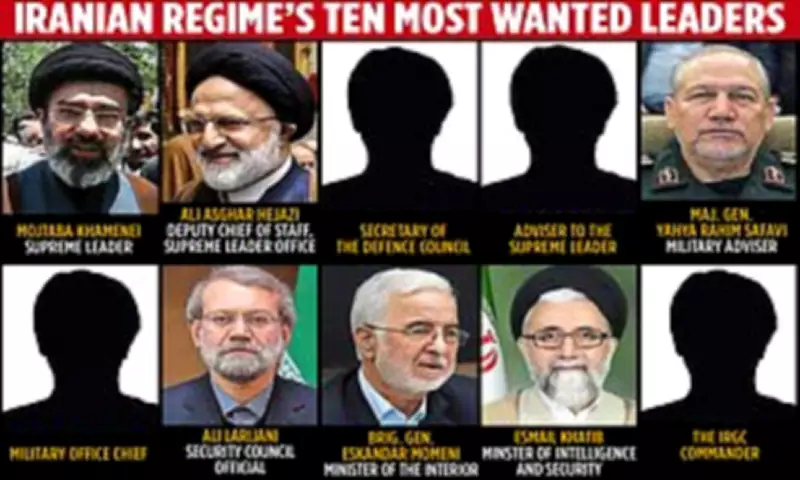
The United States has launched a bold initiative targeting Iran's hardline leadership, offering ordinary Iranians a substantial $10 million reward for information leading to the location of the regime's top figures. This dramatic announcement from the US State Department includes a Most Wanted poster featuring the newly appointed Supreme Leader, Mojtaba Khamenei, along with his key associates, urging citizens to make contact through encrypted social media platforms.
Reward and Relocation Package for Informants
In addition to the financial incentive, which translates to approximately £7.5 million, the notice promises informants an opportunity to relocate to the United States. Published on the State Department's official website and disseminated across various social media channels, this strategy evokes memories of the infamous 'deck of cards' used during the 2003 hunt for Saddam Hussein in the Iraq War. At that time, the US Defence Intelligence Agency created playing cards depicting Saddam as the ace of spades and 51 of his henchmen, a tactic now mirrored in this modern-day pursuit.
Targeting the Islamic Revolutionary Guard Corps
The poster was issued shortly after Mojtaba Khamenei, appointed Supreme Leader on Monday, delivered a defiant statement to Iranian media, calling on Arab neighbours to shut down their US military bases. The State Department identifies the ten individuals as pivotal leaders of the Islamic Revolutionary Guard Corps (IRGC), an organization accused of suppressing dissent within Iran and orchestrating terrorism globally. According to US claims, the IRGC has been responsible for massacring over 36,500 Iranians during nationwide protests in January.
In an accompanying statement, the US declared: 'These individuals command and direct various elements of the IRGC, which plans, organises and executes terrorism around the world. The IRGC is responsible for numerous attacks targeting Americans and US facilities, including those that have killed US citizens.'
Details on the Wounded Supreme Leader
Reports indicate that Mojtaba Khamenei, aged 56, sustained injuries in US-Israeli attacks that killed his father, former Supreme Leader Ali Khamenei, three weeks ago. He is currently believed to be recuperating at Sina University Hospital in Tehran. US Defence Secretary Pete Hegseth commented on Friday, stating, 'We know the new so-called, not so supreme, leader is wounded and likely disfigured. His father – dead. He's scared, he's injured, he's on the run and he lacks legitimacy.' American officials have starkly labelled him a 'dead man walking.'
Key Figures with Bounties on Their Heads
Among the nine other individuals now targeted with bounties is Ali Larijani, Secretary of the Supreme National Security Council and former speaker of Iran's parliament. A former soldier, Larijani is considered one of the architects behind Iran's response to US-Israeli military strikes, which has included launching thousands of drones and ballistic missiles at Israel and Arab neighbours, as well as blocking the Strait of Hormuz, actions that have driven up global oil prices.
Following Ali Khamenei's assassination, Larijani wrote, 'America and the Zionist regime [Israel] have set the heart of the Iranian nation ablaze. We will burn their hearts. We will make the Zionist criminals and the shameless Americans regret their actions.' He was observed at a pro-regime rally in Tehran just hours before the Most Wanted poster was released.
Another notable figure is Ali Asghar Hejazi, Deputy Chief of Staff in the Supreme Leader's Office, who served under Ali Khamenei and is believed to have retained his position. Hejazi is regarded as one of the most influential personalities within the Iranian regime and was once speculated to be a potential successor to Ali Khamenei.
Unidentified Targets and Intelligence Gaps
In a move that suggests potential intelligence shortcomings, the poster includes four individuals who remain unnamed. Their positions are listed with silhouettes instead of photographs, including the 'Secretary of the Defence Council', 'Military Office Chief Supreme Leader's Office', and 'IRGC Commander'. It is believed that previous holders of these roles were killed in US-Israeli air strikes, with the identities of new appointees still unknown to US authorities.
Given the absence of US ground troops in Iran, information leading to the location of these targets is more likely to result in air strikes rather than direct capture. This approach underscores the ongoing covert and military strategies employed by the US in its dealings with the Iranian regime.
International Support for Iran
In related developments, Iran has acknowledged receiving military support from Russia and China, with Foreign Minister Abbas Araghchi describing both nations as 'strategic partners'. When questioned about military cooperation and intelligence sharing, Araghchi confirmed ongoing collaboration but declined to provide specifics. Reports suggest that Russia has supplied imagery from its satellite network, potentially aiding Iranian drone strikes against US troops in recent days.
Additionally, intelligence indicates that China may soon offer financial assistance, spare parts for military vehicles, and missile components to Iran. China, heavily reliant on Iranian oil, has reportedly been pressuring Tehran to ensure safe passage for vessels through the Strait of Hormuz, as the conflict threatens its energy supply. The presence of the advanced Chinese spy ship Liaowang-1 in the strait last week has further highlighted the complex international dimensions of this escalating situation.