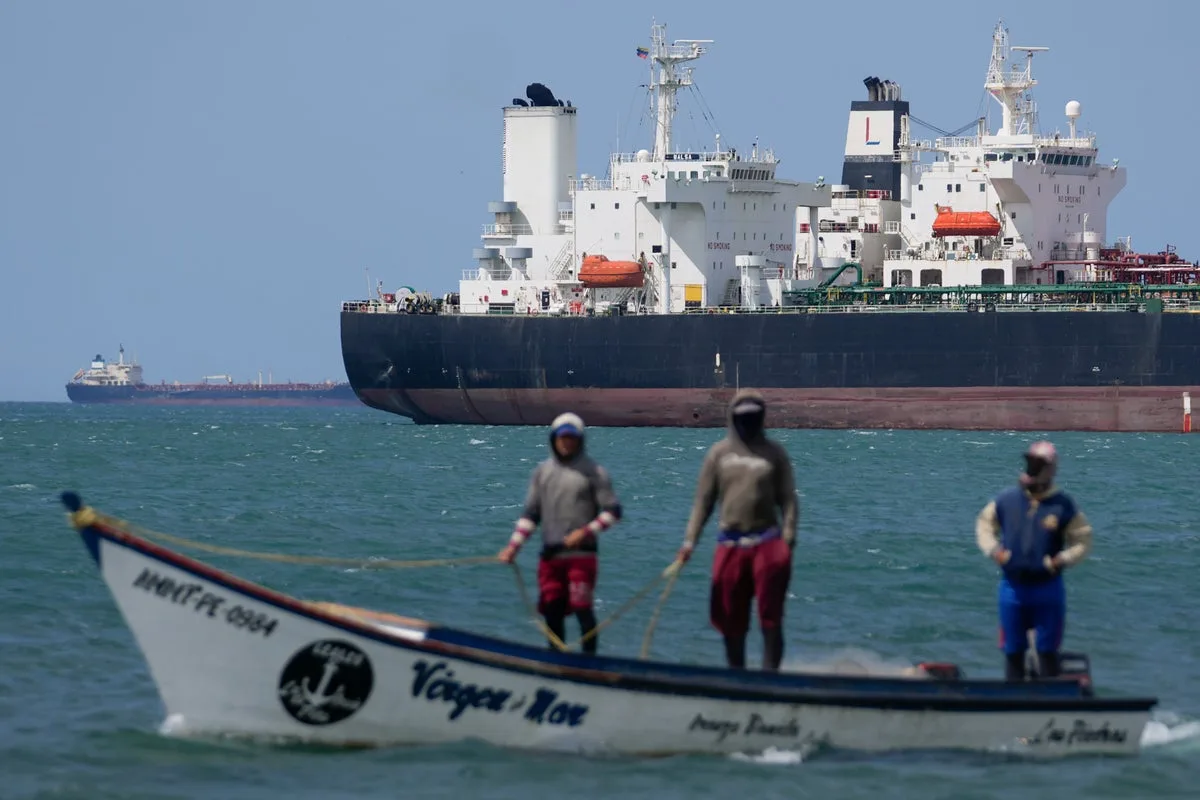
The United States Justice Department has filed a complaint to legally take ownership of a sanctioned oil tanker and nearly two million barrels of petroleum seized off the coast of Venezuela in December. This is the first such legal action by the Trump administration to formally control one of at least ten tankers intercepted since late last year, as part of a campaign to disrupt Venezuela's oil sector following the capture of President Nicolás Maduro.
The US has accused Venezuela of using a shadow fleet of falsely flagged vessels to smuggle illicit crude into global supply chains. Attorney General Pam Bondi stated that the era of secretly bankrolling regimes that threaten the US is over, and the Department of Justice will use all legal authorities to dismantle operations that defy US laws.
The tanker, named the Skipper, was seized in December, marking the first such action under President Trump's intensified pressure on Maduro by cutting off oil revenue. Maduro was arrested in a US raid last month and faces drug trafficking charges in New York, to which he has pleaded not guilty. Following his capture, several vessels fled Venezuela, and US forces have tracked and intercepted some as far as the Indian Ocean.
The Trump administration aims to control Venezuela's oil production, refining, and global distribution, and has begun lifting broad sanctions to allow foreign companies to operate in the country. A federal judge in Washington must approve the government's bid to permanently take ownership of the Skipper and its cargo, which could then be sold.
The Justice Department alleges the tanker transported oil from Iran and Venezuela worldwide under false flags, providing revenue for Iran's paramilitary Revolutionary Guard, which the US has designated a foreign terrorist organisation. Assistant Attorney General A. Tysen Duva said the coordinated efforts have removed a ghost tanker that secretly moved illicit oil, disrupting the flow of millions of dollars to terrorist organisations.