US Launches Critical Mine-Clearing Operation in Strait of Hormuz
The United States has commenced a high-stakes mine-clearing operation in the Strait of Hormuz, deploying an array of advanced technologies including drones, explosive-laden robots, and helicopters. This mission aims to counter Iran's disruption of shipping lanes, which has severely impacted global energy supplies following U.S. and Israeli strikes against Iran at the end of February.
Technological Arsenal and Operational Challenges
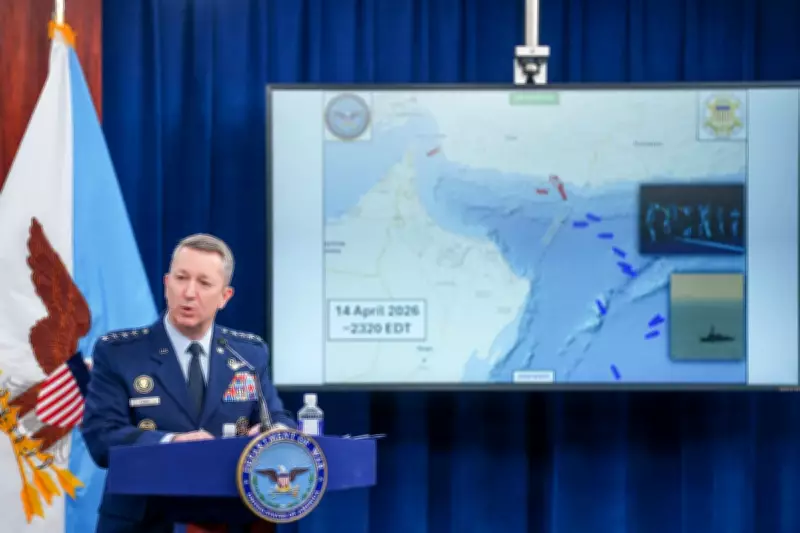
Despite the availability of modern remote detection and removal systems, former naval officers and industry specialists caution that clearing this vital waterway will be a protracted, multi-stage endeavor. The U.S. military confirmed over the weekend that the operation had begun, with two warships already navigating the strait. Additional forces, including underwater drones, are expected to join the effort in the coming days.
President Donald Trump claimed over the weekend that all of Iran's minelaying ships had been sunk. However, specialists warn of the persistent risk that Tehran could deploy further devices, potentially targeting de-mining crews who remain vulnerable to attacks.

Modernizing Mine Warfare Capabilities
Traditionally, the U.S. Navy relied on manned minesweeping ships that physically entered minefields, using sonars to locate devices and mechanical gear to clear explosives. Much of that aging fleet has been retired and is being replaced by littoral combat ships carrying modern equipment such as semi-autonomous surface and underwater drones, as well as remote-controlled robots that enable crews to distance themselves from danger.
The Navy currently has three of these advanced vessels in deployment, though two were undergoing maintenance in Singapore as of late March. The U.S. minesweeping capacity in the Middle East also includes unmanned undersea vehicles, four traditional Avenger-class vessels, helicopters, and divers.
Iran's Mine Arsenal and Clearance Methods
Tehran is believed to possess several types of maritime mines, including bottom mines that rest on the seabed, tethered mines that float near the surface, drifting mines that move freely, and limpet mines that attach directly to ship hulls. The U.S. operation will likely involve searching for mines using unmanned vehicles equipped with sensors, with detected objects analyzed by crews operating outside the minefield before neutralization.
To destroy mines, the Navy can deploy systems like the torpedo-shaped Archerfish—a remotely operated device about 2 meters long that carries an explosive charge and transmits video back to operators. Unmanned boats towing mine-sweeping sleds that trigger detonations or gather mines may also be utilized, along with human divers for intelligence gathering.
Timeframe and Future Developments
Clearing the strait could take two or three weeks according to Bryan Clark, a retired U.S. naval officer and senior fellow at the Hudson Institute. Iranian attacks on mine-clearing crews could slow the process and raise risks, potentially requiring defensive measures like ships and airborne drones to protect personnel and equipment.
New technologies are being developed to accelerate mine clearance, particularly through advances in sensors and artificial intelligence. French defense group Thales says its latest sonar can scan a suspected mine from three different angles in one pass—a process that typically requires multiple sweeps. The long-term ambition is to deploy groups of unmanned systems that can search for, identify, and destroy mines autonomously, though this capability doesn't yet exist.
As U.S. Admiral Daryl Caudle noted in March, "Finding and destroying mines is very time consuming," leaving mine-clearing capability "vulnerable." The success of this operation will significantly impact global energy security and regional stability in the coming weeks.