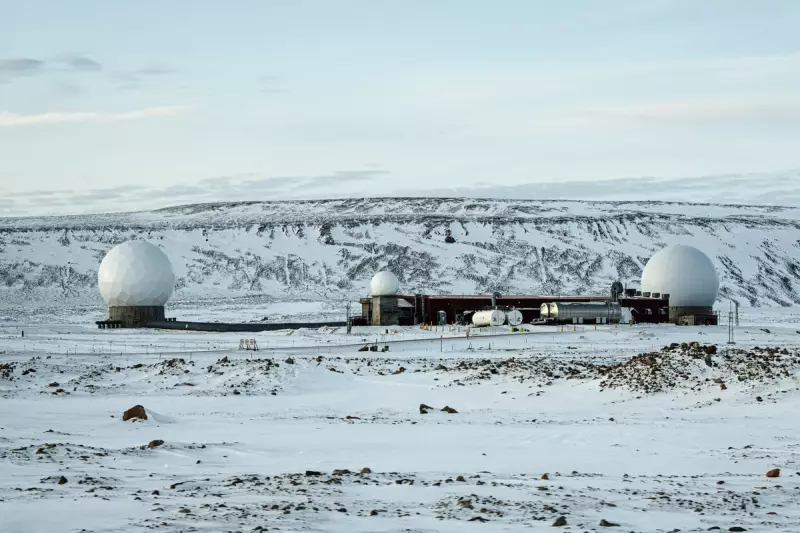
The North American Aerospace Defense Command (NORAD) has confirmed that United States military aircraft are scheduled to arrive in Greenland in the coming days, landing at the strategic Pituffik Space Base. This development occurs against a backdrop of significantly heightened geopolitical tensions, primarily fuelled by former President Donald Trump's persistent campaign to acquire the Danish autonomous territory for the United States.
Routine Operations Amidst Political Turmoil
In an official statement released on Monday, NORAD, the bi-national military organisation operated jointly by the US and Canada, was keen to emphasise the routine nature of these deployments. The command stated that the incoming aircraft will support various "long-planned NORAD activities", which build upon the enduring defence cooperation between the United States, Canada, and the Kingdom of Denmark.
"This activity has been coordinated with the Kingdom of Denmark, and all supporting forces operate with the requisite diplomatic clearances," NORAD added, further noting that the Government of Greenland has also been informed of the planned activities. The Pituffik Space Base, situated on the island's northwest coast, is the United States' sole active base in the Arctic region and was visited earlier this year by Vice President JD Vance.

Trump's Greenland Ambitions Spark International Crisis
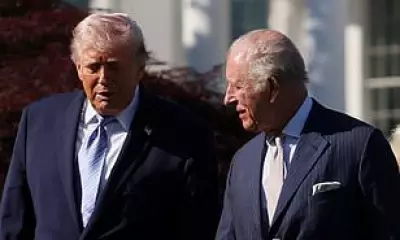
The military movements follow a series of provocative statements and actions from Donald Trump, who has repeatedly expressed his desire to acquire Greenland. In recent social media posts, Trump asserted that "The United States needs Greenland for the purpose of National Security," warning that Russia and China would otherwise dominate the region. His administration has reportedly discussed options ranging from purchasing the island to annexation by force.
These overtures have triggered a severe diplomatic crisis, alarming NATO allies and prompting a robust military response. In the wake of Trump's threats, several European nations, including France, Germany, and Norway, have deployed additional troops to Greenland to bolster the island's security. The leaders of eight European nations, including the UK, France, and Denmark, issued a joint statement condemning Trump's subsequent imposition of a 10% tariff, calling it a move that "undermines transatlantic relations and risks a dangerous downward spiral."
Domestic Political Divisions and Public Opinion
The controversy has exposed deep fractures within the American political establishment. While some Republican figures, like Senator Ted Cruz, have offered full-throated support for Trump's "America First" approach to acquiring new territories, others have issued stark warnings.
Former Vice President Mike Pence expressed concerns over the use of tariffs against NATO allies, and senior Republican senators have warned of catastrophic consequences. Senate Majority Leader John Thune noted a lack of appetite for the discussed options, while Senator Mitch McConnell cautioned that military action would represent "an unprecedented act of strategic self-harm" that could incinerate NATO alliances. Congressman Don Bacon went so far as to predict such an action would lead to impeachment.
Public sentiment, both in the US and Greenland, appears overwhelmingly against Trump's plan. A recent Ipsos survey found only 17% of Americans support acquiring Greenland. In Greenland itself, where anti-Trump protests have erupted, support is even lower; a poll commissioned by a Danish newspaper found a mere 6% of Greenlanders would favour joining the United States, despite the potential scale of such a transaction rivaling the historic Louisiana Purchase.
As NORAD's aircraft prepare to land for their scheduled activities, the underlying geopolitical standoff over Greenland's future shows no signs of abating, presenting a profound challenge to Western alliances and international norms.