US-Iran Talks Collapse as Trump's Diplomacy Falters, Risk of War Grows
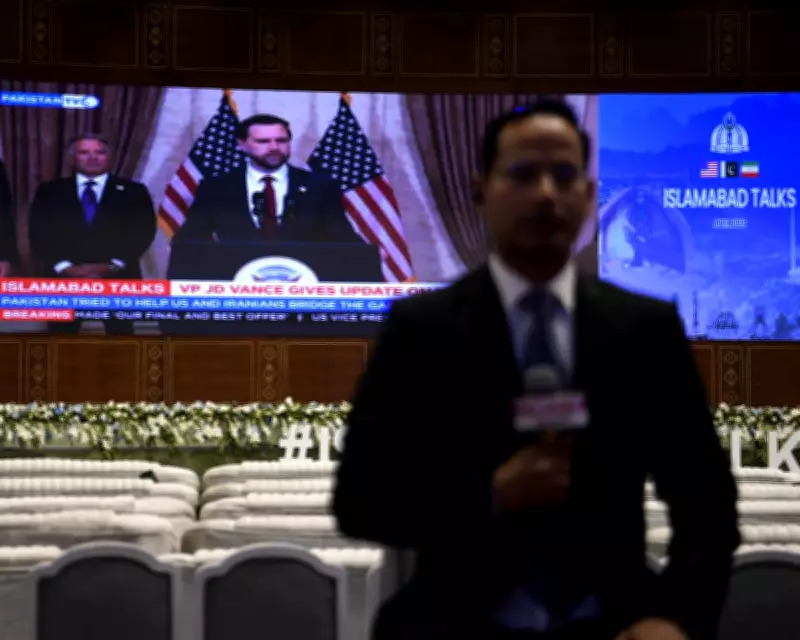
In a stark display of diplomatic failure, US Vice-President JD Vance departed Islamabad, Pakistan, on 12 April 2026, without securing a deal to end the war with Iran. His televised address, delivered after 21 hours of intense negotiations, confirmed the breakdown, while President Donald Trump was notably absent, watching a mixed martial arts fight in Miami. This contrast highlights a presidency seemingly more focused on spectacle than substantive engagement, as global stability and energy markets hang in the balance.
Irreconcilable Positions and Failed Negotiations
The talks in Islamabad did not fail by accident; the US and Iran were fundamentally talking past each other. Washington's stance demanded that Iran abandon all capacity to develop nuclear weapons, whereas Tehran insists it is not seeking such weapons and asserts its right to a civilian nuclear programme. Vance's "final and best offer" required Iran to relinquish this capacity entirely, terms that appeared more like an imposition of victory conditions than a basis for genuine negotiation.
Additionally, the US sought free passage through the Strait of Hormuz, a critical global energy artery. In contrast, Iran aimed for control of the strait via transit fees, alongside demands for lifted sanctions, unfrozen assets, reparations, and a broader regional ceasefire. Given this wide gap, reconciling positions in a single round of talks was improbable, resulting in discussions devoid of trust and a conflict without resolution.

Escalating Tensions and Market Risks
Time is running out to revive negotiations, with the current ceasefire set to expire in little over a week. The fate of this fragile truce depends not only on Washington and Tehran but also on Israel, whose expanded campaign in southern Lebanon against Hezbollah—razing villages to create a buffer zone—has drawn accusations of war crimes. Markets are unlikely to respond positively to these developments, as the White House's approach treats threats as diplomacy, bizarrely expecting submission.
Trump's decision to impose a naval blockade on Iran and the Strait of Hormuz risks intensifying the very pressures it aims to alleviate. Disrupting a route that carries one-fifth of global oil could send fuel prices soaring, with ripple effects extending far beyond the Gulf region. For Tehran, survival in this high-stakes scenario is itself a form of success, as the logic of escalation takes hold.
Broader Implications and No Clear Winners
The irony is palpable: Trump is negotiating over a nuclear programme once contained by a deal he dismantled, while attempting to reopen a strait closed by an illegal war he initiated. A deal between Iran and America, however imperfect, would leave the world better off than continued conflict, especially given the interconnectedness of oil, gas, and financial markets. Winston Churchill's adage that "jaw-jaw is better than war-war" rings true, as fighting is destructive, unpredictable, and costly.
With talks at a stalemate, the risk of escalation looms large. Iran is unlikely to back down, opting instead to test US resolve at sea. While a full-scale ground offensive may be constrained by the Gulf's summer heat, the conflict could shift into more dangerous forms—naval confrontations, airstrikes, and proxy warfare—with no clear exit strategy. In such a scenario, there will be no winners, only losers, as global tensions reach a boiling point.