The immediate prospect of the United States taking direct control of Venezuela appeared to diminish on Sunday, following the dramatic capture of President Nicolás Maduro. However, US officials confirmed that a substantial military force of 15,000 personnel will remain stationed in the Caribbean, poised for a potential second intervention should Venezuela's new interim president fail to meet Washington's objectives.
A Defiant Tone Amidst Private Negotiations
While interim president Delcy Rodríguez struck a defiant public posture, pledging loyalty to the abducted Maduro and condemning his seizure as an "atrocity," the substance of her private discussions with American officials remained unclear. The 56-year-old technocrat, who previously served as vice-president and oil minister, was reportedly identified by Trump administration figures weeks ago as a potential cooperative successor, in part due to her established ties with Wall Street and major oil firms.
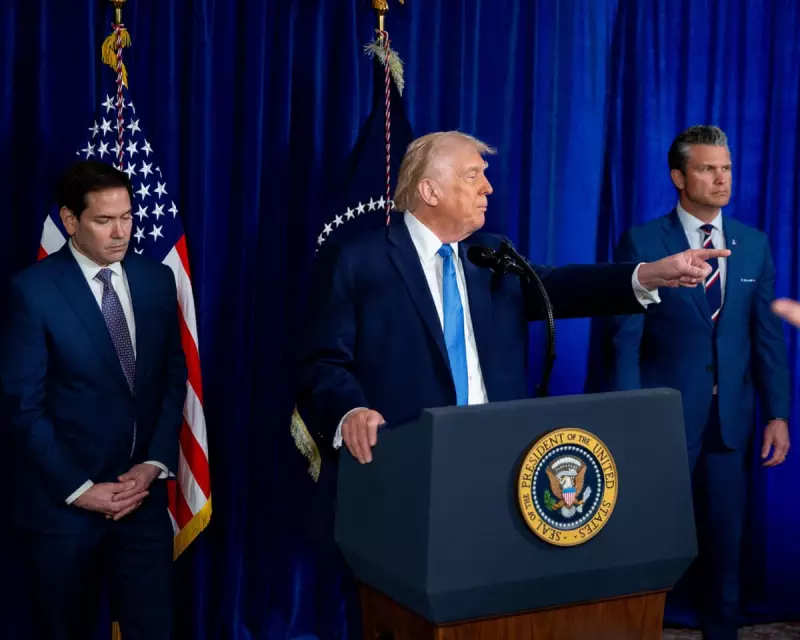
Following the raid on Saturday, which lasted approximately two and a half hours, former President Donald Trump declared the US would "run" the South American nation. On Sunday, he issued a stark warning to Rodríguez via The Atlantic, stating, "If she doesn’t do what’s right, she is going to pay a very big price, probably bigger than Maduro." Trump later told reporters that Rodríguez had been "quite gracious" in a conversation with Secretary of State Marco Rubio, telling him "'we’ll do whatever you need,'" but added, "she really doesn’t have a choice."

Military Posture and Regional Reaction
Secretary of State Marco Rubio sought to downplay the scale of the initial operation, describing the troop presence in Caracas as a brief "law enforcement function" that did not constitute an invasion or extended military campaign. He emphasised the US would maintain a naval "quarantine" around Venezuela to enforce oil sanctions and preserve leverage over the new leadership.
The US action has triggered significant regional unease. The governments of Spain, Brazil, Chile, Colombia, Mexico, and Uruguay issued a joint statement condemning the move as an "extremely dangerous precedent for peace and regional security." In response to the turmoil, Colombian President Gustavo Petro ordered 30,000 troops to his country's border with Venezuela, anticipating potential violence or a refugee crisis.
Within Venezuela, Defence Minister Vladimir Padrino López confirmed casualties among Maduro's security team, soldiers, and civilians during the raid, with one unverified report estimating 40 deaths. He urged citizens to return to normal life while vowing the military would resist "imperial aggression."
Political Tightrope and Public Anxiety
Rodríguez now faces a formidable balancing act, tasked with reconciling Washington's demands for oil and security guarantees with the socialist, anti-imperialist legacy of the regime founded by Hugo Chávez. While key regime figures like interior minister Diosdado Cabello have pledged support for her as interim leader, the Trump administration's apparent focus on influencing the existing regime, rather than instigating full democratic change, has disappointed many Venezuelans who hoped for a clean break.
In Caracas, a semblance of normalcy returned with shops reopening, but underlying anxiety was palpable. Long queues formed at supermarkets as residents, fearful of a "second wave" of attacks hinted at by Trump, rushed to stockpile essentials. "There’s so much uncertainty because people don’t know what might happen in the coming days," said one elderly pensioner waiting in line, capturing the mood of a capital gripped by nervous anticipation.
Meanwhile, Nicolás Maduro, now in US custody, was shown in footage handcuffed and escorted to Drug Enforcement Administration offices in New York. He faces a four-count indictment on charges including narco-terrorism and conspiracy to import cocaine, and is scheduled for arraignment in a Manhattan federal court. His prosecution is set to deepen the humiliation for his loyalists and complicate the political landscape for his successor.