President Donald Trump's recent declaration that the United States will acquire Greenland "whether they like it or not" is not an isolated incident. It represents the latest, most blunt expression of a complicated and co-dependent relationship that has spanned over a hundred years. American policy towards the Arctic's largest island has long been driven by what US leaders perceive as strategic and economic imperatives, often with little regard for local consequences or environmental realities.
From Plunder to Cold War Paranoia
The early American footprint in Greenland was one of exploitation. In 1894, US Navy officer Robert Peary convinced six Greenlandic Inuit to travel to New York, promising tools and weapons; within months, four had died from disease. Peary also removed three massive fragments of the Cape York iron meteorite, a vital source of metal for local toolmaking for centuries. The largest piece, the 34-ton Ahnighito, now resides in the American Museum of Natural History.
Greenland's strategic value crystallised during World War II. In 1941, a treaty with Denmark granted the US military access to protect the island from Nazi Germany. American bases became crucial refueling stops, and US troops guarded the vital cryolite mine at Ivittuut, essential for aluminium production in wartime aircraft. The island also became a front in the "weather war," with data collected there proving critical for Allied planning in Europe.

Cold War Dreams Buried in Ice
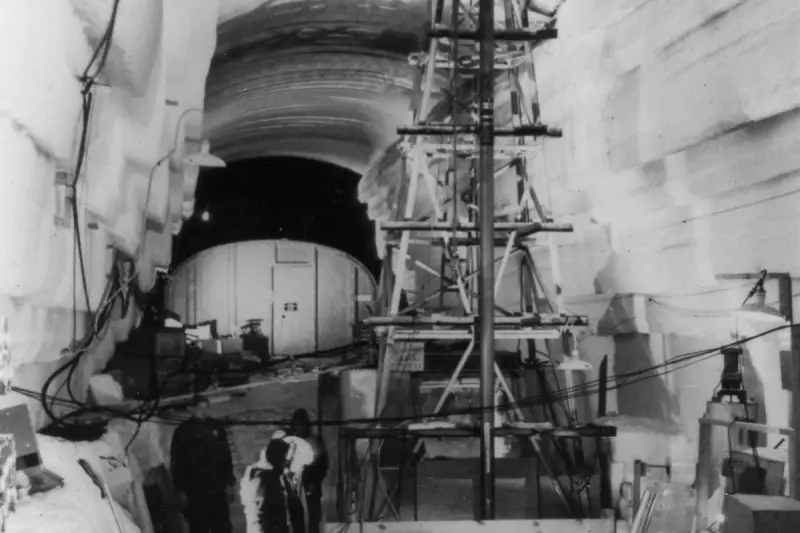
The Cold War ushered in an era of grandiose American engineering projects. The massive Thule Air Base was constructed in secret in the early 1950s, positioned as a bulwark against Soviet threats over the Arctic. But the most fanciful schemes were Camp Century and Project Iceworm.
Camp Century was a nuclear-powered base built inside the ice sheet, housing 200 men. It served as a symbol of US Arctic capability. Project Iceworm was its even more ambitious successor: a plan for hundreds of miles of rail lines inside the ice, where atomic trains would shuttle nuclear missiles. The project was abandoned in the early 1960s after the shifting ice buckled test tunnels and the White House rejected the plan.
The legacy of this era is a toxic one. When the Army abandoned Camp Century in 1966, it left behind hundreds of tons of waste, including frozen sewage, asbestos, lead paint, and carcinogenic PCBs, now buried deep within the ice. As the climate warms, this environmental hazard is destined to resurface, posing a costly and unresolved cleanup challenge.
A Warming Climate and Shortsighted Strategy
Today, the context is fundamentally altered by rapid climate change. Greenland's melting ice sheet is causing sea-level rise with global implications, while thawing permafrost is destabilising critical infrastructure, including the runway at Thule, now renamed Pituffik Space Base. Recent floods have destroyed bridges that stood for decades.
Despite geological surveys identifying mineral deposits, profitable extraction has been limited. The island's true value, argues environmental historian Paul Bierman, is its ice. The sheet holds enough water to raise global sea levels by 24 feet (over 7 metres). Its protection is a global security imperative far surpassing the short-term gains of resource extraction.
President Trump's demands for control, framed around wealth and security, echo past failures by disregarding the island's harsh reality and the accelerating impacts of climate change. History shows that projects in Greenland which ignore its isolation, dynamic ice, and warming climate are doomed. The most forward-looking strategy for the US and the world is not plunder, but preservation.