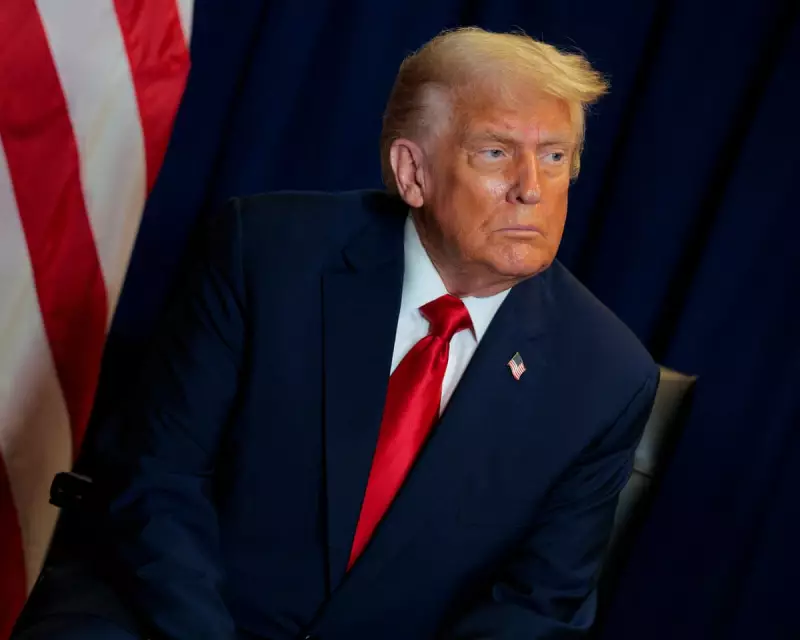
In a sweeping move that marks a significant retreat from global cooperation, former US President Donald Trump has signed an executive order to suspend American support for 66 international organisations and treaties.
A Strategic Retreat from Multilateralism
The order, signed in September, follows a Trump administration review of US participation and funding for all international bodies, particularly those affiliated with the United Nations. A White House statement confirmed the action, which represents a crystallisation of the "America First" foreign policy approach.
The list of targets is dominated by UN-related agencies, commissions, and advisory panels, many focusing on climate, labour, and initiatives the administration labelled as promoting diversity or "woke" agendas. The State Department justified the move, stating these institutions were found to be "redundant, mismanaged, wasteful, or a threat to our nation’s sovereignty."

Key Treaties and Agencies Affected
Among the most consequential withdrawals is from the United Nations Framework Convention on Climate Change (UNFCCC). This 1992 treaty, ratified by 198 countries, is the foundational agreement for the landmark Paris climate accord, from which Trump withdrew soon after returning to the White House. Climate scientist Rob Jackson of Stanford University, who chairs the Global Carbon Project, warned this decision "gives other nations the excuse to delay their own actions and commitments" on curbing greenhouse gases.
The US will also cease support for the UN Population Fund (UNFPA). The agency, which provides global sexual and reproductive health services, has long faced Republican opposition. Although President Joe Biden restored its funding in 2021, and a subsequent State Department review found no evidence of alleged "coercive abortion practices," Trump has now moved to permanently sever ties.
Other bodies on the exit list include the Carbon Free Energy Compact, the United Nations University, the International Cotton Advisory Committee, and the International Tropical Timber Organization.
Broader Implications and Expert Reaction
This action is not an isolated incident but part of a broader pattern. The Trump administration had previously suspended support for the World Health Organization (WHO), the UN agency for Palestinian refugees (UNRWA), and the UN Human Rights Council. Daniel Forti, a senior UN analyst at the International Crisis Group, described the approach as the "crystallisation of the US approach to multilateralism, which is 'my way or the highway'."
The shift has forced the UN to implement staffing and programme cuts. Furthermore, many non-governmental organisations have reported project closures due to parallel cuts in US foreign assistance through USAID.
Despite this large-scale withdrawal, US officials indicated a desire to focus taxpayer money on UN initiatives where they can counter Chinese influence, such as within the International Telecommunications Union and the International Maritime Organization.
The decision to leave the UNFCCC, in particular, poses a substantial hurdle for global climate efforts. Experts stress that meaningful progress is difficult without cooperation from the United States, one of the world's largest economies and emitters. This move coincides with mainstream scientists attributing increasing extreme weather events to climate change, underscoring the high stakes of diminished international collaboration.