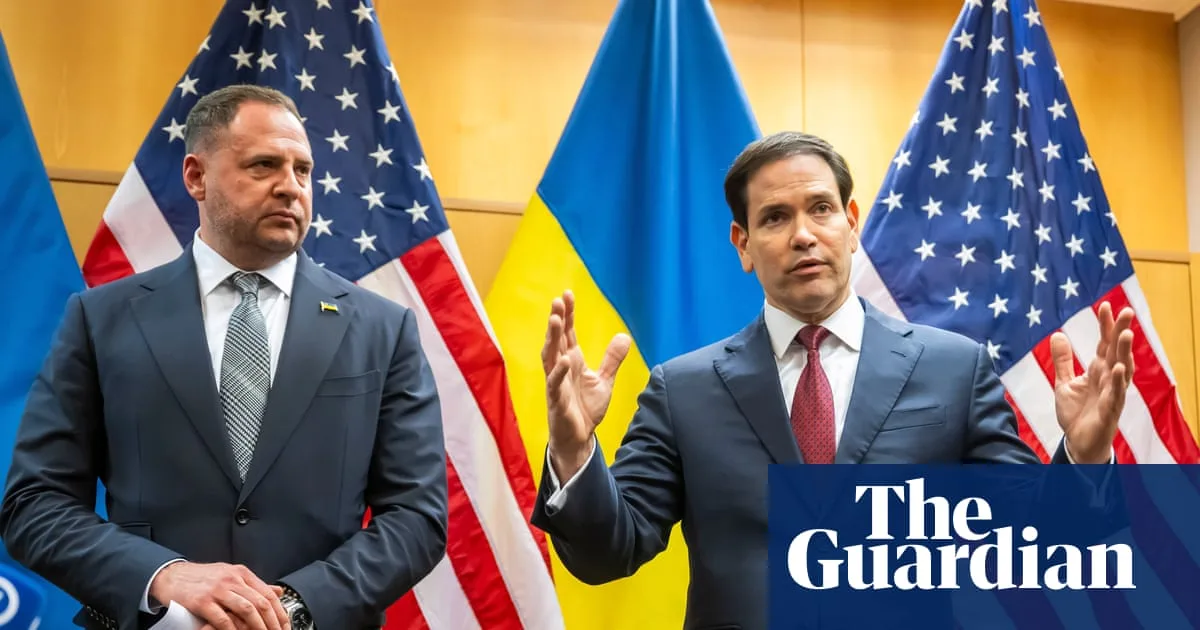
The US and Ukraine have announced an “updated and refined peace framework” to end the war with Russia, hours after European countries proposed their own alternative that omitted some of the pro-Russian points in an original US-backed document leaked last week. US Secretary of State Marco Rubio emerged from talks in Geneva on Sunday saying he was “very optimistic” about progress, while a joint US-Ukraine statement said any eventual deal would “fully uphold” Ukraine’s sovereignty.
The original 28-point US document, leaked last week, had demanded Ukraine cede territory to Russia, limit its army, and agree not to pursue war crimes charges. The European alternative, published on Sunday, proposes that negotiations over territory should take place only after a ceasefire, starting from the current frontline. It does not call for Ukraine to withdraw from cities it controls in eastern Donbas, nor does it rule out Nato membership, though it notes no consensus on that issue.
The European plan also includes radical proposals: Russia would hand the occupied Zaporizhzhia nuclear power station to the International Atomic Energy Agency, with power split 50-50; Ukraine’s peacetime army would be capped at 800,000 soldiers (200,000 more than the US draft); and frozen Russian assets would fund reconstruction rather than being given to US investors. Sanctions would gradually ease if Moscow respected a “sustainable peace”, and Russia would return to the G8.
Confusion over the authorship of the original US plan persisted. Rubio initially admitted the plan was conceived in Moscow, then insisted the US was its author. The document was reportedly drawn up by Vladimir Putin’s envoy Kirill Dmitriev and Trump’s representative Steve Witkoff, with language suggesting it was written in Russian and translated. US senators said Rubio told them it was a Russian document leaked by Moscow, which the US passed to Ukraine.
Trump had earlier demanded that President Zelenskyy sign off by Thursday, but later rowed back, calling it “not my final offer”. Zelenskyy expressed gratitude for US military aid. Rubio and Witkoff were in Geneva with US Army Secretary Dan Driscoll. Rubio said “tremendous progress” had been made on unresolved questions, adding: “I think we made a tremendous amount of progress. We’ve really moved forward.” Yermak said they were “moving forward to the just and lasting peace Ukrainian people deserve.”