The White House has declared that the United States continues to dictate policy decisions to Venezuela's interim leadership, directly contradicting assertions from Caracas that the South American nation is governing itself. This clash follows the dramatic capture of former President Nicolas Maduro by U.S. forces over the weekend of January 3-4, 2026, and his subsequent arraignment in a New York City jail.
White House Insists on 'Maximum Leverage'
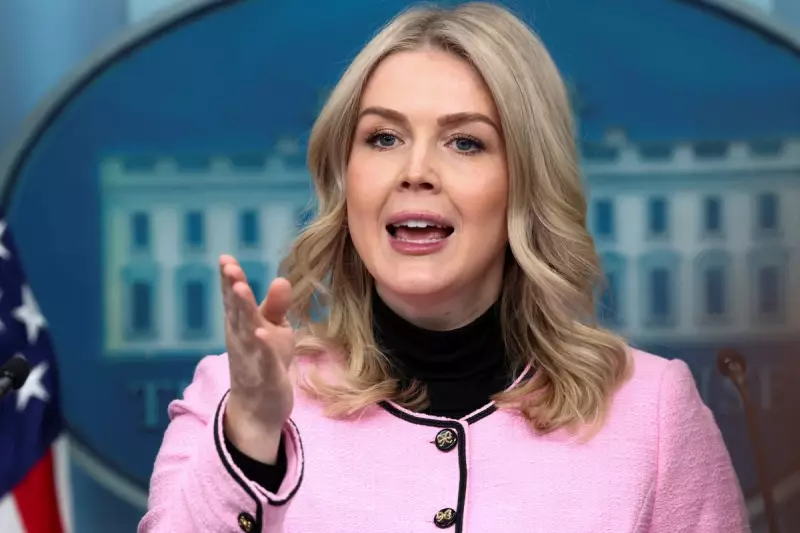
At a press briefing on Wednesday 7 January 2026, White House Press Secretary Karoline Leavitt stated that senior officials, including President Donald Trump, Secretary of State Marco Rubio, and the national security team, were in close coordination with interim authorities in Venezuela. She emphasised the U.S. was exercising "maximum leverage" over the government in Caracas.
"We're continuing to be in close coordination with the interim authorities, and their decisions are going to continue to be dictated by the United States of America," Leavitt told reporters. This claim marks a significant escalation in Washington's rhetoric regarding its role following Maduro's extraction.

Caracas Counterclaims: 'No Foreign Agent Governing'
These statements starkly oppose the position of Delcy Rodriguez, the former Venezuelan vice-president who was sworn in as acting president after Maduro's removal. During a televised address in Caracas on Tuesday 6 January, Rodriguez firmly maintained her government's autonomy.
"The government of Venezuela is in charge in our country, and no one else. There is no foreign agent governing Venezuela," Rodriguez declared. This rebuttal came a day after Trump, speaking from his Palm Beach, Florida home on Saturday, claimed the U.S. would "run" the oil-rich nation.
Political Calculations and Confused Allies
Trump's decision to authorise Maduro's seizure represented a dramatic reversal of his long-standing pledges to avoid foreign military interventions. Sources indicate he consented to Rodriguez assuming power—rather than installing opposition figure María Corina Machado or ally Edmundo González—due to her perceived support from Venezuela's military and her brother's role as president of the National Assembly.
Reports suggest Trump's sidelining of Machado was partly driven by pique over her acceptance of the Nobel Peace Prize last year. He also told reporters she lacked the necessary support and respect within Venezuela.
The president's ambiguous claim of running Venezuela, despite having no substantial military presence there and leaving much of the existing government structure intact, has sown confusion even among his allies. When asked by The Independent what Trump meant, Republican Senator Josh Hawley of Missouri said he had "no idea." However, Florida Senator Rick Scott, who represents a large Venezuelan diaspora, suggested Trump was aiming to ensure a "transition to a democracy."
Meanwhile, Nicolas Maduro pleaded not guilty in a New York court earlier this week, describing himself as a prisoner of war. The situation leaves a tense stalemate, with Washington asserting control and Caracas insisting on sovereignty, setting the stage for further geopolitical friction.