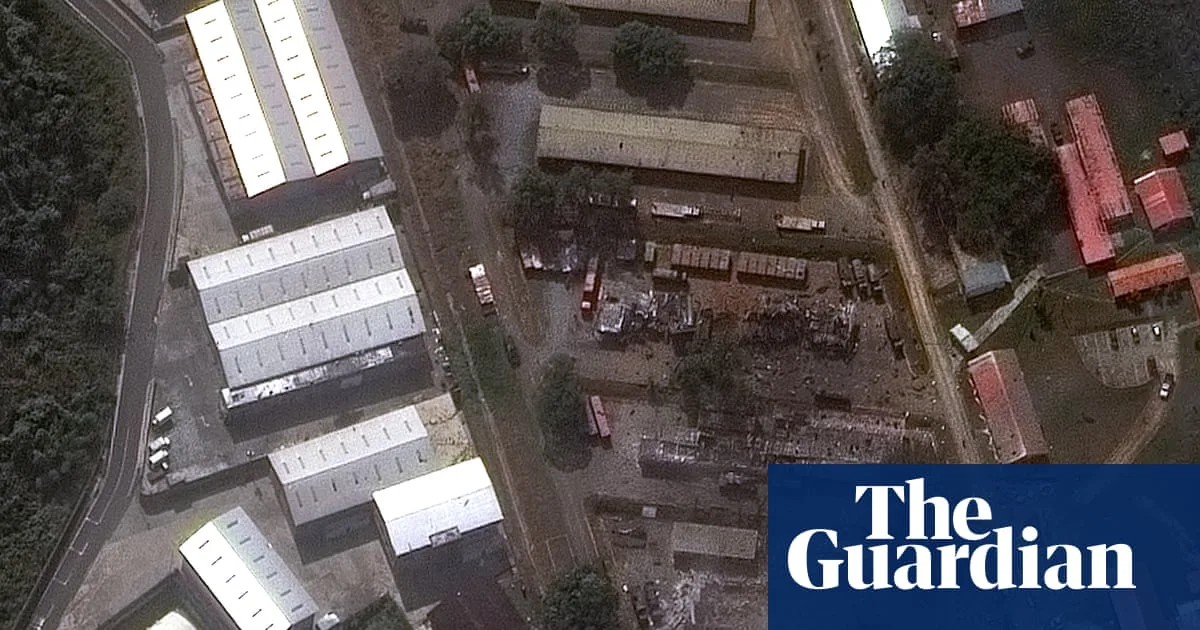
In a dramatic escalation of American foreign policy, United States military forces have seized control of Caracas and captured Venezuelan President Nicolas Maduro in a brutal night-time operation. The raid, executed by the elite Delta Force unit, marks a stark pivot for President Donald Trump and raises profound questions about the future of US interventionism.
The Path to a Daring Night Raid
The operation was the culmination of a strategy months in the making. Initial moves, such as the deployment of the USS Gerald R Ford aircraft carrier to the Caribbean in October, were followed by strikes on drug smuggling vessels and the seizure of oil tankers. These actions now appear as preludes to the main event.
Meanwhile, Delta Force operatives were in intensive training, rehearsing the assault on a building mocked up to resemble Maduro's Caracas compound. For context, the famed SEAL Team Six, which killed Osama Bin Laden in 2011, is thought to have trained for a similar duration of six to eight weeks.
Unpacking Trump's True Motives
President Trump, who has frequently boasted of resolving eight global conflicts, has shown no desire to revert to the 'world's policeman' role championed by neo-conservatives during the George W. Bush era. His withdrawal from Ukraine stands as clear evidence of this stance.
Instead, analysts point to Trump's adherence to the 'Monroe Doctrine', a foreign policy principle first declared in 1823 which asserts the United States' exclusive right to influence events in the Americas. Trump views the removal of the socialist Maduro regime as his nation's right to cleanse its Caribbean backyard.
While the administration has cited the flood of Venezuelan cocaine and narcotics onto American streets as justification, the President's actions tell a more complex story. In November, Trump pardoned former Honduran president Juan Orlando Hernandez, who was serving a 45-year sentence in a US federal jail for drug-running—the very crime for which Maduro now stands indicted.
The real driving force appears to be oil. Trump has openly spoken of making Venezuelans rich by taking over the country's oil production. This move achieves two strategic aims: it feeds specialised refineries in Louisiana that require Venezuela's heavy crude, and it severs a key energy supply line to China. As a nation poor in domestic energy reserves, China now faces the urgent task of finding an alternative source of cheap oil.
Consequences and the Risk of Quagmire
The timing is deeply symbolic, coming fifty years after Venezuela nationalised its oil industry—an act Trump has labelled 'theft'. For decades, Caracas has used its oil revenues to antagonise Washington, not least by supplying Communist Cuba.
Domestically, many Venezuelans, from refugees in Chile to those in the US, will celebrate the downfall of a leader they view as an election fraudster. However, the swift decapitation of the Maduro regime does not guarantee a transition to democracy. His henchmen remain in place and are determined to fight, raising the spectre of a Libya-style chaos, where the removal of a dictator led to an ungovernable wreck.
This presents a grave risk for President Trump. US involvement in foreign wars rarely begins with a long-term plan. More often, a minor operation unleashes unintended forces, sucking America back into a conflict against its will. Trump, elected on a platform of opposing extended overseas campaigns, may find himself presiding over exactly that.
The world now watches to see if this bold application of raw American power will bring stability or ignite a prolonged and bloody conflict in America's backyard.