A stark contradiction has emerged between Washington and Caracas over who is truly governing Venezuela, following the dramatic capture and extradition of former president Nicolas Maduro to the United States.
Conflicting Claims of Authority
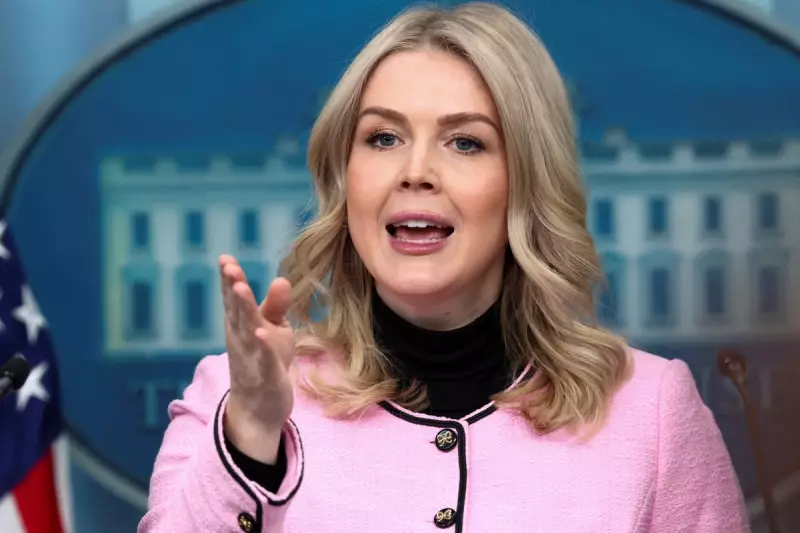
On Wednesday, 7 January 2026, White House Press Secretary Karoline Leavitt asserted that the United States continues to exercise "maximum leverage" over the Venezuelan government. She stated that senior officials, including President Donald Trump and Secretary of State Marco Rubio, are in close coordination with interim authorities in Caracas.
"We're continuing to be in close coordination with the interim authorities, and their decisions are going to continue to be dictated by the United States of America," Leavitt told reporters during a press briefing.

These claims directly challenge the position of Venezuela's new acting president, Delcy Rodriguez. The former vice president, who was sworn in after Maduro's removal by U.S. special forces over the weekend, maintained during a televised address on Tuesday that her government operates independently.
"The government of Venezuela is in charge in our country, and no one else. There is no foreign agent governing Venezuela," Rodriguez declared from Caracas.
Maduro's Ouster and Political Calculations
The crisis was triggered by a bold U.S. military operation that seized Nicolas Maduro from a safe house and transported him to a jail in New York City. Maduro, who pleaded not guilty in court earlier this week, described himself as a prisoner of war.
President Trump's decision to authorise the incursion marked a significant reversal from his long-standing promises to avoid foreign military engagements. Speaking from his Palm Beach home on Saturday, Trump claimed the U.S. would "run" the oil-rich South American nation.
However, rather than installing U.S.-favoured opposition figures like María Corina Machado or Edmundo González, Trump consented to Rodriguez assuming power. This choice is understood to be pragmatic, as Rodriguez, whose brother leads the Venezuelan National Assembly, is believed to command crucial support from the country's military establishment.
Reports suggest Trump's sidelining of Machado was partly driven by annoyance over her acceptance of the Nobel Peace Prize last year. He also publicly questioned her domestic support and respect within Venezuela.
Confusion Among Allies and Unclear Future
The ambiguous situation, where the U.S. claims control without a substantial military presence and with much of the former administration's structure intact, has sown confusion even among Trump's political allies.
When asked to clarify what Trump meant by the U.S. "running" Venezuela, Republican Senator Josh Hawley of Missouri admitted he had "no idea" what the president was referring to.
In contrast, Senator Rick Scott, who represents a significant Venezuelan diaspora community in South Florida, offered a more diplomatic interpretation. After speaking with María Corina Machado, he suggested Trump's ultimate goal was to ensure "a transition to a democracy."
The standoff sets the stage for a protracted diplomatic and political struggle, with the legitimacy of the Caracas government and the extent of American influence remaining fiercely contested.