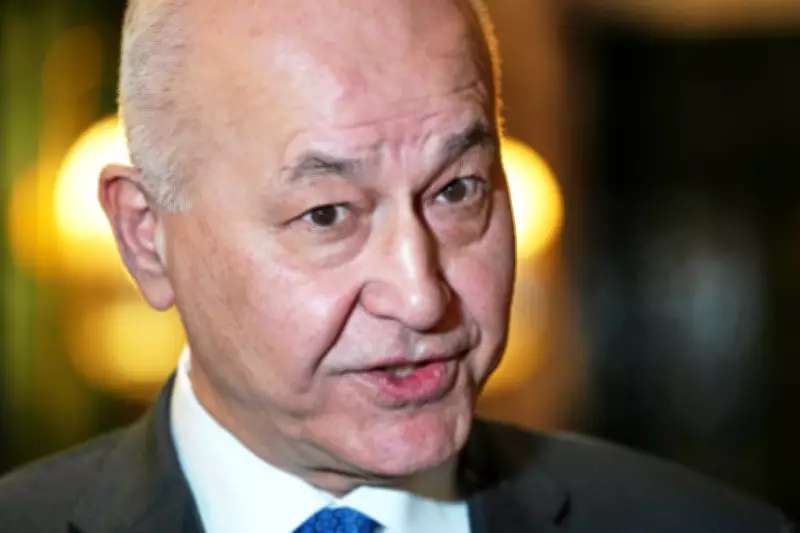
UN Refugee Chief Barham Salih Declares Diplomacy as Sole Viable Path to Peace in Ukraine
The newly appointed head of the United Nations refugee agency, Barham Salih, has emphatically stated that diplomacy remains the only realistic and viable path to achieving peace in Ukraine. This declaration comes at a critical juncture as humanitarian aid operations face severe shortages and overstretch due to multiple global crises.
Humanitarian Crisis Deepens Amid Funding Shortfalls
Speaking during his first visit to Ukraine since taking office in December, Salih highlighted the dire situation on the ground. The UNHCR has issued a $470 million appeal for Ukraine, yet only $150 million has been pledged so far. This significant shortfall reflects broader cuts across the humanitarian sector, severely hampering aid delivery.
"This tells you the gap between what is needed and what is available," Salih remarked in an interview with The Associated Press in Kyiv. "My appeal to the international community is, really, this is not the moment to walk away. These vulnerable populations need support."

Displacement Figures Paint a Grim Picture
The scale of displacement is staggering. According to Salih, there are currently 3.7 million Ukrainians displaced within their own country and nearly 6 million who have become refugees in Europe and elsewhere. The UN agency predicts that 10.8 million Ukrainians will require humanitarian assistance in 2026, with the most critical needs concentrated along the front lines in eastern and southern Ukraine, as well as the northern border region.
"Intensified hostilities produce fresh waves of displacement," Salih noted, adding that the agency's Ukraine appeal now competes with large-scale conflicts in Sudan and Gaza for limited resources.
Diplomatic Challenges and the Quest for Durable Peace
During his visit, Salih traveled to front-line cities including Kharkiv and Zaporizhzhia before meeting with President Volodymyr Zelenskyy. Their discussions centered on ongoing peace efforts and the future of UNHCR operations as Ukraine endures Russian attacks on its energy infrastructure during a harsh winter.
"You have to be hopeful, but I do understand the difficulties in the situation," Salih stated. "It's clear, of course, there are many, many impediments along the way, but at the end of the day, there is no military solution. There needs to be peace, a durable and just peace so that people can go back to their lives."
He emphasized the need to "redouble the effort to make sure that diplomacy has a chance and really bring about a durable and just peace to this war that has been going on for far too long."
Global Context and Prioritization Dilemmas
Salih's visit to Ukraine followed trips to Kenya, Chad, Turkey, and Jordan, where he engaged with refugees from various conflicts. Since his appointment, he has spent only one week in his Geneva office, underscoring the global nature of the displacement crisis.
The UNHCR chief pointed to drastic cuts in U.S. humanitarian funding under former President Donald Trump as having accelerated the erosion of global humanitarian infrastructure. Worldwide, there are now 117 million displaced people, including at least 42 million refugees, with two-thirds facing protracted displacement and remaining dependent on humanitarian assistance.
"It's really very difficult to prioritize given the scale of the problem," Salih admitted, referencing his recent visits to multiple crisis zones. "We need to be there to help people, but also I have to say we really need to look at durable solutions too. It's not a matter of sustaining dependency or humanitarian assistance."
Looking Toward Recovery and Sustainable Solutions
In his meeting with President Zelenskyy, Salih said they discussed the importance of focusing on the "recovery phase and sustainable solutions and self-reliance as we go forward." This forward-looking approach acknowledges that while immediate humanitarian needs must be addressed, long-term stability requires building resilience and reducing dependency on aid.

The UN refugee chief's message is clear: while the obstacles to peace in Ukraine are substantial and humanitarian resources are stretched thin across multiple global crises, diplomatic efforts must be intensified as the only viable path to ending the conflict and allowing millions of displaced Ukrainians to rebuild their lives.