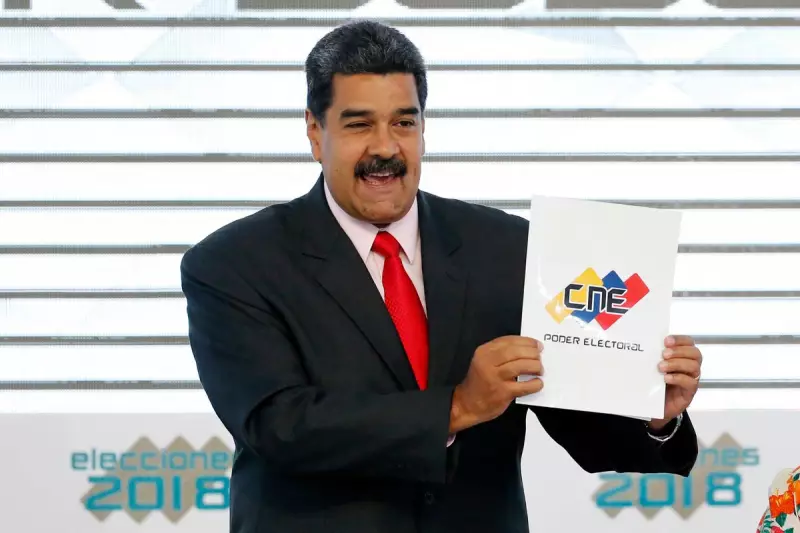
The United Nations Security Council convened for an urgent session on Monday, 5 January 2026, following a dramatic weekend raid by United States forces in Venezuela. The operation resulted in the capture of the country's leader, Nicolás Maduro, sparking a fierce international debate over sovereignty and the rule of law.
Global Outcry at the United Nations
In a striking display of unity, both longstanding allies and adversaries of the United States used the emergency meeting to condemn President Donald Trump's decision. The action, which saw Maduro and his wife seized from a military base residence early on Saturday, 3 January, and transported to a US warship, was labelled a potential violation of international statutes.
UN Secretary-General Antonio Guterres set the tone, stating he was “deeply concerned that rules of international law have not been respected.” He warned the “grave” US intervention could establish a dangerous precedent for future relations between sovereign states.

Allies and Adversaries Unite in Criticism
The criticism was notably bipartisan. Denmark, a fellow NATO member, voiced strong objections, linking the Venezuela action to Trump's renewed threats against its territory of Greenland. Ambassador Christina Markus Lassen asserted that the “inviolability of borders is not up for negotiation.”
Colombia’s Ambassador, Leonor Zalabata, called the raid a throwback to “the worst interference in our area in the past,” arguing that democracy cannot be promoted through coercion. The most scathing rebuke came from Russia's Vasily Nebenzya, who accused the US of turning “back to the era of lawlessness” and appointing itself as a supreme global judge.
US Defence and Broader Ambitions
Facing the barrage of criticism, US envoy Mike Waltz, formerly Trump's national security adviser, defended the mission. He characterised it as a “surgical law enforcement operation” justified by narco-terrorism charges. Waltz challenged the Council's stance, questioning its legitimacy if it equated Maduro with a democratically elected leader.
The raid followed months of US military buildup off Venezuela's coast and strikes on alleged drug-running vessels. President Trump has since indicated intentions to administer Venezuela temporarily and exploit its vast oil reserves, though Secretary of State Marco Rubio clarified the US would use existing oil sanctions as leverage to force policy changes.
Nicolás Maduro appeared in a Manhattan federal court on Monday to face charges detailed in a Justice Department indictment, marking a new chapter in the escalating geopolitical confrontation.