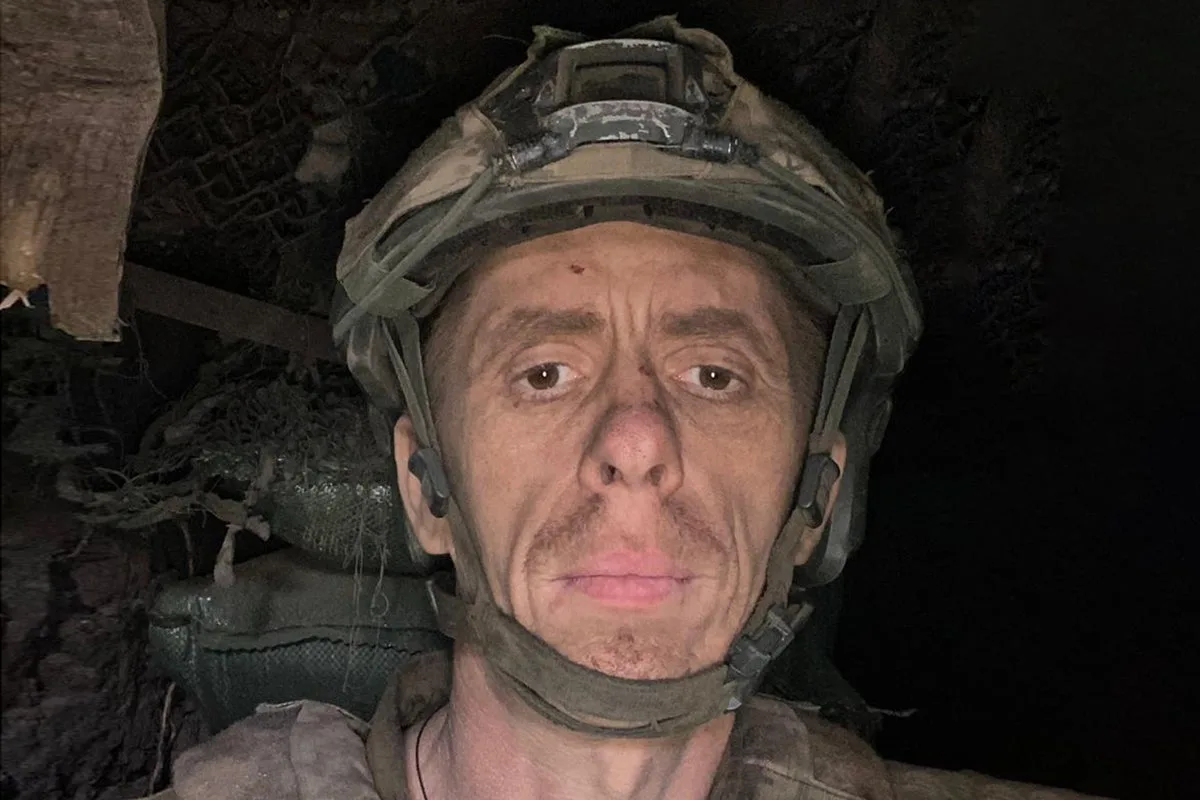
Ukrainian Sergeant's 471-Day Underground Ordeal on the Front Line
In an astonishing display of human resilience, a Ukrainian sergeant has revealed how he survived 471 consecutive days living in a cramped underground bunker on the fiercely contested eastern front. Serhiy Tyshchenko, a 46-year-old former veterinarian, endured more than sixteen months of near-suffocation, extreme hunger, and relentless Russian bombardment while defending a critical position near the city of Bakhmut.
A World Transformed Above Ground
When Tyshchenko first entered the tiny mud bunker in July 2023, Joe Biden occupied the White House. By the time he emerged in October 2025, a new American administration had taken power and had largely aligned itself with Vladimir Putin's Russia. Furthermore, Donald Trump was actively pressuring Ukraine to surrender the very territory Tyshchenko had defended at such tremendous personal cost.
The sergeant missed two birthdays and all significant milestones in the lives of his five children during his prolonged underground imprisonment. His extraordinary feat represents one of the most extreme cases of endurance in modern warfare, where survival itself has become the primary victory.
Life in the Underground Tomb
The bunker, dug directly beneath an asphalt road, measured only the width of the roadway itself. Tyshchenko and his diminishing team constantly expanded it lengthwise, creating what amounted to an underground tomb where they conducted observation duties and mounted their defense.
"Everything is underground. Everything was dug out," Tyshchenko told The Independent during an interview in Sloviansk. "There was a trench at the entrance, then a section covered with logs and camouflaged with dirt and sand."
The team faced multiple challenges:
- Constant drone attacks day and night
- Frequent mud collapses within the bunker
- Extreme oxygen deprivation after sealing their observation window
- Dangerous resupply missions involving bomber drones
- Living alongside unburied Russian corpses near the entrance
The Grinding Reality of Modern Combat
Tyshchenko's experience illustrates how drone warfare has transformed frontline combat. Traditional military concepts like Forward Lines of Enemy Troops have become obsolete in a conflict where soldiers survive by hiding from hunter-killer drones in a shattered landscape.
The sergeant's ordeal began dramatically when he and a comrade were chased by a Russian drone while collecting rations. They barely escaped to the bunker, but worse was to come. In his first week, a Russian assault team attacked, killing three of his comrades. Tyshchenko himself survived only because the enemy soldier's weapon jammed as he rushed him unarmed.
Months of Deprivation and Determination
As weeks turned into months, the team dwindled from five to four soldiers. They carved coffin-sized beds beneath the road's tarmac and faced increasingly dire conditions:
- Water rationing reduced to just 50cl every four hours
- Complete darkness making day and night indistinguishable
- Dangerous missions every two weeks to charge batteries
- The necessity of digging an underground well to prevent death by thirst
Communication with loved ones occurred through flash drives swapped during supply runs, with messages sent via Starlink connections. "The support from the children helped; it gave me strength," Tyshchenko recalled. "I thought if I die, I don't want to leave them alone."
The Eventual Escape and Aftermath
After his family lobbied for his extraction and a change in command attitude, Tyshchenko finally received orders to leave. His first escape attempt failed under Russian drone assaults, but the three-week delay allowed him to properly train his replacements.
His final 3km dash to freedom occurred during bad weather that grounded Russian drones. His body, severely atrophied from months of confinement and oxygen deprivation, struggled with the clean air and movement.
Now awarded Ukraine's highest gallantry honor, Hero of Ukraine, Tyshchenko plans to open a veterinary clinic when the war concludes. Two of his comrades escaped with him, but one soldier, Kruger, remains in the bunker, continuing the defense on the front line where Tyshchenko endured his 471-day underground nightmare.






