Inside Ukraine's Kill Zone: A Frontline Report from Zaporizhzhia
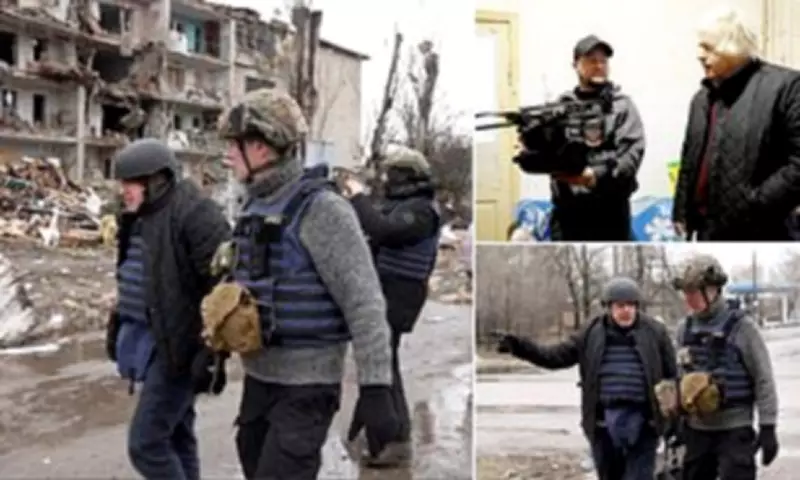
"It's time to go," declares Makar, the deputy commander of Ukraine's 65th Battalion, as he re-enters the grocery store. The enticing aroma of roast chicken fills the air, but when this battle-hardened Ukrainian soldier says move, you move without argument. We're in a southern Ukrainian village east of Zaporizhzhia, where daily existence has become perilously dangerous.
A Village Under Siege
The café opposite was destroyed two weeks ago. Flats next door lie shattered by recent explosions. Down the road, what was once a saloon car now resembles a twisted, scorched metal skeleton - apparently transformed just days earlier. Driving through Komyshuvakha has become a deadly gamble, with most motorists ignoring crater-like potholes and accelerating through.
"The Russians desperately want this village," explains our guide, "and they're sending drone after drone in their barbaric attempt to intimidate the remaining inhabitants." This explains why finding an open shop feels so remarkable, and why we've stopped - to understand life under constant Russian attack.

The Constant Drone Threat
We park on the sludgy black kerb, don helmets, and prepare to cross the road. "Be careful," warns an elderly woman, one of few visible residents. The shop proves surprisingly cheerful and warm, with appetising goods displayed - clearly serving as a final pit stop for soldiers heading to the front.
Before we can place orders, Makar receives a radio warning. Nowhere here is safe. We scramble back across the road as our Ukrainian driver accelerates northward. Above us stretches strange netting covering the road like an aviary - originally designed to protect cucumbers from birds, now repurposed to deter drones.
The winter has damaged this green mesh, creating holes large enough for Russian drone operators to exploit. Welcome to what soldiers call the Kill Zone, and welcome back to the war the West risks forgetting.
The Moral Clarity of Ukraine's Struggle
This conflict presents achingly obvious rights and wrongs - an innocent democratic European population fighting an autocratic regime. This isn't a war where Western powers use Tomahawks against defenseless children, but rather one where they refuse to allow Ukrainian children protection through such means.
Ukraine's four-year freedom struggle enjoys theoretical Western support, yet no Western leader currently commits sufficiently to achieve victory. I've come to Ukraine's frontline as Putin's intelligence network allegedly targets American ships in the Persian Gulf, and Iranian-designed Russian drones explode in Middle Eastern capitals.
"We urgently need to recognize these as two fronts of the same war," observes a military analyst. "Putin and Iran's Islamic Revolutionary Guard Corps represent two cheeks of the same arse, bankrolled by China."
Zaporizhzhia: Putin's Desired Prize
Putin desperately wants Zaporizhzhia - an important regional capital on the Dnieper River featuring a huge, currently disabled hydro-electric dam. Driving its broad art deco boulevards reveals tremendous potential awaiting reactivation. Chevrolet operated a factory here in the 1930s, while the dam shares engineering heritage with America's Hoover Dam.
One hopes this US-Ukrainian partnership will renew, explaining Putin's hunger to reclaim and rule the city from Moscow. Our day begins at 3:50 AM when explosions wake us - Putin's Shahed-style drones have killed one civilian and injured eight more by crashing into nearby flats and a supermarket.
By breakfast, Ukrainians demonstrate remarkable resilience, already bulldozing rubble and sweeping glass. We meet Makar for a high-speed tour of the Zaporizhzhia front, experiencing warfare where death buzzes from skies.
Drone Warfare Technology
Russian forces sit 10-15 kilometers southeast, but drones dominate this battlefield. Shahed drones carry heavy payloads with moped engines - modern doodlebugs - while smaller, innocuous-looking drones prove equally lethal. All know exactly where you are.

As Makar drives rally-style around potholes, he relies on Dasha, the 24-year-old battalion communications officer. She monitors a Geiger-counter-like device called Chuika (Ukrainian for "intuition"), tuning into drone radio frequencies. The green screen reveals drone presence and even shows what Russian operators see.
If she spots our vehicle, it's likely too late - time to leap into ditches and hug trees, hoping drone operators mistake cowering forms for foliage. We maintain vigilant watch on both sky and Chuika screen throughout our journey.
Ukrainian Resilience and Innovation
We visit a seemingly deserted village where a battalion priest and ordinand defend both country and religious culture Putin would exterminate. In a makeshift shrine with glimmering gold icons hastily relocated from another frontline house, we light candles and pray silently for peace and freedom.
When asked what equipment his battalion needs most, the priest responds loudly without apparent irony: "Nuclear weapons." This perhaps illustrates the spirit difference between Ukrainian orthodoxy under current circumstances and more moderate Western religious institutions.
We proceed to another ramshackle settlement where two men sit by a wood-burning stove, wrapping cheese and sausage in plastic bin-liner material for drone delivery to forward comrades. Road resupply has become impossible. Walls already show cracks from nearby Shahed explosions, and occupants know they cannot remain long once Russians identify this as the battalion food factory.
Drone Manufacturing and Ukrainian Determination
In a semi-abandoned village, Vassily - a 51-year-old former cement manufacturer - fills lightweight 3D-printed casings with plastic explosive for Ukrainian drone deployment. "Don't drop it," he warns unnecessarily when handing me a bomblet. His needs? More explosive and more 3D printers.
At a drone factory and repair shop, we meet Konstantinos (call sign Kokos), Ukraine's equivalent of Douglas Bader. This spectacularly skilled operator has killed 469 Russians using spider-like drones to drop deadly packages precisely. He shows shocking mobile footage of when a tank round sliced his leg horribly - only comrades prevented battlefield amputation.
Now walking with a slight limp, Kokos embodies Ukrainian determination. If such men continue fighting with ruthless effectiveness, nothing will break Ukrainian spirit. Diplomats thinking Ukrainians will willingly surrender territory, as Putin absurdly demands, misunderstand completely.
The Human Cost and Western Failure
Young Dasha, the press officer, hails from Kramatorsk in Donetsk region - territory Putin allegedly demands for ceasefire consideration. "How can we surrender Kramatorsk or Sloviansk?" she scorns. "I joined the army to protect Kramatorsk."
She describes contemptuously how Russian-occupied cities become slums without industry, jobs, or running water. Nothing will induce her to accommodate Putin. Western leaders should hear her perspective.
Ukrainians show exhaustion after four years of hell, many bearing visible shrapnel scars from previous injuries. Yet Putin's progress remains glacial and exorbitantly costly. Ukrainian determination manifests everywhere, particularly in massive new defenses - deep, multilayered trenches and shiny barbed wire coils snaking across black earth for miles.
Every Ukrainian general consulted - a realistic bunch - believes Putin will fail to capture Zaporizhzhia due to prohibitive manpower costs. The real question isn't whether Putin can take all Ukraine (he cannot), but whether the West helps sufficiently to push him back to negotiations.
Inadequate Western Support
Based on frontline observations, Western support proves woefully inadequate. Ukrainians lack long-range missiles to destroy drone factories or Russian bomber bases. Blaming Trump and US Tomahawk refusal proves insufficient - the UK and Germany possess their own long-range missiles.
Europeans cannot blame America while collectively sitting on hundreds of billions in frozen Putin assets that should fund Ukrainian assistance. Outside Kyiv, I visit anti-aircraft batteries manned by volunteers - the capital's last defense line.
Unit leader Yuri, a civilian ping pong coach and referee, directs friends nightly as they aim guns skyward across snowy fields where Shaheds emerge like game birds. They achieve remarkable success, downing approximately 50% of drones - meaning half continue to attack energy networks and kill or maim innocents.
Antiquated Equipment and Shameful Discrepancies
I marvel at their antiquated weapons: .50 caliber Brownings designed in 1917. When Brownings fail and drones enter range, they use AK-47s, including one manufactured in 1964. We ask Ukrainians to defend families with guns as old as many observers.
Compare this equipment with anti-aircraft and anti-drone technology rushed to the Gulf - the discrepancy proves shameful. Ukrainians fight the same war against the same drones from the same tyrannical alliance.
For four years, the West has psalmed platitudes about shared struggle. Based on frontline evidence, we fail risibly to honor pledges or provide necessary help. Ukrainians can and will win, but Western delay and timidity cause unimaginable human suffering.
If Ukrainians truly fight for all of us, why does the West continue short-changing them?