Four Years of Conflict: Ukraine War Experts Assess the Stalemate
Thursday 26 February 2026 marks four years since Russian President Vladimir Putin announced the commencement of a full-scale invasion of Ukraine. Within minutes of that declaration, explosions reverberated through major Ukrainian cities as Russian forces surged across the border, initiating a conflict that has reshaped global geopolitics.
Russian troops initially made rapid advances, capturing strategic territories near the capital Kyiv. However, the offensive momentum soon faltered dramatically. By December 2022, Russia had been compelled to withdraw its forces and consolidate positions in eastern Ukraine, where the war has persisted in a grinding stalemate ever since.
Expert Perspectives on the War's Trajectory
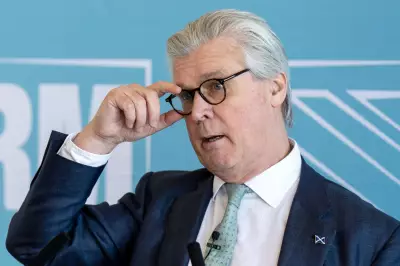
We interviewed four distinguished contributors to The Conversation UK's Ukraine coverage: Stefan Wolff, Professor of International Security at the University of Birmingham; Tetyana Malyarenko, Professor of International Security at the National University Odesa Law Academy; Scott Lucas, Professor of International Politics at University College Dublin; and Mark Webber, Professor of International Politics at the University of Birmingham. They provided insights into the conflict's most surprising developments and its probable future direction.

A Traditional War of Attrition with Modern Drone Warfare
Stefan Wolff and Tetyana Malyarenko identify Moscow's initial decision to launch a large-scale ground invasion as the most surprising development. Despite many analysts predicting swift Ukrainian defeat, this outcome always appeared improbable from Ukraine's perspective.
The remarkable mobilization of Ukrainian society during the war's early stages demonstrated that the Kremlin's objectives—ousting President Volodymyr Zelensky alongside "demilitarizing" and "denazifying" Ukraine—were fundamentally unachievable through rapid military means.
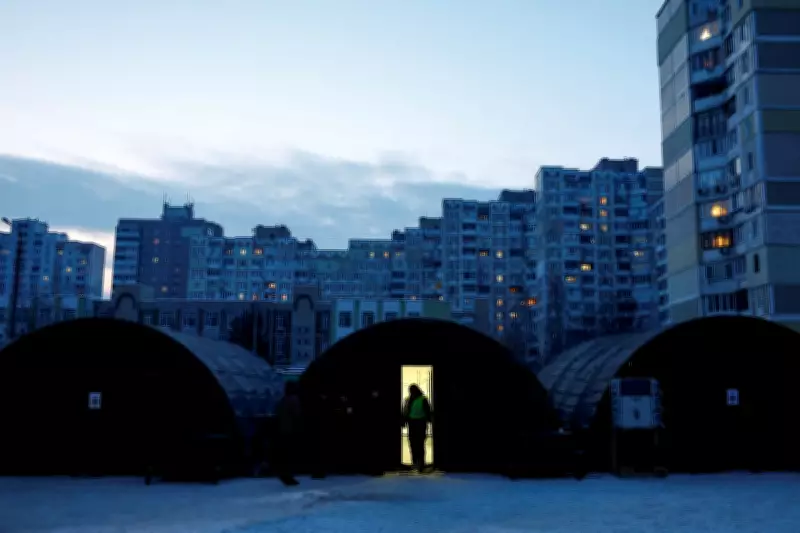
Russia's transition to a war economy and traditional attrition warfare proved far less surprising. This shift became inevitable once Moscow's fantasy of a victory parade in Kyiv within weeks evaporated. Combat methodologies have evolved significantly over four years, particularly regarding drone integration. Russia has weaponized drone technology to target Ukraine's entire critical infrastructure spectrum, extending beyond purely military objectives.
Nevertheless, the foundational principles of Russian and Soviet military doctrine—employing mass armies and tactics of mass destruction—have remained fundamentally unchanged. Looking forward, both combatants possess sufficient resources and external backing to sustain the current stalemate. They will continue fighting in hopes of exhausting their opponent, though neither side appears likely to reach that breaking point imminently.
Until exhaustion occurs, political, economic and social stagnation will continue extracting heavy tolls from citizens in both Russia and Ukraine.
Putin's Strategic Reliance on Political Shifts
Scott Lucas recalls that on the invasion's first day, most analysts anticipated Kyiv's fall within weeks. Four years later, Ukraine controls more territory than it did in June 2022—a remarkable achievement against the world's second-most powerful military, Russian disinformation campaigns, political warfare dividing Europe, and abandonment by the Trump administration.
Putin's refusal to abandon his "Greater Russia" vision and the Trump camp's willingness to sacrifice Ukrainian and European security were predictable developments. The Russian leader explicitly framed this conflict as his legacy project in a 2021 essay. Consequently, any rhetoric about imminent peace—particularly from Trump envoys Steve Witkoff and Jared Kushner—represents either cynical declarations or wishful thinking.
The Kremlin cannot accept outcomes falling short of seizing the entire strategic Donetsk region, controlling Ukraine without effective security guarantees, and toppling the Zelensky government. Accepting less would mean acknowledging the catastrophic failure of a project that has already cost approximately 1.3 million casualties.

Putin's hopes now hinge on Trump's envoys delivering what battlefield efforts cannot achieve. The Kremlin dangles joint economic projects before the US government, appealing to the Trump administration's transactional worldview over alliance-based relationships.
Nevertheless, the war's fundamental trajectory shows little sign of imminent change. Negotiated settlement remains nearly impossible due to Moscow's insistence on Ukrainian capitulation as victory. Russia has achieved only marginal territorial advances, while Zelensky maintains his stance on sovereignty, territory and security.
Despite severe damage to Ukraine's energy infrastructure, most citizens continue supporting resistance efforts. The European Union, though hampered by pro-Kremlin figures like Hungary's Viktor Orbán and Slovakia's Robert Fico, is strengthening support for Kyiv and partially compensating for diminished US backing.
Russia faces tightening economic constraints, cutting social spending and raising taxes to sustain military operations. However, without widespread domestic pressure curbing Kremlin ambitions, the invasion will continue its grinding progression.
Potential Pathways to Break the Deadlock
Mark Webber identifies Ukrainian resilience and adaptability as the conflict's most surprising element. Most observers, including himself, initially expected Ukraine to buckle under Russian assault.
While NATO-led training programs have undoubtedly assisted Ukrainian defenders, national identity and determination have proven equally vital. Putin's 2022 claims about genocide against Russian speakers and neo-Nazi governance in Ukraine were both spurious and counterproductive, strengthening Ukrainian resolve.
Russia's war methods followed grimly predictable patterns. Waves of infantry assaults designed to overwhelm defenses through sheer volume mirror strategies employed in Chechnya, Georgia and Syria. This approach has resulted in the current frozen frontline stalemate.
Two developments could potentially alter this deadlock. First, China could change its approach. Beijing has effectively subsidized Russia's war effort through technology transfers and energy purchases. Should China restrict technology provisions and pressure Moscow toward negotiation flexibility, dynamics might shift. Currently, however, China shows no interest in abandoning Russia, viewing their alliance as crucial for balancing US and NATO influence globally.
Second, a massive Ukrainian armament effort could break the impasse. This would require Germany, France and Britain to significantly boost already substantial arms provisions while removing usage constraints rooted in escalation fears. This scenario also appears unlikely, as these nations lack domestic political imperatives to support Ukraine toward decisive victory. The United States, cautious even under President Joe Biden, has now largely withdrawn from the conflict arena.
This analysis synthesizes perspectives from four leading security experts interviewed four years after Russia's full-scale invasion of Ukraine. Their collective assessment points toward prolonged conflict with no quick resolution in sight.