Ukraine Army Chief Hails 'Enormous' Impact of Starlink Disconnection from Russian Forces
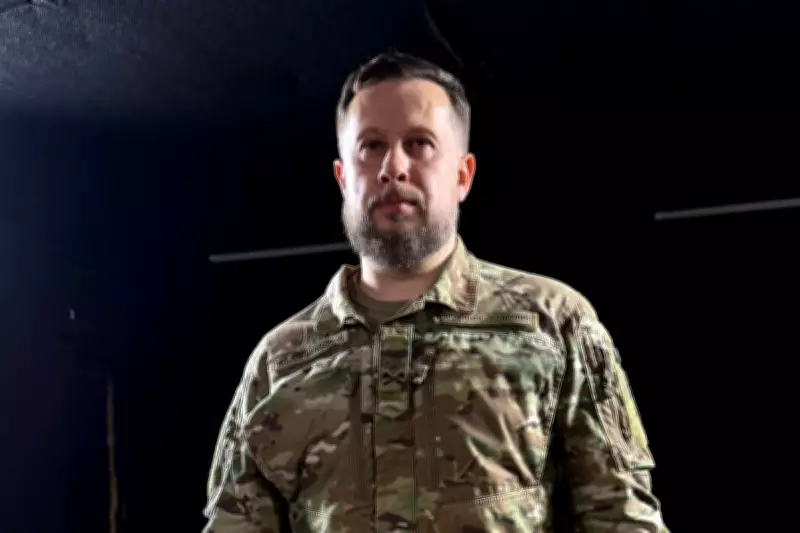
Senior Ukrainian military commanders have revealed that Russia's drone campaign has suffered a severe blow, with effectiveness declining by up to forty percent, following Elon Musk's decision to block Russian access to the Starlink satellite network. This strategic move has enabled Ukrainian forces to reclaim territory in key eastern regions, according to Brigadier General Andrii Biletski, commander of Ukraine's Third Corps.
In an exclusive interview with The Independent, Biletski described the impact as "enormous", stating that the disconnection has dramatically shifted the balance on the battlefield. "After the blocking of Starlink for the Russians, the level of their efficiency compared to ours has sharply decreased because Starlink is practically irreplaceable as a combat communication system," he explained. "Starlink can only be replaced with another Starlink. Therefore, the impact of Starlink on the current course of the war is enormous."
Significant Deterioration in Russian Strikes
Biletski, who commands approximately twelve percent of the 1,300-kilometer front line, reported that over the past two weeks, there has been a significant deterioration in the effectiveness of Russian strikes, estimating the reduction at between twenty and forty percent. His forces, concentrated in some of the most violent sectors where drone warfare has transformed conflict into a fifteen-kilometer-wide "kill zone", have recaptured territory around Pokrovsk, north of Lyman, and south near Huleiapolie since the Starlink access was severed.

The small, laptop-sized Starlink units have become the backbone of communications for both sides in the conflict, integrated into larger drones, Russian Shahed missiles, and all ground battle communications. While SpaceX initially provided free terminals to Ukraine for defense against the Russian invasion, Russia quickly adopted the technology privately. Ukraine's defense ministry now believes Moscow has lost nearly every terminal it was using in its operations.
Long-Term Strategic Blow to Russian Capabilities
Biletski believes the damage to Russia's military capability may extend for years. "It's a great opportunity for Ukraine, and I think - this is a subjective opinion - that within a month or two, they will partially regain their efficiency with the help of other means, Russian satellite communications, and so on," he noted. "But they will never be able to fully restore the level of efficiency they had with Starlink in the foreseeable future. I don't think we're even talking about three or five years."
He emphasized that this single action represents a significant strategic blow to Russian forces, highlighting the vulnerability of modern armies to individual technological systems. "Americans have an absolute advantage over any army in the world right now—and that's Starlink," Biletski asserted, warning that if Ukraine also lost its Starlink connection, the balance would revert to that of three weeks ago.
Drone Warfare Evolution and NATO Implications
The conflict has rapidly evolved into a drone-dominated war, where traditional armored assaults have become obsolete. Ukrainian drone pilots, who recently participated in NATO's Operation Hedgehog exercise, demonstrated the devastating effectiveness of unmanned systems, destroying seventeen armored vehicles and damaging thirty others with a small unit of ten operators.
Mykola Holovatiuk, one of the pilots, expressed surprise that NATO forces appeared unprepared for drone-centric warfare. "Massive armoured vehicle assaults do not work any more," he stated. "Because now there is a kill zone that is growing. And the quantity of the different kinds of UAVs in the sky - half of them just working to find the target - half of them going after the target - means there is a very fast reaction time between being seen, and being destroyed."

Senior NATO officers acknowledged the exercise was designed to accelerate adaptation to drone warfare, but the rapid evolution of technology on the Ukrainian battlefield pressures NATO defense doctrine. Roles once filled by helicopters and fighter bombers are increasingly being assumed by cheaper, more adaptable drones.
Frontline Innovations and Future Challenges
Near the front lines, Ukrainian drone operators work in makeshift workshops, constantly modifying and repairing equipment. Eugene, a premier UAV engineer traded between units "like a football player", emphasized the necessity of proximity to combat zones for rapid innovation. "We don't have a lot of drones, we have to quickly repair them, adopt, modify, and we have to stay in constant communication with units that do all the fighting," he explained.
Ukraine is already developing backup communication systems and alternative satellite intelligence feeds with European allies, amid concerns that U.S. support could waver. The dynamic nature of the conflict means technology shifts monthly, with both sides continuously developing new tactics and countermeasures in a deadly cycle of innovation.
As the war enters another phase with seasonal changes bringing new difficulties, the Starlink disconnection stands as a pivotal moment, demonstrating how individual technological decisions can reshape battlefield dynamics in modern warfare.