Ukraine Frontline Mapped: Kyiv Counteroffensive Regains Territory as Peace Talks Resume
Diplomats from Russia and Ukraine are convening for US-brokered peace talks in Geneva this week, though fundamental disagreements over territory continue to pose significant obstacles to any potential settlement. The discussions come as the fourth anniversary of Vladimir Putin's invasion of Ukraine rapidly approaches, with both sides preparing for difficult negotiations.
Recent Military Gains Bolster Kyiv's Position
Kyiv enters these crucial talks with renewed confidence following substantial territorial gains on the battlefield. According to analysis of data from the US-based Institute for the Study of War, Ukrainian forces advanced approximately 201 square kilometers between Wednesday and Sunday alone. This impressive push effectively negates Russia's territorial acquisitions throughout the entire month of December, marking a significant reversal in momentum.
Ukrainian President Volodymyr Zelensky has recently expressed frustration that his country is "too often" pressured to make concessions in negotiations. These recent military successes may provide Kyiv with additional leverage as diplomats gather in Switzerland.

Frontline Evolution and Strategic Assessment
Ahead of the war's fourth anniversary on February 24, Russian advances continue at what analysts describe as a "footpace" and "do not portend the collapse of the Ukrainian lines," according to the latest assessment from the Institute for the Study of War. While Russian forces claimed 141 square kilometers in the week beginning January 25, their gains diminished to just 74 square kilometers in the week starting February 8.
Ukrainian liberation efforts may not match the momentum of the summer 2023 counteroffensive, but steady progress through November and December has substantially reduced overall Russian gains in recent weeks. Military analyst Emil Kastehelmi of the Finland-based Black Bird Group intelligence collective notes that while the latest figures may not represent a strategic shift, they could offer valuable political relief during negotiations.
"The Ukrainians have managed to liberate various villages in the Zaporizhzhia and Dnipropetrovsk oblasts," Kastehelmi explained. "This section of the front is of less importance when we consider operational or strategic priorities, but it demonstrates that Ukrainian forces have taken the initiative locally."
Detailed Territorial Changes
According to Ukrainian military blogger Konstantin Mashovets, Ukrainian forces by Sunday had achieved several notable successes:
- Pushed Russian forces from the villages of Ternuvate and Kosivtseve
- Successfully crossed the Haichur River
- Liberated Dobropillya
- Cut through Russian lines to the east
Russian troops managed some advances in directions including Novopokrovka-Mala Tokmachka, Kamyanske-Lukyanivske, Plavnia-Primorske and Stepove-Pavlovka. However, Mashovets reported that in recent days, "the pace of advance of the advanced units and divisions of the Russian troops in these directions first dropped significantly, and then almost completely 'reduced to zero.'"
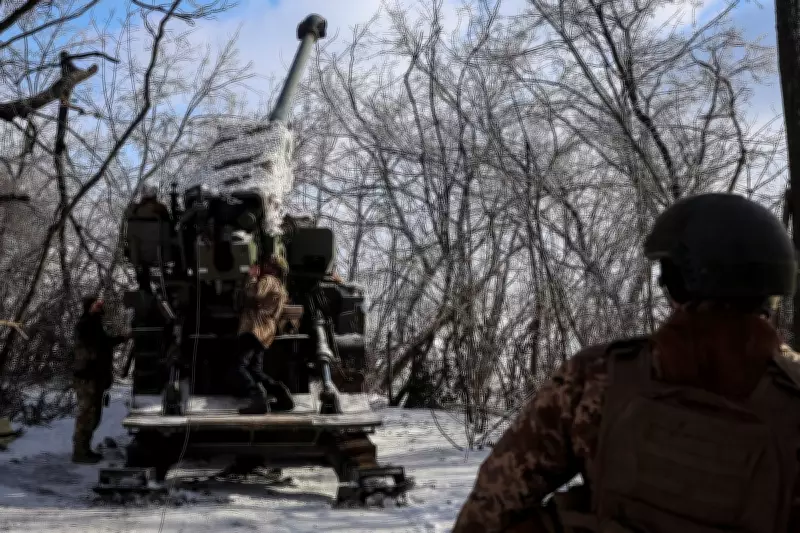
Ukrainian troops in certain areas of Donetsk mounted successful counterattacks that not only slowed the enemy's offensive but forced Russian commanders to withdraw advanced units.
Technological Factors and Communication Disruption
Successful Ukrainian counterattacks were likely aided by a recent disruption to Russian forces' access to Starlink satellite communications. Russian military units have heavily relied on Elon Musk's technology as a crucial communications line. Ukraine confirmed last week that terminals used by Russian soldiers were deactivated following discussions between Kyiv's defence minister and Musk, whose company SpaceX operates the satellite network.
Geneva Talks: Territory at the Forefront
Land ownership will undoubtedly dominate discussions this week as Russian and Ukrainian delegations meet in Switzerland to negotiate elusive peace terms. Kremlin spokesman Dmitry Peskov informed reporters on Monday that the Russian team, led by presidential aide Vladimir Medinsky, would address "main issues," which he defined as "both the territories and everything else related to the demands we have put forward."

The talks have moved to Geneva after Abu Dhabi hosted two previous rounds that both sides described as constructive but failed to produce major breakthroughs. Russia continues to demand Ukrainian-held territory in the Donbas region, while Ukraine maintains it cannot surrender sovereign land.
Political Implications of Military Success
Ukraine's battlefield achievements may not constitute a strategic turning point, but they could provide Kyiv with a political advantage entering negotiations. Kastehelmi observed: "It's possible that the counterattacks have a political dimension. Ukrainian representatives can now approach talks presenting themselves as an army that has not been defeated. They can demonstrate a fighting force capable of conducting relatively swift counterattacks compared to the general pace of this conflict."
He added: "Ukrainian negotiators can highlight their liberation of multiple villages within a short timeframe and present themselves as a stronger opponent than the Russian narrative typically portrays. This psychological and political dimension could prove significant in Geneva."
Meanwhile, Russia's primary military effort continues to concentrate on eastern Ukraine, where a formidable "fortress belt" consisting of trenches, bunkers, minefields and barbed wire has slowed advances to a painstaking crawl. As both sides prepare for difficult discussions, the evolving battlefield situation adds complexity to diplomatic efforts aimed at ending Europe's largest armed conflict in decades.