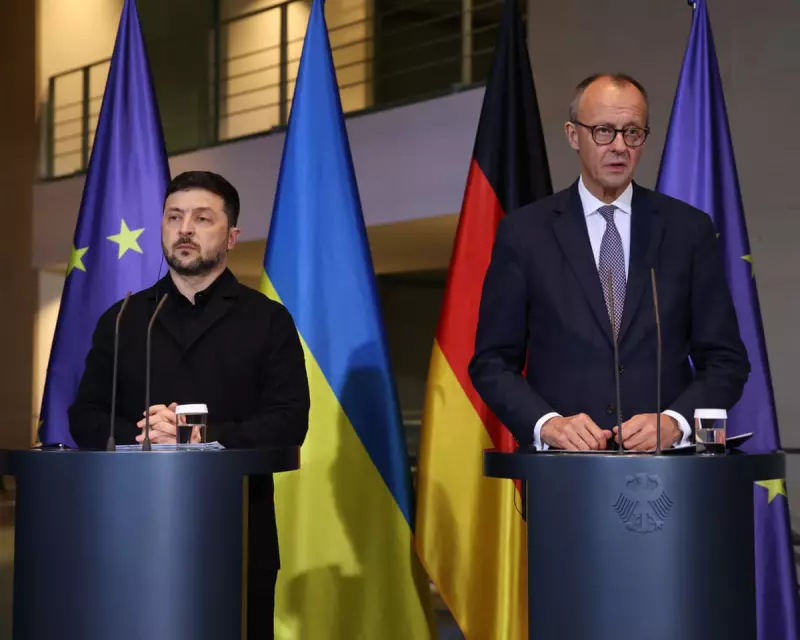
High-level discussions aimed at forging a potential peace deal for Ukraine concluded in Berlin this week, with US negotiators engaging Ukrainian and European leaders. The talks centred on the security assurances the West could provide to Kyiv as part of a future settlement with Russia.
Security Guarances on the Table
The outcome of the Berlin meeting was crystallised in a joint statement signed by leaders from the UK, France, Germany, Italy and several other European nations. The document outlined a series of proposed security guarantees designed to protect Ukraine from future aggression. These included a European-led multinational force to bolster Ukraine's army and defend its airspace and seas.
Furthermore, the proposal contained a legally binding commitment from the UK and other European countries to take measures to restore peace and security should Ukraine face another armed attack. The statement also reaffirmed European support for Ukraine's accession to the European Union and promised sustained financial support to help Ukraine build its armed forces.
Notably, the plan suggests maintaining Ukraine's military at a peacetime level of 800,000 troops, a figure far higher than what Russia has previously demanded. A US-led ceasefire monitoring mechanism was also proposed to provide early warning of any future assault.
A Positive Step, But Major Hurdles Remain
European leaders reacted with unusual optimism to the framework. The German Chancellor, Friedrich Merz, stated that "we now have the chance for a real peace process." The presence of European troops from NATO countries on the ground in Ukraine is seen as a critical deterrent, acting as the next best option to a direct US troop deployment.
However, significant obstacles stand in the way of a final agreement. This round of diplomacy is essentially a shuttle process, with the US negotiating team, led by envoy Steve Witkoff and Donald Trump's son-in-law Jared Kushner, expected to take the proposals back to Moscow.
The Kremlin's acceptance is far from guaranteed. Russia has historically viewed the presence of NATO troops in Ukraine as a red line. While some US officials briefed on the talks suggest Russia might be ready to sign a deal with these guarantees, the Trump administration's previous optimism over ceasefires has not always materialised.
The Unresolved Issue of Occupied Territory
The most difficult question remains utterly unresolved: the status of Ukrainian territory currently occupied by Russian forces. The US delegation was reportedly brainstorming ideas, such as turning the occupied regions into "economic free zones," in an attempt to find a compromise.
In essence, this seeks a formula for Ukraine to cede sovereign land to an invading army, a move Kyiv has consistently rejected. US negotiators claimed they were 90% of the way to a deal, but this critical issue represents the remaining 10% that could make or break any peace agreement. The path forward remains fraught with complexity as the hardest political and territorial questions are yet to be answered.