Ukraine Drone Strikes Target Russian Black Sea Port Ahead of Geneva Peace Talks
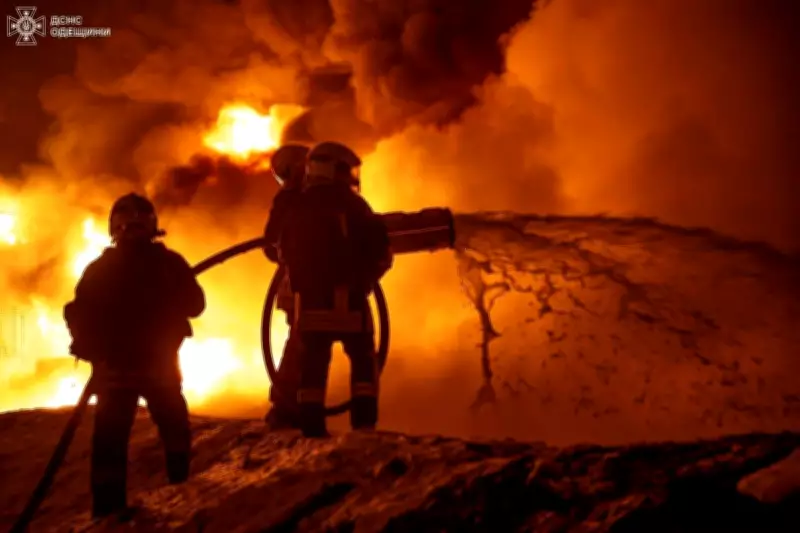
A Ukrainian drone strike has ignited significant fires at a key Russian Black Sea port, officials confirmed on Sunday, marking a sharp escalation in hostilities just days before a new round of US-brokered peace talks aimed at ending the nearly four-year conflict. The attack on the port of Taman in the Krasnodar region resulted in two injuries and damaged critical infrastructure including an oil storage tank, warehouse, and terminals, according to regional governor Veniamin Kondratyev.
Renewed Strikes on Energy Infrastructure
This assault comes as both Ukraine and Russia have resumed strikes on each other's energy infrastructure following the expiration of a US-mediated moratorium. On Saturday, separate drone strikes claimed one life in Ukraine and another in Russia. In Odesa, an elderly woman died when a Russian drone hit a residential building, while the Taman attack underscored the strategic targeting of oil export facilities that fund Moscow's war efforts.
Wider Drone Campaign Across Russian Regions
Ukraine has launched a broader drone offensive targeting several Russian oblasts, including Moscow, Bryansk, and Belgorod. Moscow mayor Sergei Sobhyanin reported that air defence units intercepted at least 13 drones heading toward the capital, with emergency services responding to debris at impact sites. The attacks caused temporary flight restrictions at Domodedovo airport.

In Bryansk, governor Alexander Bogomaz claimed 120 drones were destroyed during sustained morning attacks, leaving at least five municipalities and parts of Bryansk city without heat and electricity. Russia's defence ministry stated that between 9am and 1pm, at least 102 Ukrainian drones were intercepted across Bryansk, Kaluga, Tula oblasts, and near Moscow.
Political Developments and Security Concerns
Ahead of the Geneva talks scheduled for Tuesday and Wednesday, just before the fourth anniversary of Russia's full-scale invasion, political tensions remain high. UK foreign secretary Yvette Cooper accused the Kremlin of a "barbaric plot" to poison opposition leader Alexei Navalny, suggesting new sanctions against Moscow. The Russian embassy in London has denied involvement in Navalny's death.
US secretary of state Marco Rubio described a European report blaming Russia for Navalny's killing as "troubling," stating Washington had no reason to question its findings. The joint statement from the UK, France, Germany, Sweden, and the Netherlands confirmed the presence of epibatidine, a toxin not naturally found in Russia, in Navalny's body.
Ukrainian Internal Challenges
Domestically, Ukraine faces uncertainty as Kyiv mayor Vitali Klitschko warned that the country's survival as an independent nation remains "an open question." He emphasized that Russia's goal extends beyond Donetsk to include Kyiv and the entire country, aiming to "destroy our independence." Klitschko noted severe damage to critical infrastructure in Kyiv over the past two months, bringing the city to the brink of catastrophe.
In a separate development, Ukraine's National Anti-Corruption Bureau arrested former energy minister German Galushchenko as he attempted to leave the country. Galushchenko resigned in November amid a massive corruption scandal in the energy sector, which has drawn criticism from Ukraine's allies.
International Reactions and Regional Dynamics
North Korea has intensified efforts to honour soldiers killed while fighting alongside Russian forces in Ukraine, completing a new housing district in Pyongyang for their families. Leader Kim Jong Un visited the homes with his daughter, pledging to repay the "young martyrs" in what analysts see as an attempt to bolster internal unity.
At the Munich Security Conference, Ukrainian president Volodymyr Zelensky raised concerns about future security guarantees and questioned how a proposed US free trade zone would function in the Donbas region. US Senator Jeanne Shaheen echoed these worries, warning that without real security guarantees, conflict could reemerge as Russia aims to expand beyond Ukraine.
Russia has also rebuffed international criticism over Navalny's death, with its foreign ministry stating that Canada has "no right to comment on Russia's internal affairs" after Canadian condemnation.