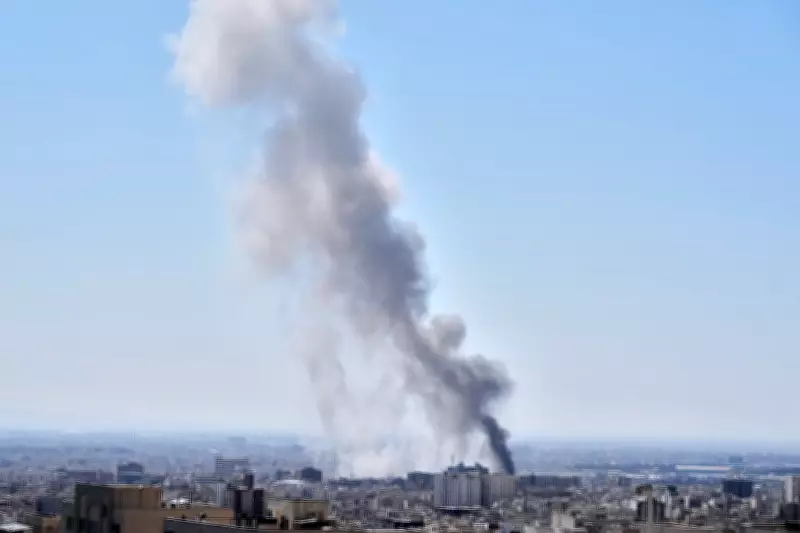
The United Kingdom has pointedly refused to declare whether it considers the recent US-Israeli military strikes on Iran to be lawful, as missile attacks continued to reverberate across the Middle East on Sunday. This diplomatic silence comes amidst a rapidly escalating crisis, with explosions reported in multiple Gulf states and Iran pledging to execute its "most intense operation" ever in retaliation.
Iran Vows Retaliation After Supreme Leader's Death
Supreme Leader Ayatollah Ali Khamenei, the 86-year-old who had ruled Iran for nearly four decades, was killed in the US-Israeli attack on Saturday morning. His death has plunged the future of the nation into profound uncertainty. In response, Iran's parliamentary speaker Mohammad Bagher Qalibaf has promised that Tehran will deliver "such devastating blows" to its adversaries.
US President Donald Trump issued a stark warning to Iran, stating that the United States would deploy "a force that has never been seen before" if Iranian retaliation persists. Simultaneously, the Israeli military confirmed it had conducted additional air strikes in the Iranian capital, aimed at "establishing aerial superiority and paving the path to Tehran."

UK Defence Secretary Highlights Regional Threats
While the UK has played no direct role in the US-Israeli strikes, Defence Secretary John Healey emphasized on Sunday that Iranian retaliation poses a significant risk to UK personnel and allied forces. Speaking to Sky News's Sunday Morning With Trevor Phillips, Mr Healey revealed alarming details: Iranian missiles and drones had landed within "a few hundred yards" of approximately 300 British troops stationed at a base in Bahrain.
Furthermore, two missiles were fired toward Cyprus, where thousands of UK military personnel are based. "We don't believe they were targeted at Cyprus," Mr Healey stated, "but nevertheless, it's an example of how there is a very real and rising threat from a regime that is lashing out widely across the region."
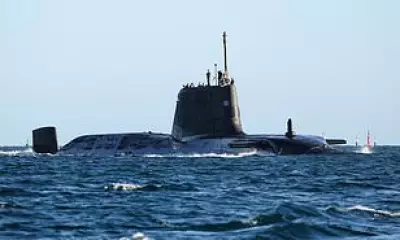
British aircraft have been deployed on defensive operations from bases in Cyprus and Qatar, actively "taking down" drones and missiles that threaten UK installations and allies, the Defence Secretary added.
Government's Evasion on Legality Draws Criticism
Despite acknowledging that "few people" would mourn the ayatollah, Defence Secretary John Healey repeatedly avoided answering whether the UK supports the US-Israeli strikes or believes them to be legal. When pressed six times by the BBC's Laura Kuenssberg, he declined to give a direct response.
"Britain played no part in the strikes on Iran," Mr Healey asserted. "We share, however, the primary aim of all allies in the region and the US that Iran should never have a nuclear weapon." He later clarified, "It is for the US to set out the legal basis of the action that it took."
The UK government, alongside France and Germany, has condemned Iran's retaliatory actions and urged Tehran to return to diplomatic negotiations. However, other allies have adopted a firmer stance; both Canada and Australia have expressed support for the US "acting to prevent Iran from obtaining a nuclear weapon" and continuing to threaten "international peace and security."
Political Backlash from Across the Spectrum
The government's reluctance to explicitly endorse or condemn the strikes has sparked criticism from political parties on both the left and right. Green Party leader Zack Polanski branded the attacks "illegal and unprovoked," telling the BBC, "We've got a Defence Secretary saying that diplomacy is the long runway we need but won't condemn Donald Trump when he attacks a country and assassinates its leader. That's the law of the jungle. That's an end to international law."
Conversely, Conservative shadow foreign secretary Dame Priti Patel argued that the government should have been "more proactive" in supporting the strikes. She questioned, "Why were some of our bases not used? And was the British Government asked about use of our military bases in the defensive strikes that took place?"

To date, the government has also declined to disclose whether the United States requested permission to utilize British bases, such as Diego Garcia in the Indian Ocean, for the strikes. Meanwhile, the Foreign Office has instructed its staff in Pakistan to restrict their movements due to anti-US protests that have resulted in at least nine fatalities, highlighting the widespread regional instability triggered by the conflict.