UK Government Initiates Evacuation Planning for Britons in Middle East
The Foreign Office has commenced urgent preparations to evacuate tens of thousands of British citizens from the Middle East, as regional tensions surge following recent US-Israeli military actions against Iran. This unprecedented consular operation involves registering individuals across multiple affected countries to identify those requiring immediate assistance.
Escalating Tensions and Stranded Travellers
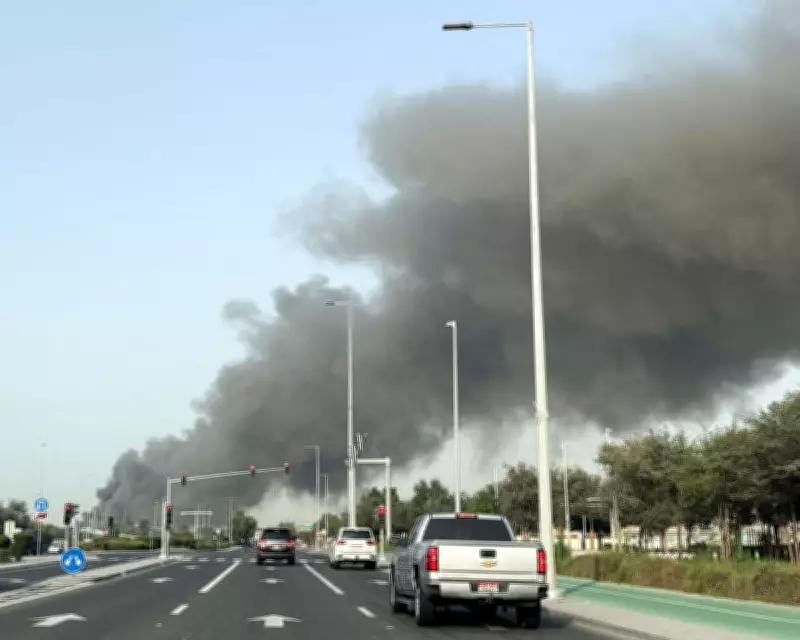
Smoke was observed billowing from Zayed port in Abu Dhabi, United Arab Emirates, after an Iranian attack on Sunday, highlighting the volatile situation. With airspace currently closed in key areas like Dubai, numerous tourists and business travellers find themselves stranded without clear routes home. The government estimates that approximately 76,000 British nationals have registered their presence in affected regions, though the total number residing or travelling in the Gulf remains uncertain.
More than 50,000 of these registered individuals are believed to be in the United Arab Emirates, predominantly holidaymakers or short-term visitors rather than long-term residents. The closure of airspace has left many without viable plans for departure, prompting authorities to explore alternative evacuation methods.

Government Response and Diplomatic Efforts
Foreign Secretary Yvette Cooper is anticipated to address the crisis publicly on Monday, following a weekend dedicated to coordinating the UK's response. She has engaged in intensive diplomatic discussions with regional counterparts, US Secretary of State Marco Rubio, and other G7 foreign ministers to manage the escalating situation.
The Ministry of Defence is collaborating closely with the Foreign Office to evaluate all possible options, including potential evacuations by road to neighbouring countries such as Saudi Arabia, where airspace remains operational. Government advice currently urges British nationals to adhere to local instructions, particularly sheltering in place, but contingency plans are being developed for more severe scenarios.
Security Threats and Political Reactions
Defence Secretary John Healey described the Iranian regime as "evil", citing its involvement in sponsoring terrorist plots and proxy conflicts. He confirmed that UK military aircraft are actively deployed in the region to protect British interests and citizens, noting that Iranian strikes have targeted locations including hotels in Dubai and Bahrain, as well as an airport in Kuwait.
Political opinions within the UK are divided regarding the US-Israeli strikes. Labour's Keir Starmer expressed solidarity with Middle Eastern nations facing indiscriminate attacks, while Green Party leader Zack Polanski condemned the assassination of Iran's supreme leader. In contrast, shadow foreign secretary Priti Patel criticised Starmer for insufficient support of the US-Israeli operations.
Travel Advisories and Regional Precautions
The Foreign Office has issued stringent travel warnings, advising against all travel to Iran, Israel, and Palestine, and recommending only essential travel to the UAE, Qatar, Kuwait, and Bahrain. Additional precautions are advised for parts of Pakistan, while British nationals in Saudi Arabia are instructed to remain at home. Those in Jordan, Oman, Syria, Lebanon, Yemen, and Iraq should exercise heightened vigilance due to the increased regional instability.
As the situation evolves, the UK government remains focused on defensive measures to safeguard its citizens, with ongoing assessments of evacuation routes and consular support mechanisms to address the escalating crisis in the Middle East.