UK Government Launches Major Evacuation Operation Amid Middle East Conflict
The British government has initiated its most significant evacuation effort since the Afghanistan crisis, as tens of thousands of UK nationals remain trapped in the escalating Middle East conflict. With over 140,000 Britons registered as caught in the war zone, Foreign Secretary David Lammy has pledged a massive airlift operation to bring citizens home safely.
First Charter Flights Arrive Amid Chaotic Conditions
The initial UK government-chartered flight from Muscat, Oman, touched down at London Stansted Airport early this morning, carrying relieved families who had endured harrowing journeys to escape the conflict. Many passengers had driven more than 300 miles from Dubai and Abu Dhabi to reach Oman, the only accessible departure point with operational airspace.
"This is a technical operation, and we've got more people to evacuate than in Afghanistan... this is a pretty big feat," Foreign Secretary Lammy stated, comparing the current crisis to the 2021 evacuation that airlifted over 15,000 British and Afghan citizens as the Taliban seized power.

So far, approximately 4,000 British nationals have returned home, with additional flights scheduled to depart from Muscat tonight. The government is coordinating with commercial airlines to maximize evacuation capacity once regional airspace reopens.
Personal Stories of Escape and Survival
Fazal Chowdhury, a Dubai resident for three years, described his immediate decision to flee with his wife when attacks began. "We just made a run for it straight away, checked into a hotel in Muscat," he recounted. "Then it was just a case of waiting." Despite spending 20 hours at the airport due to technical delays, Chowdhury expressed gratitude toward government efforts.
Another couple, Amelia Reid and Samuel Sharp, shared their terrifying experience of sheltering in a hotel basement car park with approximately 100 other people after emergency alarms sounded. "We ended up sleeping in a car park... after the alarms went off on our phones," Samuel explained. "We've been on edge for four days."
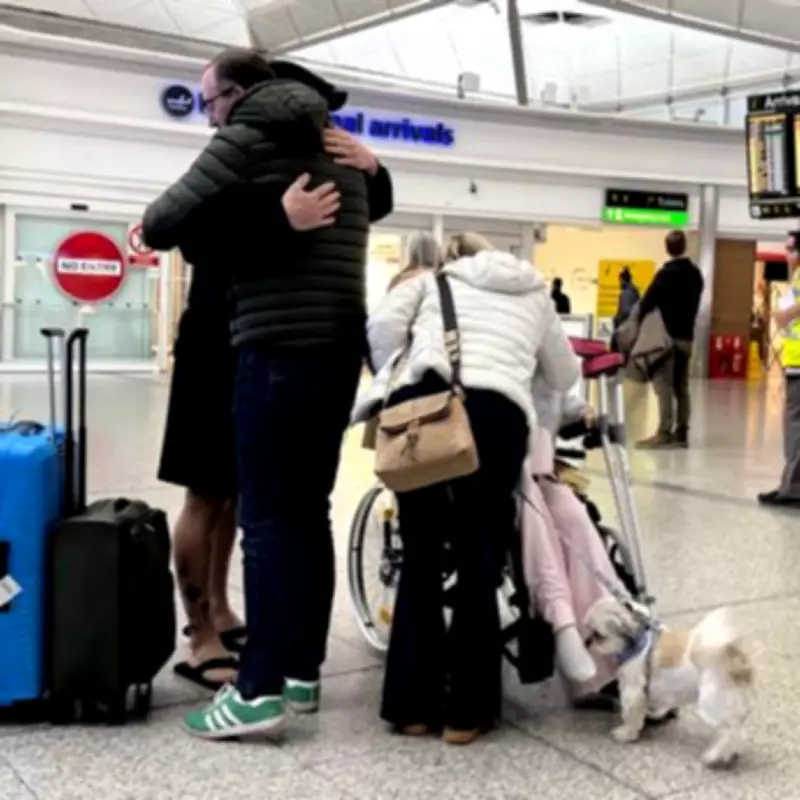
Their journey home took over 40 hours, including a coach trip to Muscat airport and an unexpected delay when their chartered flight's pilot exceeded duty hours. Amelia, who traveled in a wheelchair, emphasized the physical and emotional toll of the evacuation process.
Logistical Challenges and Government Response
The evacuation faces significant obstacles, primarily due to restricted airspace across the region. A source in Muscat revealed, "It is chaos because of the problems with the airspace." While Omani airspace currently remains clear, the situation remains volatile and dependent on safety conditions.
The conflict has severely impacted global travel, with only 7,000 passengers passing through Heathrow Airport on Thursday due to widespread flight cancellations. Muscat has become the critical evacuation hub because, unlike airports in Dubai, Abu Dhabi, and Doha, the Foreign Office has not advised against travel to Oman's capital region.
Prime Minister Rishi Sunak chaired an emergency COBRA meeting, acknowledging that families across Britain are "worried sick about their family and friends who are caught up" in a conflict that "could continue for some time."
Historical Context and Ongoing Operations
The current evacuation evokes memories of Operation Pitting in August 2021, when the UK military deployed over 1,000 personnel to evacuate British nationals and eligible Afghans following the Taliban's resurgence. That operation concluded on August 28, 2021, ending Britain's two-decade military presence in Afghanistan at a cost of 457 service personnel deaths.
Today's evacuation represents an even larger logistical challenge, with Lammy emphasizing the government's commitment to "get our people out" through coordinated charter flights and eventual commercial air travel resumption. As missiles continue to strike the region and the United States increases military presence, the race to evacuate British citizens intensifies with each passing hour.