The UK government has moved swiftly to clarify its position on the planned handover of the Chagos Islands to Mauritius, following a statement by a Foreign Office minister that sparked significant confusion and political controversy. Officials have firmly denied that the process has been paused, despite ministerial comments suggesting otherwise.
Ministerial Misstatement Sparks Political Storm
Hamish Falconer, a Foreign Office minister and former diplomat, told Members of Parliament on Wednesday that the government was "pausing for discussions with our American counterparts" regarding the treaty that would transfer sovereignty of the Chagos archipelago to Mauritius. This statement immediately created uncertainty about the status of the long-planned agreement.
In response to the confusion, Foreign Office sources stated that Falconer had "misspoke" during his parliamentary appearance. A spokesperson explicitly declared: "There is no pause. We have never set a deadline. Timings will be announced in the usual way." The clarification came as the government sought to contain the political fallout from what appeared to be conflicting messages about one of its significant foreign policy initiatives.

Trump's Intervention Adds Diplomatic Complexity
The ministerial confusion occurred against the backdrop of increasing pressure on the deal, most notably from former US President Donald Trump. In a social media post on Truth Social on February 18th, Trump declared that UK Prime Minister Keir Starmer was "making a big mistake" by proceeding with the sovereignty transfer.
This intervention represented a significant shift from Trump's previous position, as he had earlier described the arrangement as the "best" deal Starmer could achieve under the circumstances. Falconer acknowledged Trump's changed stance during his parliamentary remarks, noting that "the view of the United States president may well have changed but the treaty has not."
Opposition Parties Seize on Confusion
The shadow foreign secretary, Priti Patel, immediately capitalized on the ministerial confusion, describing the situation as "an appalling act of betrayal." Patel, who was in Washington meeting with US political figures about the Chagos agreement, stated: "I am pleased the UK government has been forced to pause the legislation. But ministers must go further: now it is time for Keir Starmer to face reality and kill this shameful surrender once and for all before it does any more damage."
The controversy emerged during an urgent question session initiated by Reform UK leader Nigel Farage, who has been a vocal critic of the sovereignty transfer. Farage had recently claimed that the British government prevented him from traveling to the Chagos Islands as part of a humanitarian mission to deliver aid to Chagossians attempting to establish a settlement on one of the archipelago's islands.
Strategic Importance of Diego Garcia
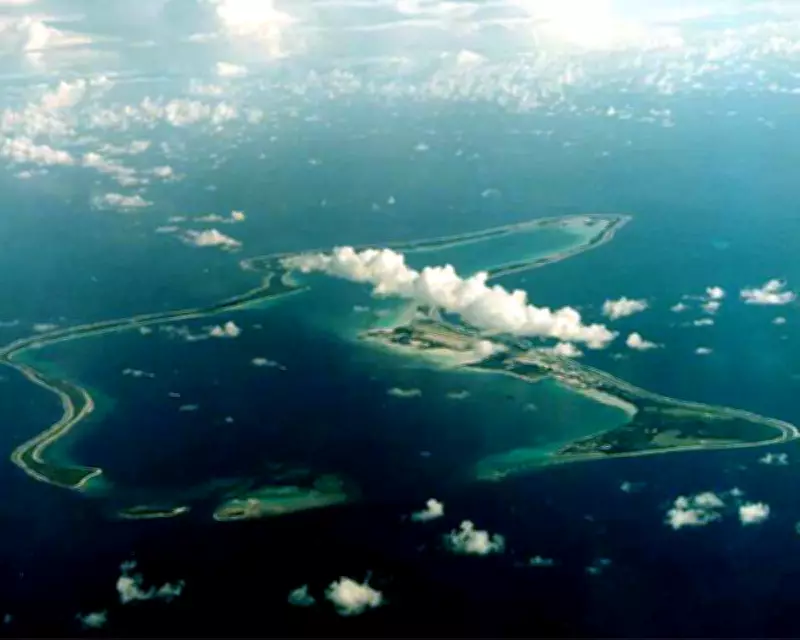
At the heart of the controversy lies Diego Garcia, the largest island in the Chagos archipelago and the site of a strategically vital US-UK airbase. The proposed sovereignty transfer agreement would allow Mauritius to assume control of the islands while guaranteeing continued military access to Diego Garcia for both the United Kingdom and United States.
The legislation to enact this transfer cleared its third reading in the House of Commons last month, and members of the House of Lords had been unofficially informed that the bill would come before them this week. However, these plans appear to have been reconsidered following Trump's public intervention against the agreement.
Broader Political Context and Implications
The Chagos Islands sovereignty issue represents one of the most complex and contentious foreign policy challenges facing the current UK government. The archipelago has been under British control since 1814, but Mauritius has long claimed sovereignty over the territory, a position that gained significant international support in recent years.

The current controversy highlights the delicate balancing act the UK government must perform between honoring international legal obligations, maintaining crucial military alliances, and managing domestic political pressures. The ministerial confusion has exposed vulnerabilities in the government's communication strategy on sensitive diplomatic matters and provided opposition parties with ammunition to challenge its foreign policy competence.
As the situation continues to develop, all eyes remain on how the government will navigate the competing pressures from the United States, Mauritius, domestic political opponents, and international legal considerations while maintaining clarity and consistency in its diplomatic communications.