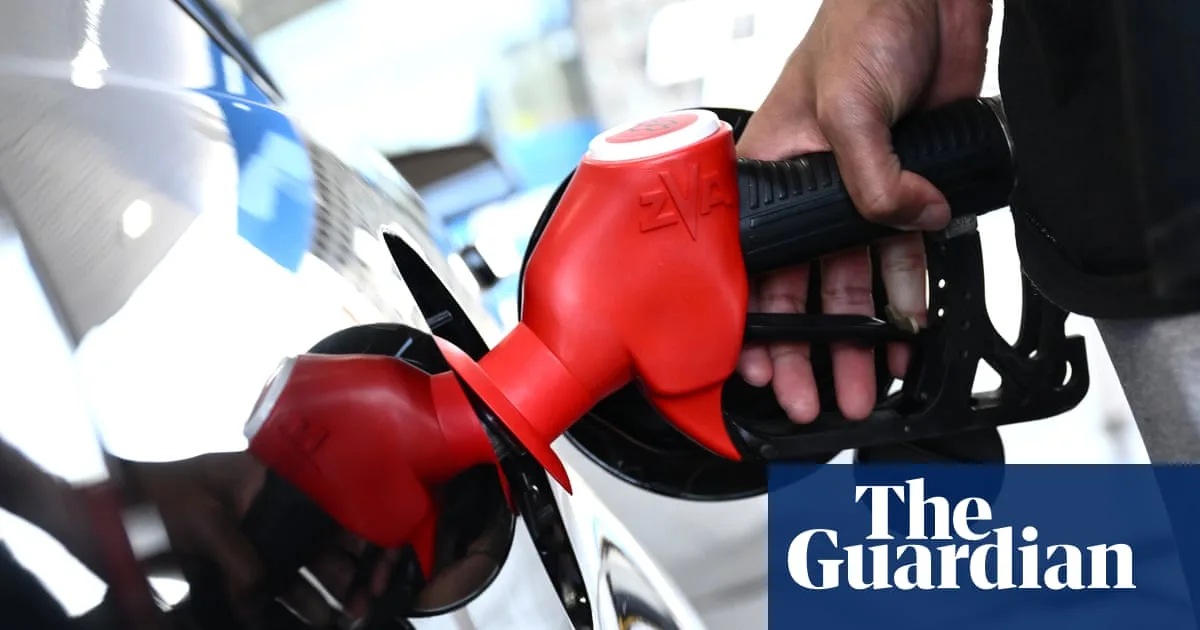
Documents obtained by Guardian Australia under freedom of information reveal that the Australian government considered plans for retail fuel rationing early in the fuel crisis, as the International Energy Agency warned on Friday that oil markets would enter the 'red zone' by August. The plans, described as a 'worst-case scenario,' included imposing a 'maximum transaction value per vehicle per day' to limit how much fuel a single vehicle could buy at a service station over 24 hours.
The documents, from the Department of Climate Change, Energy, the Environment and Water (DCCEEW), span from 21 February to 17 March, covering the early part of the Iran war after US-Israel strikes on Iran began on 28 February. Under the Liquid Fuels Emergency Act, the federal energy minister, Chris Bowen, can declare a liquid fuel emergency (LFE), with powers including directing fuel supply and even rationing in extreme examples.
Despite these considerations, both Bowen and Prime Minister Anthony Albanese publicly ruled out the need for fuel rationing at the height of the crisis. Bowen stated on 26 March that the liquid fuel emergency plan, which has existed since 2006 and discussed measures like banning jerry cans, 'was just a guide' and the government 'wouldn't do it that way.'
Other countries have enacted various responses to the fuel crisis, including limiting purchases and asking citizens to reduce travel, according to the IEA. The Australian government asked people to consider voluntary measures such as using public transport. Notes from a 13 March meeting of the National Oil Supply Emergency Committee (Nosec) show that representatives from Victoria raised interest in 'thinking in future about what will rationing look like.'
The government has since added to stocks, securing 600 million litres of diesel and 100 million litres of jet fuel in 14 additional cargoes from Singapore, China, Brunei and other nations. The budget also included a $10 billion fuel security package. Another document suggests that in a serious fuel shortage, controls could be placed 'on either bulk or retail sales of petroleum products and further customer demand side management responses.'