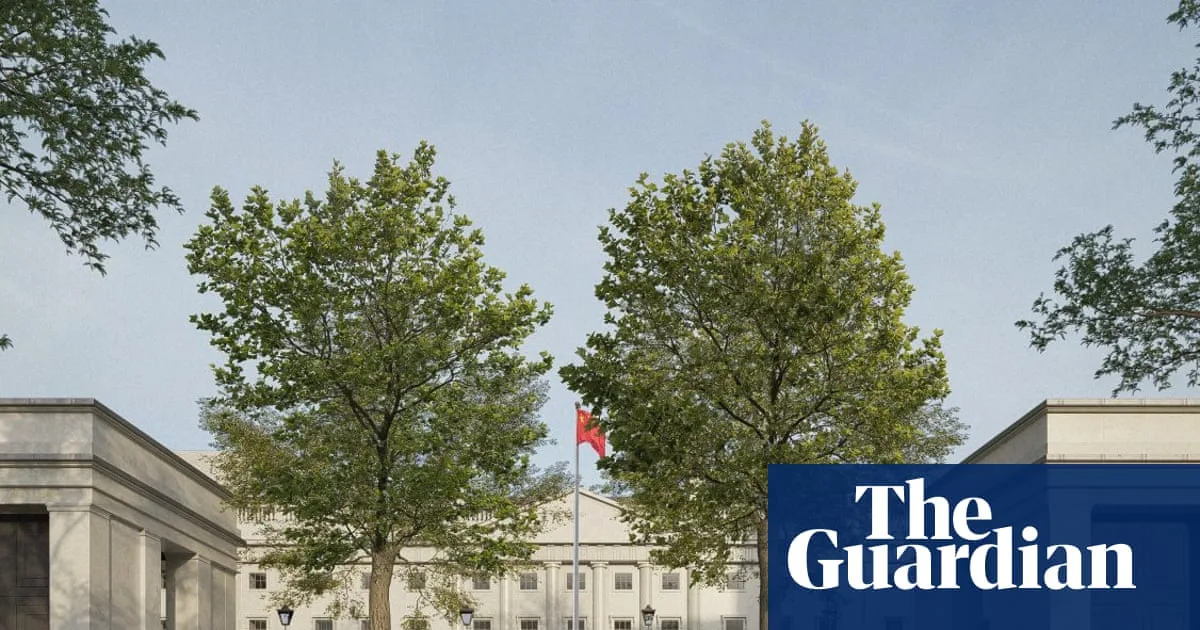
A vast new Chinese embassy complex in east London is almost certain to be formally approved next week, despite renewed concerns among Labour MPs about potential security risks and the effect on Hong Kong and Uyghur exiles in the capital. The green light for the super-embassy at Royal Mint Court near Tower Bridge would smooth relations before Prime Minister Keir Starmer’s expected visit to China at the end of January, but officials insist there has been no political input in the planning process.
The decision would be controversial, with several Labour MPs expressing concern in the Commons on Tuesday over the plans for the 20,000 sq metre complex. Answering an urgent question from shadow Home Office minister Alicia Kearns, Planning Minister Matthew Pennycook said he could not comment on what was a “quasi-judicial” process. Kearns secured the question after a report in the Daily Telegraph that unredacted plans showed a network of more than 200 subterranean rooms, one alongside communication cables taking information to the City of London.
Pennycook said any new information would be assessed, but the embassy is expected to be given the go-ahead after a final consultation. MI5 is understood not to have any security concerns about the project, as revealed by the Guardian last year. Kearns called this complacent, saying access to the cables “would give the Chinese Communist party a launch pad for economic warfare against our nation”. She demanded the Chinese ambassador be called in to explain the plans.
No Labour MPs spoke in favour of approving the plan during the urgent question. Among those expressing concern was Sarah Champion, chair of the Commons international development select committee, who said multiple government agencies and international partners had raised concerns. Other Labour backbenchers focused on possible repercussions for residents from Hong Kong, Tibet or Xinjiang, citing past targeting of diaspora populations by Chinese diplomatic missions.
Rushanara Ali, the MP for Bethnal Green and Stepney, in whose constituency the embassy would be sited, called for local concerns to be taken seriously, noting the area’s large Muslim population and focus on Xinjiang. Another Labour MP, James Naish, said the debate was about national security and safety for diaspora groups. Pennycook assured that the planning process had not been compromised and that a decision would be made based on relevant propriety guidance.