UK and Allies Blame Russia for Navalny Poisoning with Dart Frog Toxin
Britain and its European allies have publicly accused Russia of poisoning opposition leader Alexei Navalny with a lethal toxin derived from South American poison dart frogs. The dramatic announcement was made at the Munich Security Conference, where foreign ministers from the UK, France, Germany, Sweden, and the Netherlands presented evidence of epibatidine in Navalny's body samples.
International Condemnation and Kremlin Denial
Foreign Secretary Yvette Cooper led the charge, stating that only Russia possessed the "means, motive, and opportunity" to carry out such an attack. She condemned the Kremlin's "barbaric plot" to silence Navalny, highlighting Russia's fear of political opposition. The five nations have reported the incident to the Organisation for the Prohibition of Chemical Weapons, citing Russia's repeated disregard for international law.
In response, the Kremlin rejected the claims through Russian foreign ministry spokesperson Maria Zakharova, who dismissed the allegations as propaganda aimed at diverting attention from Western issues. She described Navalny as a blogger officially designated as a terrorist and extremist in Russia, asserting that Russia would comment only after test results and substance formulas are disclosed.

Navalnaya's Call for Accountability
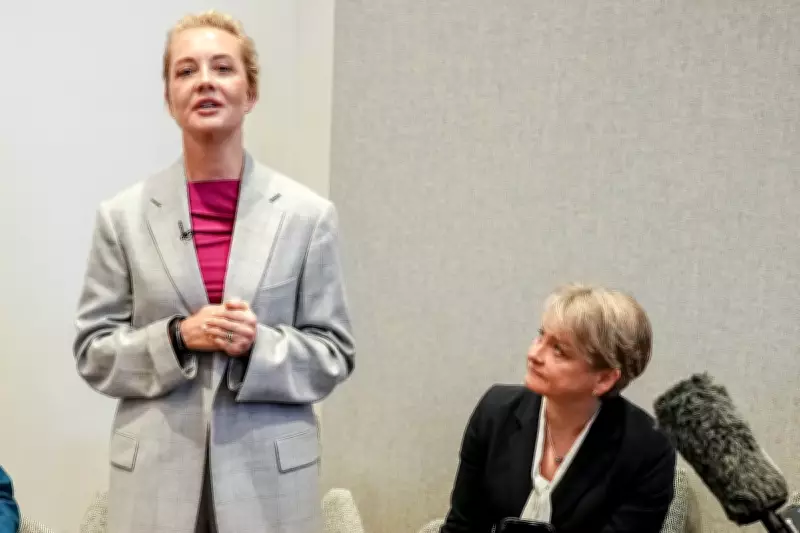
Navalny's widow, Yulia Navalnaya, who first announced his death at the same conference two years ago, called for Vladimir Putin to be held accountable. She expressed gratitude to European states for their meticulous work over two years, uncovering the truth that "Putin killed Alexei with chemical weapon." Her statement emphasized the proof of poisoning, which she had suspected from the beginning.
Historical Context and Broader Implications
Navalny, a prominent critic of Putin known for anti-corruption campaigns and massive protests, died in a Siberian penal colony in February 2024 at age 47, while serving a 19-year sentence he believed was politically motivated. This incident follows a pattern of alleged Russian poisonings, including:
- The 2020 novichok poisoning attempt on Navalny.
- The 2018 Salisbury poisonings of Sergei and Yulia Skripal, linked to Putin by a UK inquiry.
- The 2006 assassination of former spy Alexander Litvinenko with poisoned tea in London.
The joint statement from the five countries confirmed that epibatidine, not naturally found in Russia, was conclusively detected in Navalny's samples. They argued that given the toxin's toxicity and reported symptoms, poisoning was highly likely the cause of death, with Russia having full control during his imprisonment.
Prime Minister Sir Keir Starmer praised Navalny's courage against tyranny and affirmed efforts to defend British values from Russian threats. The Foreign Office stressed there can be no innocent explanation for the toxin's presence, underscoring the ongoing geopolitical tensions and calls for justice in this high-profile case.