Trump's Call for Allied Deployment to Strait of Hormuz Meets Muted Global Response
Countries including the United Kingdom, Japan, China, and South Korea have indicated they are still evaluating their options but have refrained from making firm commitments following a public appeal by former US President Donald Trump. Trump urged these nations to dispatch warships to the Strait of Hormuz to secure this critical shipping route, which is currently under a violent blockade by Iran.
Trump's Social Media Appeal for Naval Support
In a post on his Truth Social platform, Trump explicitly called on the UK, China, France, Japan, South Korea, and other affected countries to send naval vessels to the waterway. He described it as the world's busiest shipping route, now blockaded by Iran. Trump asserted that many nations, particularly those impacted by Iran's attempted closure, would be deploying warships in coordination with the United States to maintain the strait's openness and safety.
In a subsequent post, he broadened his appeal to all global countries that rely on oil shipments through the Hormuz Strait, urging them to contribute naval support. The blockade, enacted by Tehran in retaliation for airstrikes by the US and Israel, has had catastrophic effects on global energy and trade flows. It has caused the largest oil supply disruption in recorded history, leading to soaring global oil prices and significant economic strain.
International Reluctance and Cautious Considerations
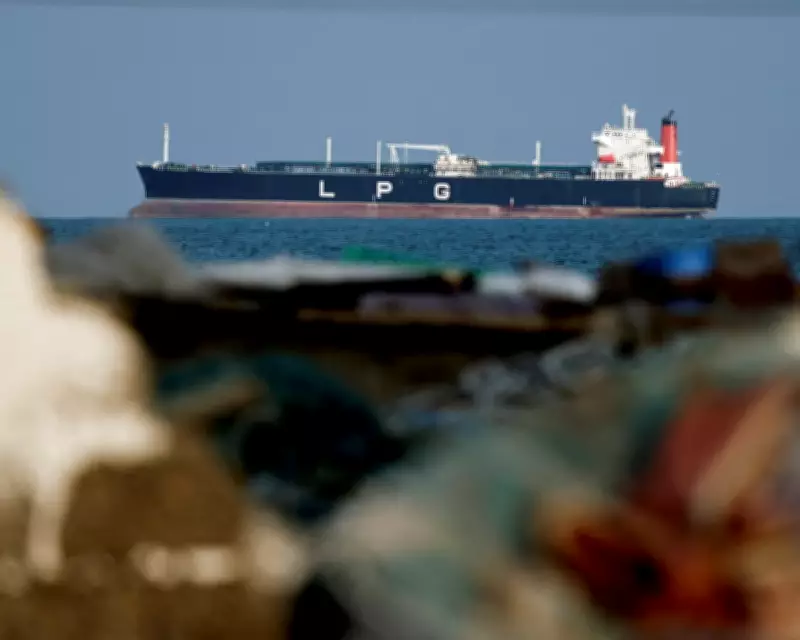
However, the international response to Trump's call has been notably vague and hesitant. Many nations are unwilling to commit to a military response that could pose severe risks to their naval forces. Iran has declared that any oil tanker bound for the US, Israel, or their allies is a legitimate target and will be immediately destroyed. Since the conflict began in late February, sixteen tankers have been attacked in the Strait of Hormuz, and Iran has threatened to deploy explosive mines in the waterway. Notably, the US has not yet sent its own navy ships to escort tankers through the strait.
The UK Ministry of Defence issued a statement confirming discussions with allies over a range of options to ensure regional shipping security. In a call on Sunday, Prime Minister Keir Starmer and Trump discussed the importance of reopening the Strait of Hormuz to alleviate global shipping disruptions and rising costs. Energy Secretary Ed Miliband, speaking on the BBC, revealed that the UK has been in talks with the US and other allies on strategies to keep the strait open, including the potential use of mine-hunting drones. Miliband emphasized that all viable options to facilitate reopening are under active consideration.
Global Positions and Diplomatic Maneuvers
A senior Japanese politician, Takayuki Kobayashi, chair of the ruling Liberal Democratic Party's policy research council, told NHK TV that Japan would not rule out sending warships but cautioned that the threshold for such action remains very high. He stressed the need for cautious judgment given the ongoing dispute. South Korea, which is heavily dependent on energy flows through the strait, acknowledged Trump's comments but stated it would communicate closely with the US and review the situation before deciding on any measures to help secure the shipping route.
France had already clarified its stance prior to Trump's remarks. Defence Minister Catherine Vautrin stated unequivocally that France would not send warships to the Strait of Hormuz while the conflict continues to escalate. She affirmed a purely defensive position, with no plans to deploy the French navy's flagship aircraft carrier, the Charles de Gaulle, from the eastern Mediterranean. President Emmanuel Macron, speaking in Cyprus last week, mentioned that France and its allies are preparing a defensive mission to escort vessels through the strait, but only after the most intense phase of the US-Israeli war on Iran concludes.
According to reports, EU foreign affairs ministers are considering expanding the scope of the EU's Aspides naval mission, currently focused on protecting ships from Houthi attacks in Yemen, to include the Strait of Hormuz. However, Germany's Foreign Minister Johann Wadephul expressed scepticism about this extension, questioning its effectiveness in providing greater security.
China's Diplomatic Approach and Global Implications
China, an ally of Iran and a major importer of crude oil through the strait, has not mentioned military intervention. Instead, it is reportedly in talks with the Iranian regime to allow oil tankers to pass from the Gulf, though no definitive agreement has been reached. The Chinese embassy in Washington stated that Beijing would work to strengthen communication with relevant parties in the Middle East and play a constructive role in de-escalation and peace restoration. US Energy Secretary Chris Wright noted ongoing dialogues with some countries and expressed optimism that China would be a constructive partner in reopening the strait, which normally handles one-fifth of global oil exports.
The situation underscores the complex geopolitical dynamics and the cautious, often reluctant, international stance towards military engagement in the volatile Strait of Hormuz, as nations weigh the risks against the urgent need to restore global energy stability.