
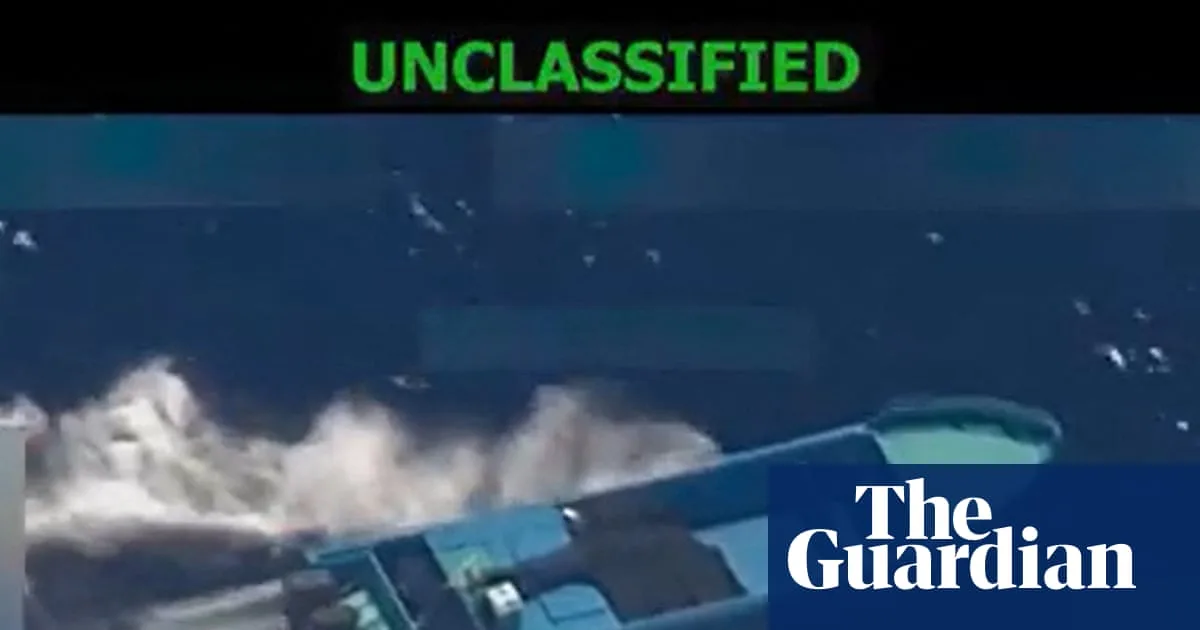
The Trump administration has intensified military operations against Venezuela, conducting at least eight strikes in recent weeks that killed 38 people, targeting boats in the Caribbean allegedly used for drug trafficking. The latest strike, announced by Defense Secretary Pete Hegseth, reportedly killed six people on a vessel on a known narco-trafficking route. Two additional strikes in the Pacific this week killed at least five people, as tensions with Colombia also rose over US tactics against alleged traffickers.
The buildup includes the deployment of nuclear-capable B-52 bombers and elite special operations forces off Venezuela’s coast. Trump authorized the CIA to conduct operations inside Venezuela, fueling fears of an attempted coup or ground invasion. However, former CIA analyst Fulton Armstrong noted that direct invasion is the least preferred option, with special operations and technology likely used to encourage Venezuelans to remove President Nicolás Maduro themselves.
The policy shift reflects a power struggle within the administration, with Secretary of State Marco Rubio prevailing over envoy Richard Grenell, who advocated a pragmatic approach to secure oil deals. Rubio, backed by White House officials Stephen Miller and Susie Wiles, pushed a tough line by linking Maduro’s regime to the Tren de Aragua gang and the Cartel de los Soles, designated as foreign terrorist organizations. A US businessman with ties to Venezuela said Trump initially cared only about oil, but Rubio’s narco-terrorist rhetoric caused a U-turn.
Maduro has offered extensive concessions, including a dominant stake in Venezuela’s oil industry for the US, and the Trump administration eased some sanctions, granting Chevron a licence to resume operations. However, tensions escalated as Rubio’s influence grew. Experts question Venezuela’s significance as a primary drug source, noting it is a conduit rather than a major supplier of fentanyl, which causes most US drug deaths.




