The Real-Life Soldier Behind Robert Duvall's Apocalypse Now Role Revealed
Real-Life Soldier Behind Duvall's Apocalypse Now Role

The Real-Life Inspiration for Robert Duvall's Apocalypse Now Character

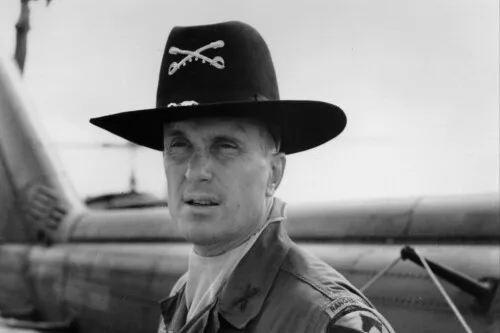
The late actor Robert Duvall, who passed away this week, delivered many unforgettable performances throughout his illustrious career. However, his brief but iconic cameo as the Stetson-wearing Lt Col Bill Kilgore in Francis Ford Coppola's Vietnam War epic Apocalypse Now remains one of his most celebrated roles. Duvall's portrayal of the helicopter squadron commander, who famously declares "I love the smell of napalm in the morning," earned him a Bafta, a Golden Globe, and an Oscar nomination for Best Supporting Actor.

The Man Behind the Myth: Lt Col John B Stockton

Less widely known is the fact that Duvall's character was based on a real officer who served in Vietnam. Lt Col John B Stockton was a hard-to-miss figure in the US Army's Air Cavalry. Mirroring Duvall's on-screen depiction, Stockton sported a black Stetson and spurs on his boots, carried his documents in leather saddlebags, and even managed to smuggle his unit's mascot, a mule named Maggie, into Vietnam despite a strict "no pets" policy. Most strikingly, he genuinely played Wagner's Ride of the Valkyries from side-mounted speakers on his helicopter during combat missions.

Duvall, the son of a US Navy rear admiral, confirmed in interviews that he studied accounts of Stockton and similar officers while preparing for the role. In his book Pleiku: The Dawn of Helicopter Warfare in Vietnam, military historian JD Coleman describes Stockton as "balding, rawhide-lean, just under six feet tall, [with] the handlebar moustache of the old time cavalryman. When viewed without his headgear, he looked a lot like a Yul Brynner with facial hair."

Wide Pickt banner — collaborative shopping lists app for Telegram, phone mockup with grocery list

The Air Cavalry and Its Historical Roots

Stockton commanded the 1st Squadron, 9th Air Cavalry Regiment and was deeply fixated on the term "cavalry." He viewed the helicopter soldiers of Vietnam as the modern embodiment of the US cavalry bluecoats from the 19th-century frontier wars against Native Americans. This perspective was part of a broader tactical doctrine that emerged in the late 1950s, inspired by the speed and mobility of mounted cavalry from earlier eras.

While helicopters were introduced during the Korean War primarily for medical evacuations, as depicted in the film M*A*S*H, their revolutionary use in infantry warfare is credited to Lt Gen James "Jumpin' Jim" Gavin. By 1957, as head of research and development for the US Army, Gavin advocated for troop-carrying helicopters to deliver soldiers to critical battlefield points with precision, much like cavalry horses of the past.

When the Air Cavalry began operations in Vietnam in 1965, Stockton was not alone in embracing this heritage. Many officers in the 1st Cavalry Division adopted Stetsons, cavalry moustaches, bullwhips, and six-shooters, despite objections from more conservative commanders.

Stockton's Controversial Career and Legacy

Interestingly, Stockton never actually uttered the famous "napalm" line; screenwriter John Milius conceived it while working on the script in the late 1960s. Although Stockton never publicly commented on his portrayal as Lt Col Kilgore, army colleagues reported that it amused him.

Stockton's military career was marked by both innovation and controversy. Recognised as a pioneer of "air mobile" tactics, he commanded his squadron with daring during the early phases of the Battle of Ia Drang in November 1965. When a US infantry company faced annihilation, Stockton requested permission to send reinforcements but was denied. Defying direct orders, he dispatched helicopters anyway, an action credited with saving approximately 100 US and allied lives. Consequently, he was removed from command but retained his rank, playing no further role in the conflict.

Despite this official disgrace, Stockton retained the strong affection of the men under his command, who saw him as a champion of ordinary soldiers against often careless senior officers. He passed away in 1997 at the age of 74, leaving behind a legacy that continues to captivate both military historians and film enthusiasts alike.

Pickt after-article banner — collaborative shopping lists app with family illustration