The dramatic US military capture of Venezuelan leader Nicolás Maduro has swiftly given way to a contentious political dilemma in Washington, exposing a sharp rift within the Republican Party and the Venezuelan-American community over who should lead the country next.
An Ideological Interim and a Strategic Rift
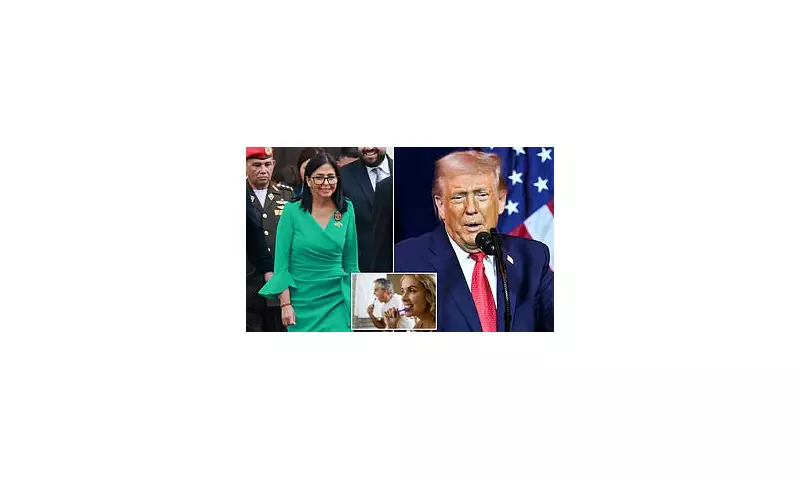
With Maduro now facing trial in New York, effective control in Caracas has passed to his vice president, the staunch socialist Delcy Rodríguez. Former US diplomat Brett Bruen, who served in Caracas, recalls Rodríguez's hardline ideology, epitomised by her morning ritual of berating her toothpaste as a 'capitalist product'. He labels her a 'rabid Chavista' and warns the administration's approach risks turning a military victory into a political farce.
'From a strategic standpoint, that's astonishingly stupid, even for him,' Bruen said of President Donald Trump's vow that the United States will 'run Venezuela.' The core of the dispute lies in Trump's decision to sideline the country's recognised democratic opposition leaders, María Corina Machado and Edmundo González.

Key Republican Allies Break Ranks
This move has triggered open dissent from some of Trump's closest allies. Representative Carlos Gimenez, a powerful voice in Miami's exile community and a staunch Trump supporter, told the Daily Mail the president is 'simply wrong' on Machado. 'The community is not divided on her. I think the community is solid behind her,' Gimenez stated.
While praising the 'bold action' of the raid that captured Maduro on January 3, 2026, Gimenez confirmed a stark disconnect on future leadership. He described speaking with Machado after Maduro's apprehension, finding her 'statesman-like'. He argued her legitimacy is undeniable, noting she backed González in the recent elections—where he won 70% of the vote—only because she was illegally barred from running. 'If you had an election tomorrow, I bet pretty good money that Maria Corina Machado would win,' he asserted.
Congresswoman Maria Elvira Salazar echoed this, calling Machado the 'moral force' of Venezuela's democratic movement and urging steps to ensure either the 2024 results are respected or a new election is held with her on the ballot.
The Challenge of Governing and Warnings of Hubris
As Venezuela's parliament swore in Delcy Rodríguez as interim president on January 5, the administration's national security team, including Vice President Vance, Secretary of State Marco Rubio, and CIA Director John Ratcliffe, faces the monumental task of stabilising the country. A senior official confirmed they do not plan to appoint a full-time envoy to assist Rubio.
Some diplomats suggest the 'sugar high' of the successful operation is fading, replaced by the complex reality of governance. Kevin Whitaker, a former US Ambassador to Colombia, suggested the administration might be keeping elements of the old regime in place temporarily to maintain order. Bruen offered a starker warning, drawing parallels to past interventions: 'We've seen this movie before in Iraq and certainly in Afghanistan.'
With Trump's own party pushing back and the exile community unified behind an alternative leader, the path forward for US policy in Venezuela appears fraught with political as well as diplomatic challenges.