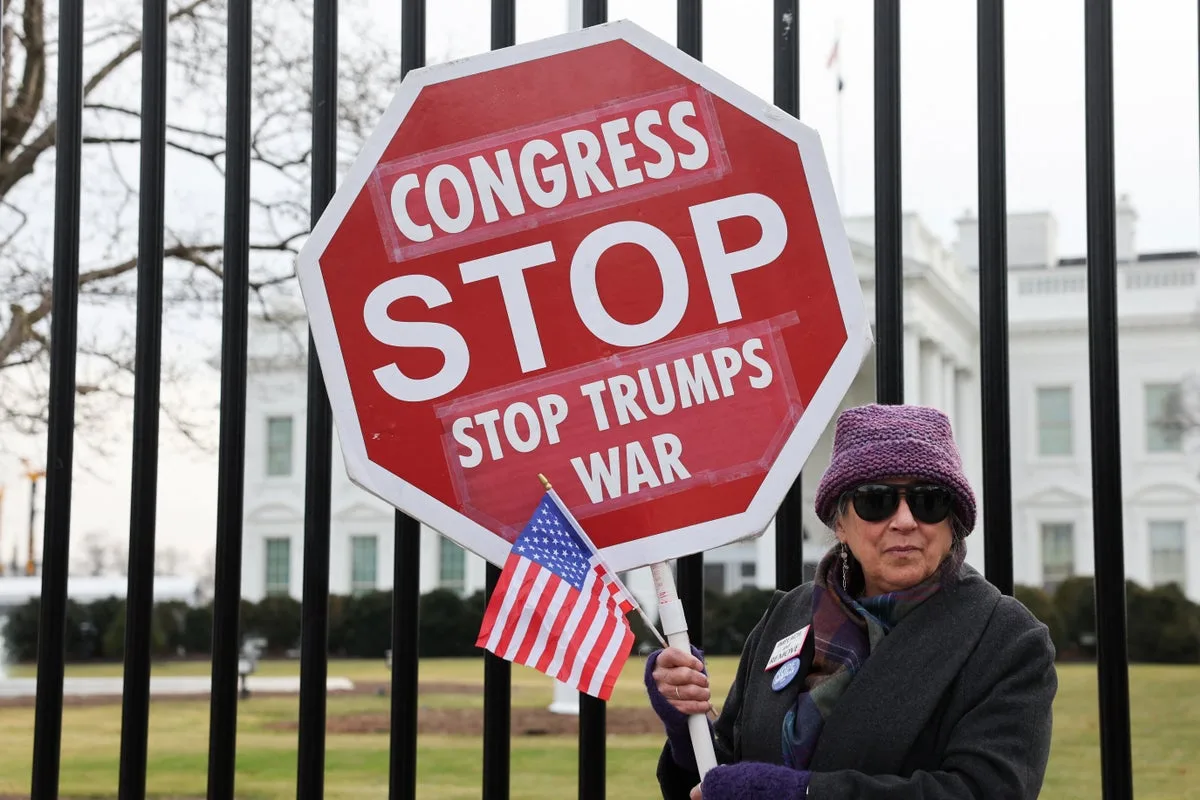
In a dramatic escalation that has sent shockwaves through the international community, former US President Donald Trump has ordered a military invasion of Venezuela, resulting in the capture of its leader, Nicolás Maduro. The action, carried out in the early hours of Saturday 3 January 2026, marks a perilous new chapter in global affairs, with analysts warning it signifies the effective end of the Western alliance as currently constituted.
A Night of Invasion Over Caracas
The Venezuelan capital, Caracas, was shaken by a series of explosions as American forces launched their operation. Chinook transport aircraft and Apache gunship escorts filled the night sky, with missile strikes targeting military installations across the country. Within hours, Trump announced that President Maduro and his wife had been apprehended and flown out of Venezuela.
The move was celebrated by Trump's inner circle, including Defence Secretary Peter Hegseth. However, world affairs editor Sam Kiley argues that beyond the Oval Office and Trump's core supporters, the invasion is viewed as a strategically catastrophic violation of international law. The only other capitals likely cheering, he suggests, are Moscow and Beijing.
NATO's Paralysis and a New World Order
The reaction within the NATO alliance is one of profound horror, yet it is expected to be met with continued acquiescence from its leadership. This submission, Kiley warns, acknowledges a grim evolution: America has moved from friend, to unreliable ally, to an active threat under Trump's command.
Trump justified the invasion by labelling Venezuela a "narco-terrorist state" responsible for flooding the US with opiates. This premise has been widely dismissed as false, with experts noting the primary drug route runs through Mexico, not Venezuela. The parallel to the false claims of weapons of mass destruction that precipitated the Iraq War is stark, a conflict that spawned decades of instability and birthed ISIS.
By acting without any international mandate, Trump has aped the behaviour of his ally, Vladimir Putin. Furthermore, his administration's rhetoric and actions have destabilised the global framework. China's leader, Xi Jinping, has concurrently renewed threats against Taiwan, while Russia continues its war in Ukraine with Trump's support. Trump has also voiced expansionist ambitions towards Canada and Greenland, the latter for its mineral wealth, despite both being NATO territories.
The Centre Cannot Hold
What might once have been dismissed as the ramblings of a diplomatic disruptor must now be taken as serious policy. Trump has demonstrated a consistent pattern of following through on his threats. His administration's National Security Strategy reportedly frames demographic change in four NATO nations through the lens of the racist "Great Replacement" conspiracy theory.
Kiley concludes that Trump now views the world in three spheres: the western hemisphere under his control, Europe ceded to Russia, and the rest to China. This moment, he argues, is the realisation of W.B. Yeats's prophetic line: "the centre cannot hold; mere anarchy is loosed upon the world." The bloody tide rises because "the best lack all conviction." While Europe desperately needs to stand up to this unfolding chaos, the analysis suggests it is likely to remain sitting down as the crisis deepens.




