Trump's Venezuela Gambit: A High-Stakes Standoff on the Simon Bolivar Bridge
Trump's Venezuela Intervention Sparks Border Crisis

A tense and dangerous standoff is unfolding on the Simon Bolivar Bridge, the crucial crossing between Colombia and Venezuela. Here, two national armies and powerful militias face each other, while the shadow of former US President Donald Trump's dramatic intervention in Caracas looms large.

A Bridge of Peril and Uncertainty

Reporting from Cucuta, on the Colombian side of the border, reveals a landscape fraught with risk. Locals warn visitors in stark terms. "Don't go left or right of the road – you're OK on the bridge, but don't wander into these streets," advises one young woman, highlighting that adjacent areas are controlled by the notorious Tren de Aragua gangsters. A taxi driver adds a grim caution: crossing to the Venezuelan side is possible, but rescue is unlikely if trouble strikes in the contested 'no man's land,' with guerrillas controlling the territory beneath the bridge.

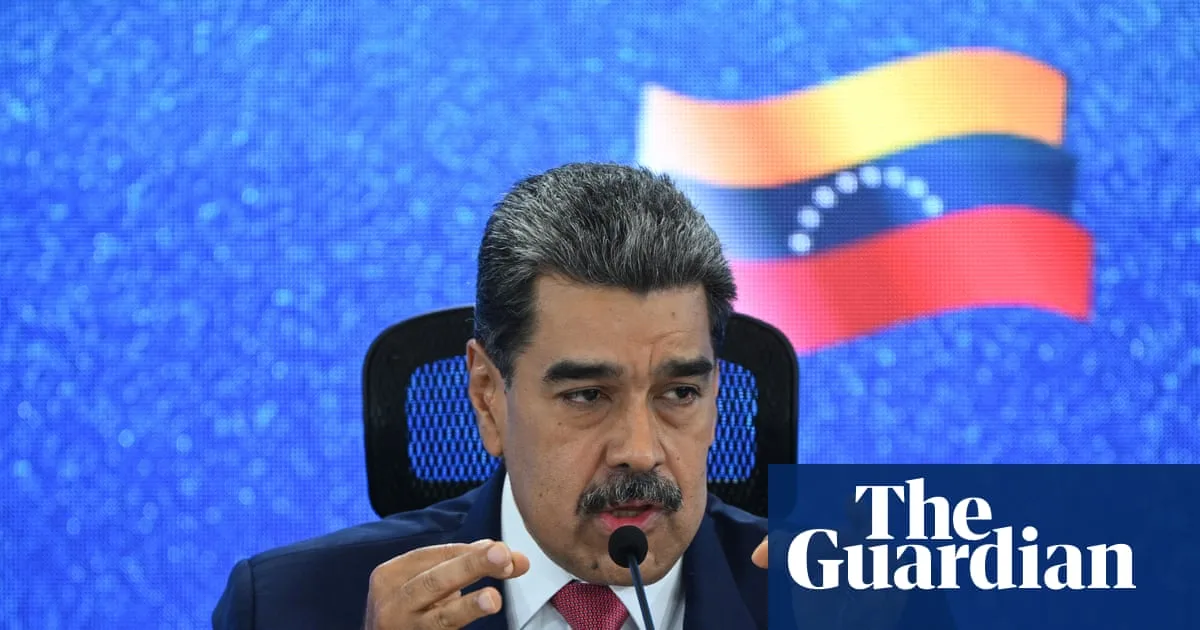
This is the complex, volatile reality that Donald Trump, alongside allies like Pete Hegseth and Marco Rubio, now seeks to manage from afar. The catalyst was a swift, clinical military operation over the weekend of 3 January 2026, ordered by Trump, which resulted in the capture of Venezuelan leader Nicolas Maduro. Maduro was forcibly removed, blindfolded and chained, and extradited to New York to face federal charges including narco-terrorism and drug trafficking.

Power Vacuum and Coercive Diplomacy

While the operation successfully decapitated the government Trump accused of "narco-terrorism," it left the state apparatus intact and the population in profound limbo. The immediate aftermath saw a 48-hour power vacuum in Caracas. Vice-President Delcy Rodriguez initially refused to assume power, calling for national resistance against what she termed US colonialism.

Trump's response was a blunt, 18th-century-style ultimatum to Venezuela's remaining leadership. He warned that non-compliance would trigger further attacks, stating, "If they don't behave, we'll do a second strike." He directly threatened Rodriguez, saying she would face a situation "probably worse than Maduro." The threat proved effective. By Monday morning, Rodriguez had reversed her position, issuing a social media statement committing Venezuela to "peace and peaceful coexistence" and appealing for internal calm.

In exchange for cooperation, the Trump administration has dangled the lifting of crippling economic sanctions and opportunities for American firms in Venezuela's oil and infrastructure sectors. However, there appears to be no comprehensive plan for Venezuela's political future, its shattered economy, or how to stabilise a nation harbouring paramilitary drug cartels, gold smugglers, and millions craving democratic change.

Regional Ripples and the 'Pottery Barn' Rule

The intervention has sent shockwaves beyond Venezuela's borders. Trump has simultaneously escalated threats against Mexico, Colombia, and Cuba, and renewed a demand for the United States to acquire Greenland from Denmark. The action recalls the so-called "Pottery Barn rule" once invoked by former US Secretary of State Colin Powell regarding Iraq: "You break it, you own it."

On the ground, the mood is one of anxiety rather than celebration. Almost 8 million Venezuelans have fled poverty and turmoil since Maduro took power, with 7 million remaining in South America and the Caribbean. Many, like beautician Sylvie, feared Maduro but dread a future of chaos. "We don't want to end up like Iraq," she confesses. Others, like a man named Emanuel, hedge their bets, cautiously expressing support for "the legitimate government" without specifying which one he means.

The critical question now is whether Trump's strategy is a calculated move to control Venezuela or a reckless act of geopolitical plate-smashing. With Maduro in a Manhattan courtroom and a coerced government in Caracas, the path forward for Venezuela remains dangerously unclear, its fate held in the balance between foreign ambition and local desperation.