The recent capture of Venezuela's former president, Nicolás Maduro, by US-backed forces in Caracas has acted as a stark flashpoint, illuminating a profound shift in global power dynamics. This event, which brushed aside established international process, has forced America's historic allies, including the United Kingdom, into a moment of urgent reckoning. The comfortable assumptions of the post-1945 rules-based order are disintegrating, replaced by a more volatile landscape where raw power and mercantile interest often trump diplomacy.
A Stark Warning from a Former Insider
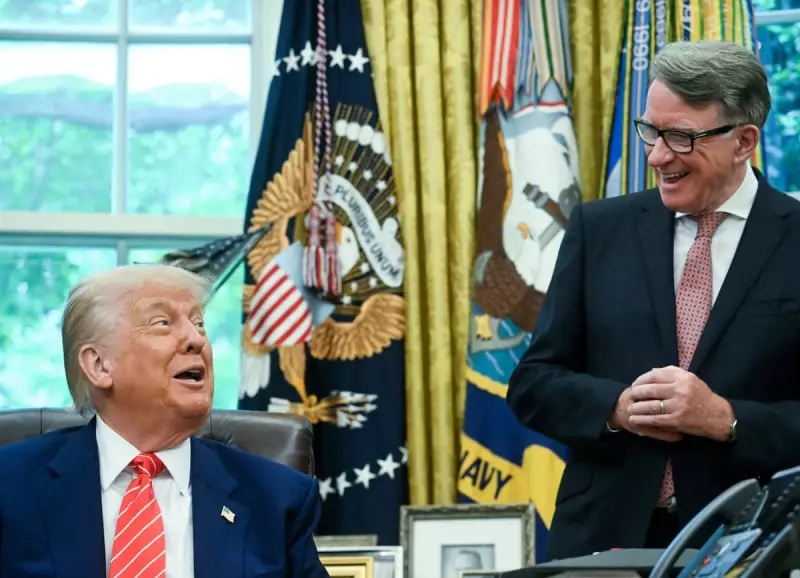
In the wake of the Caracas operation, the analysis of former ambassador to Washington, Peter Mandelson, has cut through the diplomatic noise. Writing in The Spectator, Lord Mandelson delivered a blunt assessment: "Trump has the means and the will, and they [Europe and the UK] do not." He argued that in Venezuela, President Trump achieved in a single day what years of conventional statecraft had failed to do, highlighting what he termed "Europe's growing political impotence in the world." His controversial prescription is not more rhetoric, but the collective European deployment of "hard power and hard cash" to reclaim a seat at the table.
Deciphering the New American Doctrine
Experts are scrambling to interpret the broader pattern behind such unilateral actions. Professor John Bew, an adviser to four prime ministers from Boris Johnson to Keir Starmer, sees the Venezuela incident as a marker of three critical trends. Firstly, it signals a heightened US willingness to use executive power for rapid military intervention. Secondly, it asserts a form of American mercantilism, prioritising US control over key resources like oil and gas. Thirdly, it suggests a potential turn towards a hemispheric approach, which could cede influence in other regions to powers like China and Russia.

This represents a dramatic transformation of the United States from the anchor of the Western alliance to a more unpredictable, transaction-driven actor. Officials, academics, and commentators across the spectrum are grappling with this new reality, where the US operates with a different set of rules.
The Imperative for a British and European Response
While the instinct may be to condemn this new disorder, Professor Bew cautions that mourning the old system is not a strategy. The assumptions of the past are not returning. The pressing question for Britain and its European partners is no longer merely how to manage the US alliance, but how to guarantee their own security and economic interests in its absence.
This necessitates a mature and clear-eyed national debate, free from histrionics. The UK government cannot be faulted for initial hesitation in the face of such seismic change, but prolonged indecision is not sustainable. The nation must determine what economic, technological, and strategic adaptations are required to protect its people and its values. This conversation involves everyone, with implications that will touch all citizens, and therefore demands broad public engagement.
The Caracas episode is more than a news story; it is a catalyst. It forces a fundamental reassessment of where power lies and how it is exercised. For Britain and Europe, the path forward is uncertain and fraught, but forging an independent, collective course is no longer a choice—it is an imperative for the new global age.