The prospect of direct US military action against Iran, as threatened by former President Donald Trump, risks catastrophically undermining the most significant popular uprising the Islamic Republic has faced in decades. As protests enter their third week, analysts warn that American intervention could unite a fractured regime, splinter the opposition, and repeat historic foreign policy blunders.
A Gathering Storm: The Scale of Iran's Unrest
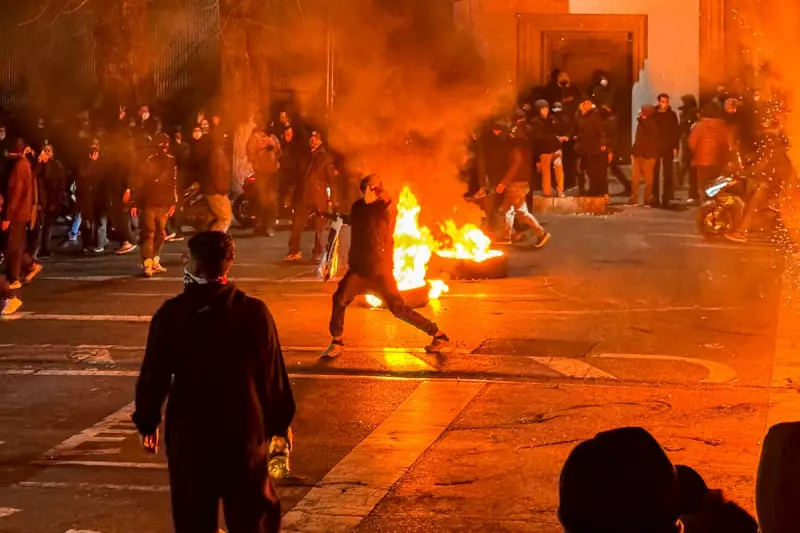
Current protests, which began in January 2026, represent a profound shift in Iran's long history of dissent. Unlike previous uprisings, this movement has spread across all social classes and regions, moving beyond major urban centres to become a genuine nationwide revolt. The regime's brutal tactics—including police firing on civilians, severing communications, and plunging streets into darkness—have failed to quell the momentum.
Videos and eyewitness accounts, facilitated in part by Elon Musk's Starlink system, continue to emerge, showing symbols of state power being torn down. Crucially, there are signs that elements within the police, civil service, and even the Revolutionary Guards may be reconsidering their loyalties as the Supreme Leader, Ayatollah Ali Khamenei, digs in for a bloody fight to retain control.

The Trump Factor: A Dangerous Taste for Intervention
The calculus in Washington has shifted dramatically. The precedent for direct US action was set in June 2025 with successful American raids on nuclear facilities at Natanz and Esfahan, which demonstrated the ineffectiveness of Iran's air defences. This, coupled with President Trump's evolving appetite for foreign intervention—evident in Venezuela and Syria—has made the threat of bombing campaigns against the ayatollahs "perfectly feasible."
The White House has consistently warned that US forces are "locked and loaded" and ready to strike the regime "where it hurts" if protesters are harmed. However, this very threat may be the regime's greatest propaganda tool. It hands the theocrats the "proof" they crave to label the counterrevolution as a puppet of the "Great Satan," potentially fracturing the broad-based Iranian resistance.
Why Western Restraint is Paramount
Military intervention now would be both unnecessary and counterproductive. It would play directly into ancient, and partly justified, narratives of Anglo-American interference in Iranian affairs, harking back to the 1953 coup and the exploitation of oil resources. Furthermore, destroying the regime from the air could also obliterate the machinery of government and the vital oil industry, leading to a Libyan or Afghan-style collapse even in the event of liberation.
Planning for "the day after" a potential fall of the regime appears absent in Washington. Meanwhile, European powers—Britain, France, and Germany forming a key diplomatic bloc—have been criticised for weak statements merely urging Tehran to "exercise restraint." The people of Iran deserve to know the West supports their ambition for change and stands ready to help stabilise and rebuild, but the immediate task of completing this revolution must rest with the Iranian people themselves. For the West, the most prudent course is to offer robust diplomatic support while exercising strategic military restraint.