Trump's Evolving Iran Policy Raises Alarms Among Democrats
Senior Democrats have issued reserved warnings following a classified briefing on Iran with Secretary of State Marco Rubio, highlighting concerns over what could become the United States' most significant military intervention since the Iraq war. The focus is not on drawing a line against a new Middle East conflict but on the opaque decision-making processes surrounding Donald Trump and his unpredictable whims, which could shape the weightiest foreign-policy decision of his two terms in office.
Democratic Reservations and Calls for Transparency
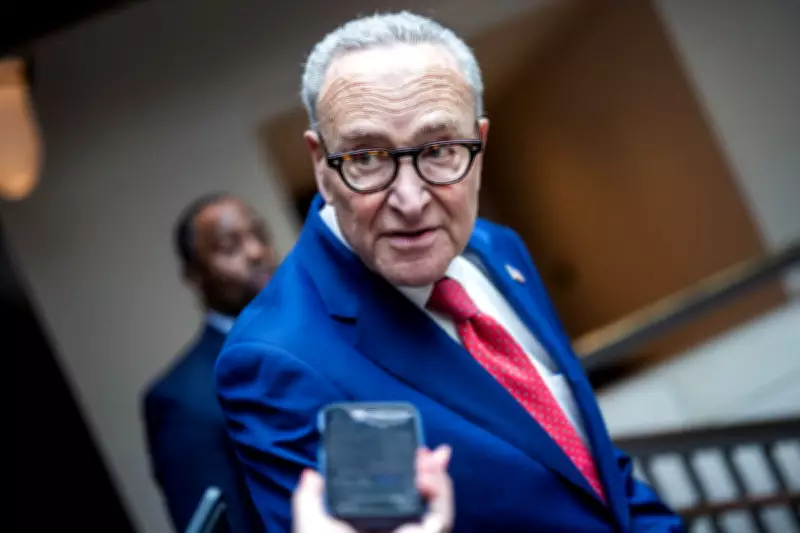
Chuck Schumer, the Senate minority leader and one of the party's most senior lawmakers, emphasized the seriousness of the situation after the briefing. "This is serious and the administration has to make its case to the American people," Schumer stated. He added, "If they want to do something in Iran – and who the hell knows what it is – they should make it public." Other Democrats in the briefing for the "gang of eight" senior lawmakers echoed these sentiments, though their responses fell short of full-throated denunciations of the move towards war.
Recent polling suggests many Americans desire stronger opposition to potential military action, but Trump's ultimate goals in Iran remain unclear. The mustering of the largest invasion force since 2003 has created a sense of inevitability that the US could soon be at war again. Unlike the pro-war sentiment that flourished after the 9/11 attacks, a collective consensus or initial acquiescence has emerged through Trump's immense gravitational pull among his supporters and the fractured opposition among Democrats.

Backlash and Congressional Action
A backlash may be in the making as House Democrats, after tumultuous internal deliberation, have announced they will force a vote next week to summon Trump to Congress to explain his plans for Iran. A statement from Democrats read: "The Iranian regime is brutal and destabilizing, seen most recently in the killing of thousands of protestors." It continued, "However, undertaking a war of choice in the Middle East, without a full understanding of all the attendant risks to our servicemembers and to escalation, is reckless. We maintain that any such action would be unconstitutional without consultation with and authorization from Congress."
Dylan Williams, vice-president for government affairs at the Center for International Policy, noted a shift in Democratic leadership. "I think there has been a shift from Democratic leadership and a number of mainstream Democrats in the last 48 hours or so," Williams said. "Once it became clear how much this mattered to the Democratic voting base, those leaders have started to speak out more strongly on the substance of the issue." Schumer has also listed himself as a co-sponsor for a corresponding measure in the Senate to limit Trump's use of the military in Iran.
Trump's Shifting Rationales and Historical Parallels
Trump has prided himself on his early opposition to the Iraq war, although he gave lukewarm support to the invasion until late 2003. During his first term, he claimed his victory was bolstered by a goal to end US interventions in the Middle East, stating he had been "elected on getting out of these ridiculous endless wars." However, like George W. Bush in the early 2000s, Trump and his administration have presented a shifting series of rationales to justify striking Iran:

- First, the regime's crackdown on pro-democracy protesters, with Trump claiming 32,000 deaths (others have made lower estimates).
- Then, the regime's nuclear programme.
- Finally, its efforts to build ballistic missiles.
Despite assembling a team that includes vocal opponents of further US interventions in the Middle East, such as JD Vance, Trump's administration is reported to be edging toward a significant military strike if negotiations do not yield results. In his State of the Union address, Trump reiterated that Iran could not possess a nuclear weapon, despite claims that last summer's Midnight Hammer operation had "obliterated" the Iranian nuclear programme. He went further, describing Iran as a clear and present danger, saying: "They've already developed missiles that can threaten Europe and our bases overseas, and they're working to build missiles that will soon reach the United States of America." The administration has not provided evidence to support this claim or a timeline for missile development.
Administration Responses and Comparisons
Trump's closest advisers, including Vance, Rubio, and envoy Steve Witkoff, have bristled at comparisons to the Bush administration's case for the Iraq war. After last year's limited strikes on Iran's nuclear programme, Vance said he empathized with Americans "exhausted after 25 years of foreign entanglements in the Middle East" but added, "back then, we had dumb presidents, and now we have a president who actually knows how to accomplish America's national security objectives." This Thursday, Vance echoed Trump's remarks that Iran was crossing a red line, stating: "It's very simple ... I think most Americans understand that you can't let the craziest and worst regime in the world have nuclear weapons."
The evolving situation underscores the complexities of US foreign policy under Trump, with Democrats pushing for greater transparency and accountability as military tensions with Iran escalate.