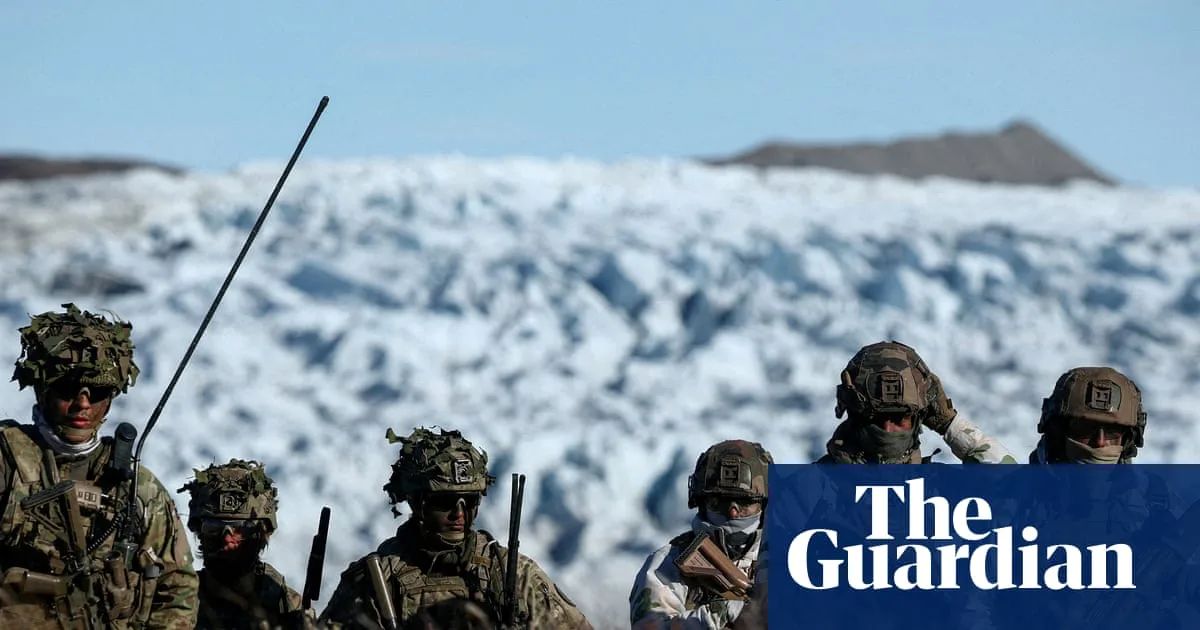
Former United States President Donald Trump has once again brought a controversial geopolitical proposition to the fore, expressing a renewed interest in the United States purchasing the vast, autonomous Arctic territory of Greenland. This ambition, which first surfaced during his presidency, continues to define an unconventional and assertive approach to American foreign policy and territorial expansion.
The Genesis of a Geopolitical Curiosity
The idea of the US acquiring Greenland is not entirely novel, with a historical precedent in President Harry Truman's 1946 offer to buy the island for $100 million in gold. However, Trump's public and persistent pursuit of the concept during and after his term marks a significant departure from recent diplomatic norms. His fascination with the territory is reportedly driven by its strategic location and abundant natural resources, positioning it as a key asset in the growing great-power competition in the Arctic region.
Reports confirm that during his time in office, Trump discussed the possibility with aides, some of whom allegedly pursued preliminary research into the feasibility of such a transaction. The notion was met with a mixture of bewilderment and outright rejection. The Danish government, under then-Prime Minister Mette Frederiksen, dismissed the idea as "absurd," leading to a diplomatic spat and the postponement of a presidential visit to Copenhagen.
Strategic Motivations Behind the Proposal
The core of Trump's interest lies in Greenland's immense geopolitical and economic value. The island is rich in rare earth minerals, essential for modern technology and green energy solutions, and its melting ice caps are opening new shipping routes and resource exploration opportunities. Furthermore, its location between North America and Europe offers unparalleled strategic military advantages.
This move is seen by analysts as part of a broader strategy to counter Russian and Chinese influence in the High North. China has been actively seeking investment opportunities in Greenland's mining sector, while Russia has been modernising its Arctic military bases. Controlling Greenland would grant the US a dominant position in this increasingly contested theatre.
Diplomatic Repercussions and Future Implications
The revival of this proposal, even from outside the Oval Office, continues to strain relations with Denmark, a key NATO ally. It challenges the principle of Greenland's right to self-determination and highlights a transactional view of international relations. The territory's local government in Nuuk has consistently asserted its desire for greater independence from Copenhagen, not a transfer to another power.
The persistent nature of this ambition suggests it may remain a feature of Trump-aligned foreign policy thinking. Should he or a political ally return to power, the topic could resurface with greater force, potentially triggering a serious diplomatic crisis and raising fundamental questions about sovereignty, colonialism, and the future of the Arctic. The episode underscores how personal political obsessions can drive and disrupt long-standing international alliances and protocols.
Ultimately, the story of Trump and Greenland is more than a political oddity; it is a case study in how 21st-century geopolitics, climate change, and resource competition are converging in the world's most remote frontiers. It signals a potential new era where territorial acquisitions, once thought a relic of the past, are reconsidered through the lens of national interest and strategic advantage.




