Trump's Direct Involvement in Iran Conflict Confirmed
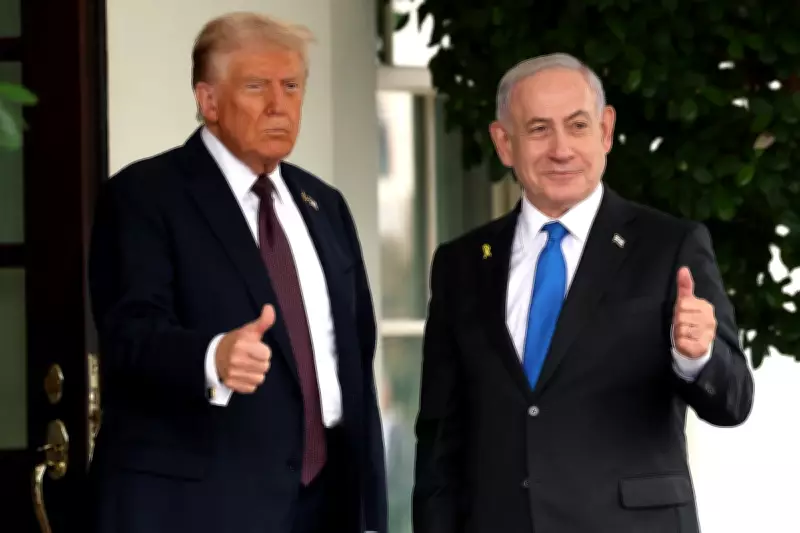
While social media has been awash with unfounded rumours about Israeli Prime Minister Benjamin Netanyahu's supposed demise, the real story unfolding is far more substantial. New evidence indicates that former US President Donald Trump personally authorised the escalation of military action against Iran, marking a significant development in the ongoing conflict that began on February 28.
The Netanyahu Influence Factor
There is no denying Benjamin Netanyahu's pivotal role in initiating hostilities. As Israel's longest-serving head of government, his political vitality remains unquestionable, and his influence over Trump's decision-making process has been widely acknowledged. Marco Rubio has publicly stated that the United States joined the attack primarily because Israel was determined to strike regardless of American participation.
Netanyahu's desire to confront Iran dates back at least two decades, with successive US administrations under George W. Bush, Barack Obama, and Joe Biden consistently blocking such action. Trump, however, proved uniquely receptive to Netanyahu's persuasive arguments, sharing the Israeli leader's ultimate goal of regime change in Tehran in ways that even key advisors like Pete Hegseth did not fully endorse.

As Ben Rhodes, former deputy National Security Adviser during the Obama presidency, pointedly asked: "Do we really believe that the United States would be in this war absent Netanyahu?"
Trump's Direct Authorization Revealed
Despite Trump's claims of ignorance regarding Israel's recent attack on Iran's South Pars gas field—an operation that caused significant turbulence in global energy markets—officials and experts in both Jerusalem and Washington DC remain deeply sceptical. The unprecedented level of cooperation between American and Israeli defence establishments makes such claims of presidential unawareness difficult to accept.
Dan Shapiro, former US ambassador to Israel now at the Atlantic Council think tank, has been particularly vocal this week, insisting that "Trump knew and approved [of the strike]. Now he realises it caused a massive escalation." This assessment aligns with broader analysis suggesting Trump's personal involvement in authorising military actions that have significantly expanded the conflict.
The assassination of Iran's security chief Ali Larijani further illustrates this coordination. While bearing the hallmarks of Israel's controversial "decapitation" strategy—targeting movement leaders to achieve victory—the notion that Israel acted independently in eliminating Larijani is virtually inconceivable given the current military partnership.
Responsibility and Accountability
Attributing appropriate responsibility requires careful distinction. While Netanyahu undoubtedly played a crucial role in initiating hostilities, this should not validate extreme narratives from certain ultra-right American figures. Joe Kent, who resigned from his counter-intelligence post in protest at the war, was factually correct in stating that "Iran posed no imminent threat to our nation," but his additional claim that Israel "dragged" the US into the 2003 Iraq war lacks foundation.
Ultimately, this remains Trump's war by choice. The conflict enjoys greater popularity in Israel than in the United States, potentially offering Netanyahu domestic political benefits despite his currently precarious poll ratings. While Netanyahu's stated goal of liberating Iranians from what he describes as "the Ayatollahs' egregious tyranny" may be laudable to some, it contrasts sharply with his demonstrated lack of parallel interest in Palestinian self-determination.
Trump's decision to become the first American president not to deny Netanyahu regarding Iran represents a significant foreign policy shift. His subsequent handling of the conflict—reportedly treating it "like a bellicose toddler with a new video game" and threatening to repeat bombing campaigns "just for fun"—further underscores his personal responsibility.

As Ben Rhodes emphasised in a recent interview: "Donald Trump is responsible. I actually don't think it's fair to say it's all Netanyahu. No, this is the guy who took us to war. He could have said no to Netanyahu." This assessment captures the essential truth that while Netanyahu provided the opportunity and persuasion, Trump exercised the ultimate authority to commit American forces to a conflict that continues to escalate with unpredictable consequences.