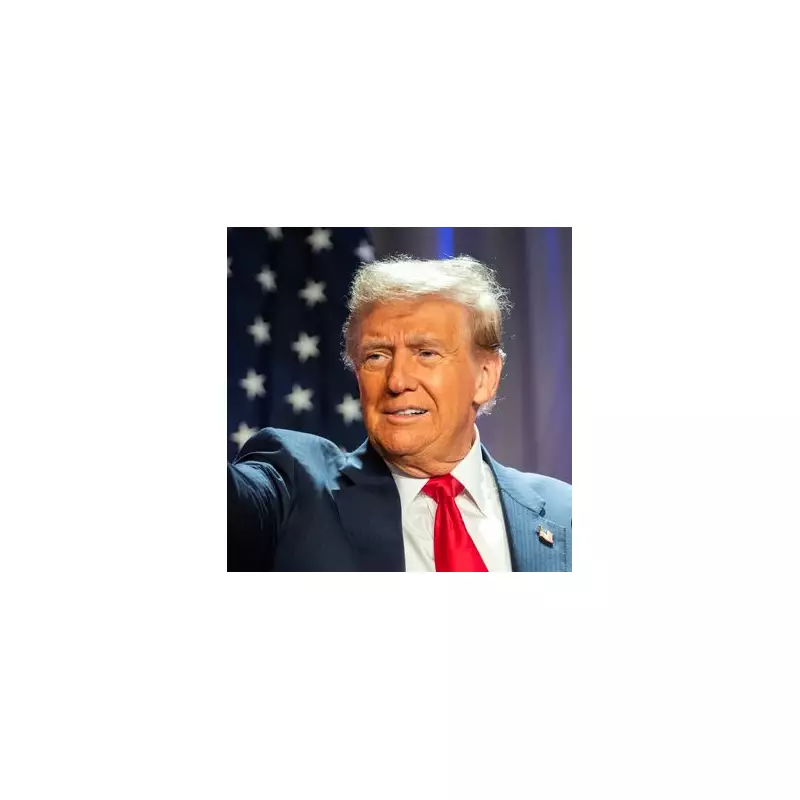
Donald Trump's military strike on Venezuela's capital, Caracas, represents a dramatic and dangerous escalation in the long-standing conflict between the United States and the Latin American nation. The attack, which included the reported abduction of President Nicolas Maduro and his wife, has sent shockwaves through the international community.
The 'Police Action' Justification
The Trump administration is expected to frame this aggressive move not as an act of war, but as an extension of law enforcement. This legal rationale is crucial, as it would allow the White House to circumvent the requirement to seek Congressional approval before engaging in hostilities.
Secretary of State Marco Rubio underscored this position in a social media post, stating, "Maduro is NOT the President of Venezuela and his regime is NOT the legitimate government." He described Maduro as the head of the 'Cartel de Los Soles', a narco-terrorist organisation. This builds on the longstanding US accusation that Venezuela floods America with drugs, which led to Maduro's indictment on narco-terrorism charges in 2020.

By classifying the operation as a "counter narco-terrorism campaign" aimed at capturing a fugitive, Trump aims to portray the bombing and abduction as a large-scale police action rather than a military invasion requiring legislative consent.
Deeper Motives: Ideology and Oil
Beyond the stated war on drugs, analysts point to two core motivations driving Trump's push for regime change in Caracas. Firstly, there is a clear ideological clash. Maduro's leftist, anti-American stance is fundamentally at odds with Trump's vision for the hemisphere. Since returning to office, Trump has actively promoted leaders in Latin America who align with his 'MAGA' philosophy while criticising those who do not.
The second, and arguably more compelling, reason is economic: oil. Venezuela sits atop the world's largest proven oil reserves, estimated at over 300 billion barrels. These resources are tightly controlled by the state-owned company PDVSA. A change in leadership, particularly to a US-friendly government, could loosen this state grip and open the door for American oil firms—many of whom are significant Trump donors—to access this vast energy bounty.
Regional Dominance and Unanswered Questions
This bold strike is seen as a stark assertion of US dominance in its own backyard. Trump's strategy appears to be reshaping the political landscape of Latin America, favouring allies and isolating adversaries. The immediate aftermath leaves critical questions unanswered, primarily regarding the legal and geopolitical fallout of an attack justified as a police action on foreign soil.
The world now watches to see how other nations will respond and whether the administration's controversial justification will hold under intense international scrutiny.