Trump's Iran War Echoes Bush's Iraq: A Legacy of Failed Assumptions
Donald Trump, the self-styled "America First" president who built his political brand on opposing foreign military adventures, has unleashed a war of choice aimed at regime change in Iran. This stark reversal from his campaign promises of peace mirrors the deceptive tactics and flawed assumptions that led to the catastrophic Iraq war under George W. Bush.
From Peacemaker to Warmonger
Throughout the 2024 presidential campaign, Trump pitched himself as the antithesis of his Democratic opponents, Joe Biden and Kamala Harris. He insisted he would use his deal-making skills to end global conflicts, including Israel's war on Gaza and Russia's invasion of Ukraine. In his election night victory speech, Trump told supporters, "I'm not going to start a war. I'm going to stop wars." His inaugural address reinforced this image, promising to measure success by "the wars we never get into."
Many of Trump's top advisers echoed this message. The national Republican Party portrayed Trump and his vice president, JD Vance, as the "pro-peace ticket." Vance, in a 2023 Wall Street Journal op-ed, argued that Trump's best foreign policy was "not starting any wars."

A Sudden Military Escalation
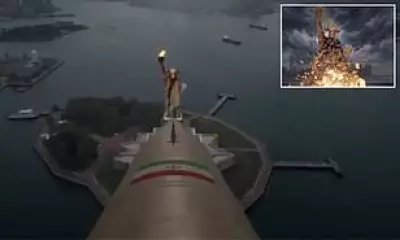
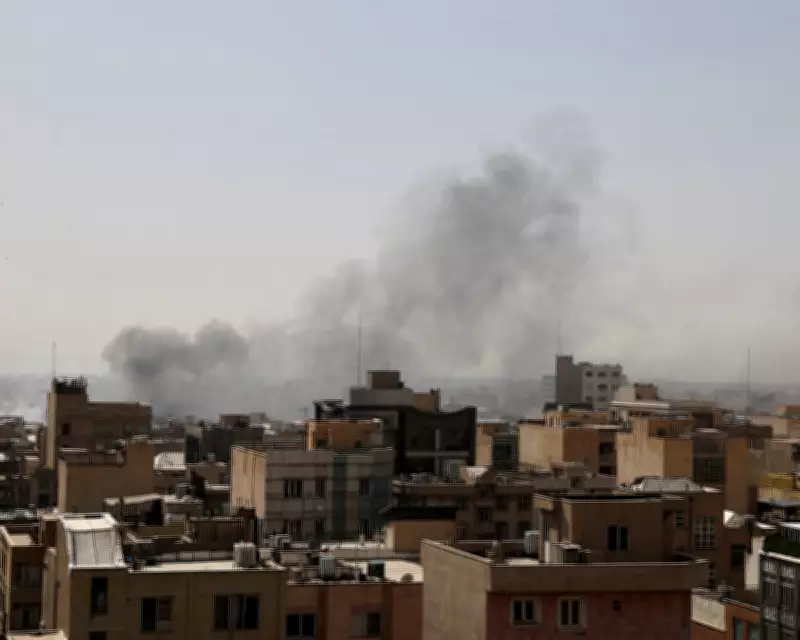
Yet, in his first year back in office, Trump bombed seven countries: Yemen, Syria, Iran, Iraq, Nigeria, Somalia, and Venezuela. The most extensive and dangerous campaign came early on a Saturday, with a war against Iran that risks spiraling into a regional conflagration. In an eight-minute video on Truth Social, Trump announced a "massive and ongoing" attack intended to destroy Iran's military capabilities and overthrow its Islamic regime.
This move came with little explanation to the American people or Congress, despite recent opinion polls showing 70% of Americans oppose military action in Iran. Trump's video recycled decades-old complaints about Tehran's nuclear program, ballistic missiles, and support for regional militias like Hezbollah, Hamas, and the Houthis. He claimed Iran poses "imminent threats" to the US, but the evidence is exaggerated and doesn't hold up to scrutiny.
Flawed Justifications and Intelligence Manipulation
Trump argued that Iran is close to developing long-range missiles that "could soon reach the American homeland." However, US intelligence agencies, including Trump's own Defense Intelligence Agency, concluded Iran is years away from such capabilities. A 2025 report found Iran does not have ballistic missiles capable of reaching the US and might not build them until 2035.
Similarly, Trump claimed Tehran was rebuilding its nuclear program, which he said he had "obliterated" in June airstrikes. Leaked intelligence assessments showed two nuclear sites were not as severely damaged as implied, and the International Atomic Energy Agency found no evidence Iran resumed enriching uranium. Trump's special envoy, Steve Witkoff, claimed Iran was "probably a week away" from bomb-making material, but US officials say Iran has not tried to rebuild its main sites.
Parallels to the Iraq War Debacle
The deceitful case for war against Iran draws direct parallels to the lies and manipulated intelligence George W. Bush used to justify invading Iraq in 2003. The Bush administration sold the invasion as a "cakewalk," promising US troops would be greeted as liberators. They ignored disputes over intelligence and warnings about postwar chaos, leading to a decades-long conflict that shattered Iraqi society and cost the US nearly $2.9 trillion.
Every major assumption made by the architects of the Iraq war proved wrong. Now, Trump, who spent years ranting against regime-change wars, has launched his own in the Middle East with little hint of how it might end. The cycle of failed assumptions and costly interventions continues, leaving a legacy of blood and treasure wasted.