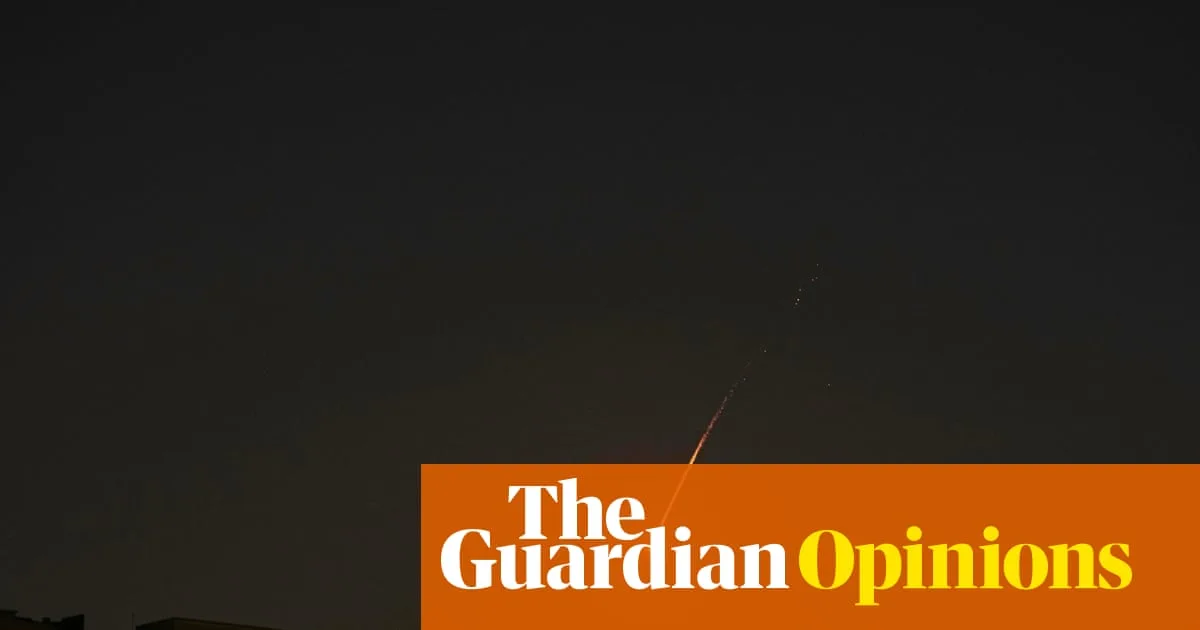
Trump's Iran Strikes: A Diversionary War Strategy Amid Domestic Scandals
The United States' recent military escalation against Iran follows a troubling pattern reminiscent of the 2003 Iraq invasion, where strategic deliberation was sidelined in favour of immediate action. Donald Trump's administration has initiated a campaign explicitly aimed at regime collapse in Tehran, yet there has been no serious public reckoning with the risks or plausibility of the political outcomes sought. This approach weaponises military force not as a tool subordinated to strategy, but as the strategy itself, driven by the need for spectacle and command of the news cycle.
The Logic of Performative Power
Trump's foreign policy lacks a coherent theory of order, deterrence, or alliance management. Instead, it is fuelled by the demonstration of dominance and the creation of spectacle. The strikes on Iran come at a time of mounting domestic pressure, including attacks on civil rights in Minneapolis, renewed scrutiny over the Epstein files, and a Supreme Court ruling against his global tariff policy. In this context, the military action functions as a classic "diversionary war," attempting to hijack the global narrative and drown out domestic scandals with the thunder of cruise missiles.
By framing the escalation as a response to Iran's repressive regime, Trump has neutralised much of the domestic opposition that might otherwise constrain a rush to war. This tactic rides the political currents of a US capital drifting toward confrontation, where bombing Tehran remains an article of faith for many Republicans, and Democratic resistance has been softened by Iran's own odious actions against its citizens.
Long-Term Consequences and Global Risks
If the objective is display rather than durable political effect, long-term consequences become secondary. Questions about the feasibility of a stable successor regime in Tehran, containment of regional escalation, and the impact on alliances are peripheral to a foreign policy built on showing what Trump is capable of doing. The White House appears to operate on a theory that destabilising an authoritarian state from the air will spontaneously produce a more favourable political order, but recent history—from Libya to Afghanistan—shows that weakening central authority often leads to fragmentation rather than freedom.
The risks extend well beyond Iran's borders. A destabilised Iran could trigger a massive humanitarian crisis on Europe's doorstep, potentially emboldening far-right movements through refugee flows. Escalation might draw in regional actors, threaten shipping in the Gulf, and widen into a broader confrontation. Iran's oil exports could slow or collapse, tightening global markets and benefiting energy exporters like Russia, Venezuela, and Saudi Arabia, while straining American bandwidth in managing strategic competition in Asia and commitments in Europe.
Strategic Costs and Diplomatic Isolation
Unlike the 2003 Iraq invasion, where the US assembled a "coalition of the willing," Europe and other traditional allies are standing on the sidelines, highlighting notable diplomatic isolation. This deepens the divide Trump has already created through actions like threatening Greenland, imposing indiscriminate tariffs, and fostering global uncertainty. Deterrence relies on credibility, predictability, and alliance cohesion—all of which are eroded by a foreign policy driven by spectacle.
Even if the initial phase appears successful, with Iranian capabilities degraded or the regime weakened, the long-term costs for the United States could be severe. Wars begun for display rarely end on favourable terms, and victories at the outset can leave a country weaker in the long run. The absence of deliberation and substitution of performance for strategy echoes past tragedies, underscoring that if Trump cares little for strategy, this does not make strategy irrelevant.






