Trump's Iran Conflict: A Personal Vietnam and a War on Language
Donald Trump finds himself embroiled in what observers are calling a 'personal Vietnam' in Iran, a quagmire where his goals remain elusive, bombing fails to force surrender, and an exit strategy is conspicuously absent. Good morning, Vietnam—a phrase that echoes the confusion and fog of war enveloping his administration. Trump's naive expectation of a lightning victory, akin to his 'perfect scenario' in Venezuela, has sunk in the Strait of Hormuz, leaving him to compound confusion with improvised fabrications.
Delusions and Incoherent Strategies
There may be few if any facts underlying the delusions upon which Trump constructs his vapid explanations and evanescent strategies. The belief that coherent sense can be made from his shuffling words is a weakness of the rational mind, which struggles to accept the impulses of an inveterate demagogue. Searching for reason in the jungle of Trump's tales often compels sensible people to superimpose logic where none exists, merely to satisfy a need for semblance of soundness.
Trump's erratic efforts to reframe his rationale further expose his incompetence and unintelligibility, predictable yet now lethal on a global scale. His stream of sputtering remarks, however, has clearly established ground that should be explored by congressional inquiries into the war's origins, planning, and conduct.

A War on Language and Accountability
Trump is also at war with the English language. He insists his war is not a war but a 'short-term excursion', a semantic dodge to skirt congressional and international accountability. When pressed, he claims it's both an excursion and a war, stating, 'It's an excursion that will keep us out of a war.' This rhetorical legerdemain mirrors René Magritte's painting The Treachery of Images, where a pipe is captioned 'This is not a pipe.' Is this Orwellian propaganda or surrealism? The line blurs as Trump demands 'regime change' or negotiates with figures recently killed, declaring, 'Most of the people we had in mind are dead.'
He demands 'unconditional surrender' or declares the war 'very complete' after conversations with Vladimir Putin, who pledged support to Iran's new supreme leader, Mojtaba Khomeini—a 'lightweight' in Trump's view. Even taking Trump's confused reasons at face value, the conflict remains a total disaster, with shifting accounts from officials like Marco Rubio, who suggested an 'imminent threat' from Iran if attacked by Israel, a claim Trump alternately dismisses and supports.
Escalating Confusion and Political Fallout
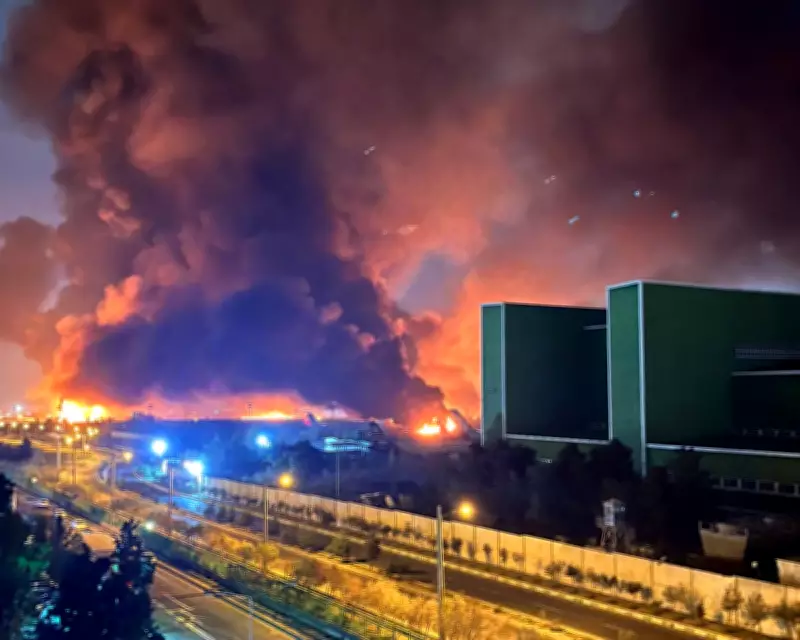
The 'excursion' is ending 'very soon', according to Trump, or just beginning, as defense secretary Pete Hegseth suggests—or 'both', as Trump clarified. Boasting a plan for everything, Trump grapples with surging oil prices and an elusive war aim, stating, 'We've already won in many ways, but we haven't won enough.' One of the most unpopular presidents of the century attempts to restore popularity with an unpopular war, where winning recedes over a horizon obscured by black clouds over Tehran.
The Trump White House uniquely defines war's purpose as achieving the ecstatic sensation of a simulated video game, producing mash-ups of action movies and real bombings. This reflects Maga incel culture, with women depicted as Lois Lane or in aprons—a stark contrast to Trump's past avoidance of Vietnam service via bone spurs and his description of dating as 'my personal Vietnam', where women are 'landmines'.
Historical Parallels and Congressional Scrutiny
Trump faces a real 'personal Vietnam', with a 'credibility gap' widening into a chasm. Stuck in a quagmire, his bombing fails to force surrender, the adversary proves resilient, allies are alienated, and humanitarian and economic disasters loom. After the Senate voted down a War Powers Resolution, Democrats aim to hold up business until hearings on the war, reminiscent of the Fulbright hearings on Vietnam, which exposed Johnson's 'credibility gap' and plummeted his approval ratings.

Fulbright's critique in The Arrogance of Power warned against equating power with virtue and belligerence with greatness—a lesson unheeded as Vietnam destroyed Johnson's presidency and paved the way for Nixon's paranoia from war to Watergate. Trump, meanwhile, stages rallies to whip up war enthusiasm, attacking dissenters like Thomas Massie for disloyalty, equating it with treason to the country.
In this conflict, Trump's war on language and reality mirrors historical failures, raising urgent questions about accountability and the future of U.S. foreign policy in the Middle East.